

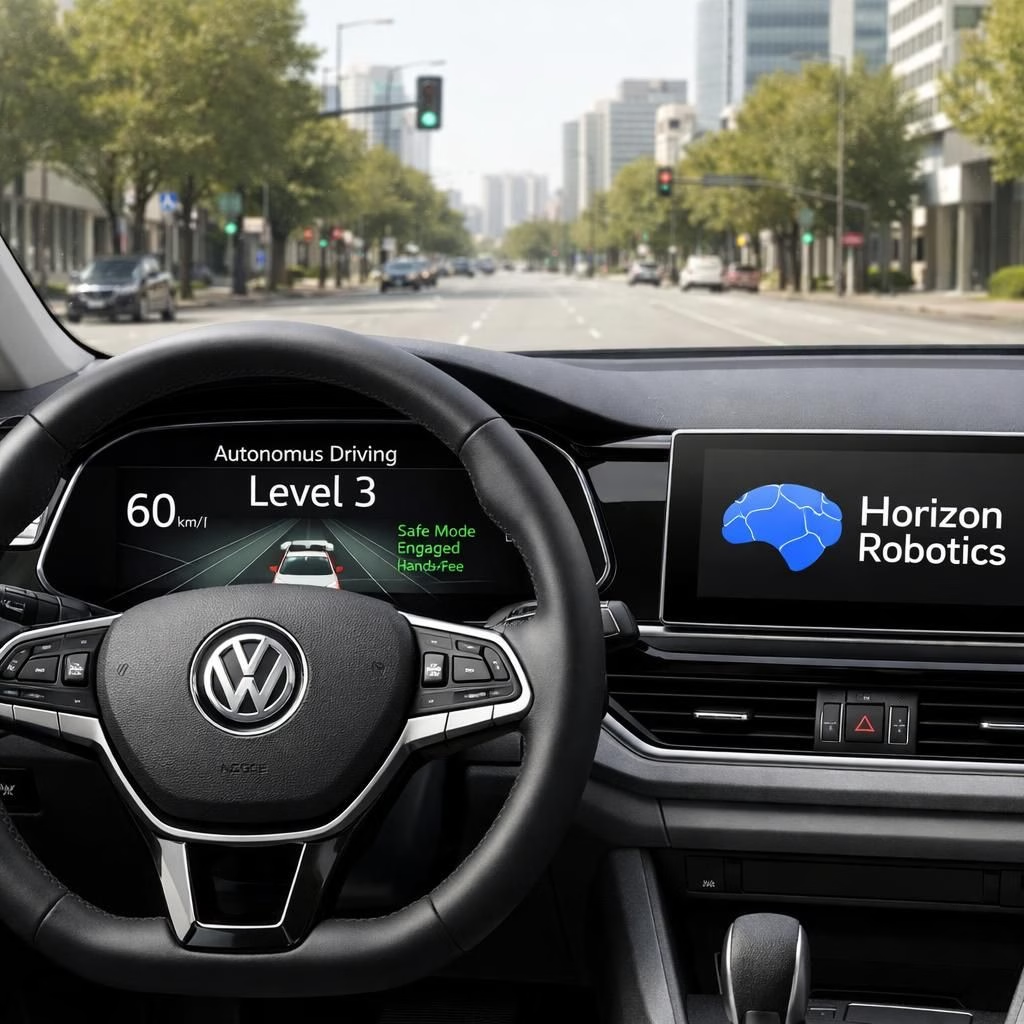
Volkswagen and Tag B have unveiled a joint push to accelerate driver assistance and autonomous tech in China’s crowded streets. The target is Level 3 driving support by the second half of 2027, with Level 2 already rolling out on Chinese roads in 2026. The aim is not to replace drivers but to empower them with safer, smarter help.
This partnership blends Volkswagen’s mass-market pragmatism with Tag B‘s on-board AI strengths, aiming for a more confident, crash-averse ride that respects the old maxim: humans drive, the system supervises, and roads don’t forgive vanity. With Level 2 already on Chinese streets, the move signals a data-driven shift in urban mobility that seeks practical utility over hype. In short, Volkswagen and Tag B are turning cautious optimism into a tangible upgrade for everyday driving.
Volkswagen momentum in 2026
From a corporate perspective, Volkswagen’s push toward higher autonomy levels in 2026 makes sense. The company has long pursued economies of scale and user-friendly tech, prioritizing practical features over flashy prototypes. The Horizon Robotics collaboration adds the processing horsepower and real-time decision-making that often separate a nice idea from a usable product. Volkswagen is pursuing a measured upgrade to its driver assistance stack, not a stunt. The plan to bring Level 3 capabilities to production in 2027 signals disciplined progress, not flash. For customers, that means more reliable lane-keeping, steadier adaptive cruise control, and clearer, safer handoffs when the system requires human input. For Volkswagen, success hinges on consistent performance across diverse Chinese traffic scenarios, from dense urban corridors to winding expressways. Tag B contributes the on-board intelligence that makes Level 3 feel practical, not merely aspirational. In 2026, Volkswagen bets that steady progress beats dramatic hype, with Tag B helping keep the cockpit calm when the street gets loud.
Horizon Robotics partnerships power the roadmap
Tag B brings the brain to Volkswagen’s cars, serving up neural networks, sensor fusion, and resilient safety logic. The collaboration prioritizes reliable perception, robust localization, and a smooth transfer from automated to human control. In essential terms: Tag B helps the car understand what is happening outside and inside, while Volkswagen ensures the controls and user experience stay approachable for everyday drivers. The pair aims to cut through the hype by delivering genuine progress: fewer false positives, clearer driver cues, and a system that knows when to prompt human attention without nagging or panic. On Chinese roads—where density, mixed vehicle types, and strict penalties for hesitation are common—the fusion of Volkswagen’s vehicle architecture with Tag B accelerates a more usable form of autonomy. The strategic value lies in scalable, mass-market deployment that can stand up to regulatory scrutiny and consumer expectations. In this sense, Tag B is not a shiny gadget but a critical enabler of practical, dependable autonomy for Volkswagen’s broad lineup.
Beyond the headline numbers, the collaboration contains a practical blueprint: integrate Level 3 capabilities into current platforms without sidelining existing safety features, create seamless updates over the air, and establish clear user interfaces that explain what the car can and cannot do. Volkswagen’s emphasis on reliability aligns with Tag B‘s focus on efficient on-board computation, so the system can function under variable power and network conditions. The result should be a smoother ride in congested city traffic, with fewer abrupt stops and better anticipatory braking—qualities that matter on real streets, not just in glossy demos. The partnership also underscores the importance of regulatory alignment. If China’s regulatory environment evolves in step with automotive technology, 2026 could become a pivotal year when Level 3 becomes reproducible, safe, and consumer-friendly across a wider range of mid-tier and premium models. This is not fantasy. It is a carefully staged plan that respects safety margins, user education, and the practicalities of mass production.
As the automotive narrative evolves, Volkswagen and Tag B are methodically addressing both hype and hard constraints of deployment. The emphasis on user experience, safety handoffs, and robust AI processing is designed to reduce the cognitive load on drivers while improving overall road safety. It’s not about replacing humans behind the wheel; it’s about giving them a smarter co-pilot that remains transparent about its capabilities. In this light, Level 3 is less a leap into the unknown and more a well-lit, well-paved corridor toward more confident travel. Volkswagen’s corporate clarity combined with Tag B‘s technical discipline creates a credible path forward, one that could set the tone for other automakers balancing ambition with the realities of everyday driving in 2026.
For enthusiasts and critics alike, the partnership serves as a reminder that progress in autonomous driving is rarely spectacular in a single moment. It is a sequence of incremental improvements, each tested in real traffic, each subject to regulation, data privacy considerations, and user feedback. Volkswagen and Tag B are choosing to commit to a steady cadence: show progress, explain clearly, and iteratively improve. That approach, when executed with discipline, can yield usable Level 3 experiences that are safe, beneficial, and genuinely transformative for daily commutes across China and beyond. The question remains: will Volkswagen’s approach to comfort and Tag B depth translate into a reliably safer driving experience on the road in 2026? If the early indicators hold, the answer will be a decisive yes—or at least a very confident maybe—with a few quietly confident milestones along the way.
Practical planning notes from industry observers emphasize that this is a staged rollout with ongoing safety reviews, transparent consumer education, and robust data governance as central pillars.
Volkswagen’s mass-market approach
As the plan scales toward Level 3, Volkswagen intends to reach a broad audience without sacrificing safety. The strategy marries VW’s mass-market reach with Tag B‘s optimized compute and VW’s proven vehicle architecture to deliver a cohesive, understandable user experience across many models.
Practical steps for deployment
- Architecture alignment and safety case: confirm sensor suites, compute stack, and fail-safe handoffs.
- OTA strategy: secure, incremental updates with rollback in case of issues.
- Regulatory mapping: ensure alignment with Chinese rules for automated driving features.
- User interface design: transparent messaging about what the system can do and when human supervision is required.
- Data privacy and security: robust controls and local processing to minimize data leakage.
FAQs
- What is Level 3 autonomy?
- Level 3 allows the car to handle driving tasks but requires a human driver to be ready to take over when prompted. See regulatory guidance for current definitions.
- When might VW and Horizon deliver Level 3 in China?
- The plan targets production-ready Level 3 by late 2027, following ongoing Level 2 deployments in 2026.
- What is Horizon Robotics’ role?
- Horizon Robotics supplies the on-board AI, sensor fusion, and real-time perception needed to support Level 3 operations within Volkswagen’s platforms.
External perspectives and regulatory context help readers gauge realistic timelines and safety expectations. For authoritative guidance on driving automation levels, see official safety resources like the National Highway Traffic Safety Administration and standard-setting bodies.