

In this cheerful take on a Kotaku story, Physical Copies and Day-One Update are not adversaries but partners in nostalgia, reminding us that a 25-year-old RPG remake still benefits from modern patch love to reach its full charm. The idea isn’t a rant about DRM or nostalgia for its own sake; it’s a celebration of patch culture that keeps old games playable and relevant. The core truth remains: to enjoy the remake now, you often need a little patch attention, and that attention can be friendly, funny, and surprisingly efficient.
Physical Copies in the RPG Remake Era
Physical Copies are more than relics; they are time capsules that demand care in a world of instant digital access. The act of opening the box arrives with a tiny ceremony, followed by the quiet realization that a day-one patch waits in the wings like a helpful NPC. The patch notes are not a skippable chore; they are a gateway to a stable frame rate, clearer UI, and a balanced difficulty curve that honors both nostalgia and modern expectations. Yes, you can admire the glossy cover art, but the real satisfaction comes from booting the game and seeing the update prompt proudly flashing like a badge of modern responsibility. The patch is the companion who walks you through creaky corridors and rebalanced boss fights with a grin, not a hand on a dismissive hip. This is where the box meets the patch in a mutually beneficial dance, and the result is a smoother trip down memory lane with fewer detours into the land of crashes and fatigue.
From a design perspective, the remake faces two timelines at once: the original era and today’s expectations for accessibility, performance, and clarity. Physical Copies carry the promise that the experience can be shared in living rooms, game nights, and collector shelves, while the patch ensures that the experience remains accessible on contemporary hardware. The box is a physical reminder that good games deserve updates; the update is a digital reminder that good memories benefit from polish. If you pick up the disc or cartridge, you should anticipate a small, polite prompt telling you what to install. The day-one patch quietly becomes the prologue to your personal walkthrough, a prelude that streamlines quests, fixes early missteps, and improves the interface without erasing the heart of the original design. In short, Physical Copies anchor memory while the patch anchors quality.
Collectors and casual players alike gain something valuable from this pairing. The physical edition brings tangible joy—art, booklet, and a spine that proudly labels your nostalgia—but the patch ensures that the vision remains coherent when viewed through a modern screen. The coexistence of physical and digital is not a failing; it’s a healthy ecosystem where the remade classic can evolve without losing its soul. The presence of Physical Copies thus becomes an invitation to treat the remake as a shared experience across generations, with the patch acting as the responsible host who keeps the table tidy and the conversation flowing.
Practical Steps for Physical Copies and Patch Integration
Here’s a practical plan for readers who want the best of both worlds: start with the physical edition, then apply the Day-One Update to unlock its full potential. The Day-One Update prompt should guide you through the installation, language options, and accessibility tweaks that many players overlook. Fast-forward to a smoother first hour by checking patch notes before you dive into the very first quest. The goal is to balance nostalgia with modern polish while keeping the core experience intact.
- Treat patches as a welcome feature, not a mandatory obstacle to begin playing.
- Check patch notes before diving in to understand any changes to balance or UI.
- Enjoy the blend of nostalgia and modern polish that a Day-One Update enables.
In practice, the combination of Physical Copies and Day-One Update creates a delightful paradox: a relic that feels fresh, a classic that behaves like a contemporary game, and a memory that benefits from ongoing care. The experience is not about chasing perfection but about embracing improvement without losing the essence that drew players to the remake in the first place. With a little patience and a sense of humor, the journey from box to screen becomes a pleasant stroll rather than a sprint through patch notes.
What’s your take on the double-act of Physical Copies and Day-One Update? Have you found clever workarounds, or do you simply enjoy the ritual of patching as part of the game’s charm? Share your stories, tips, and favorite moments in the comments below.
Thank you to Kotaku for the original piece that sparked this discussion. Original article: Physical Copies Of A Remake Of A 25-Year-Old RPG Are Unplayable Without A Day-One Update.
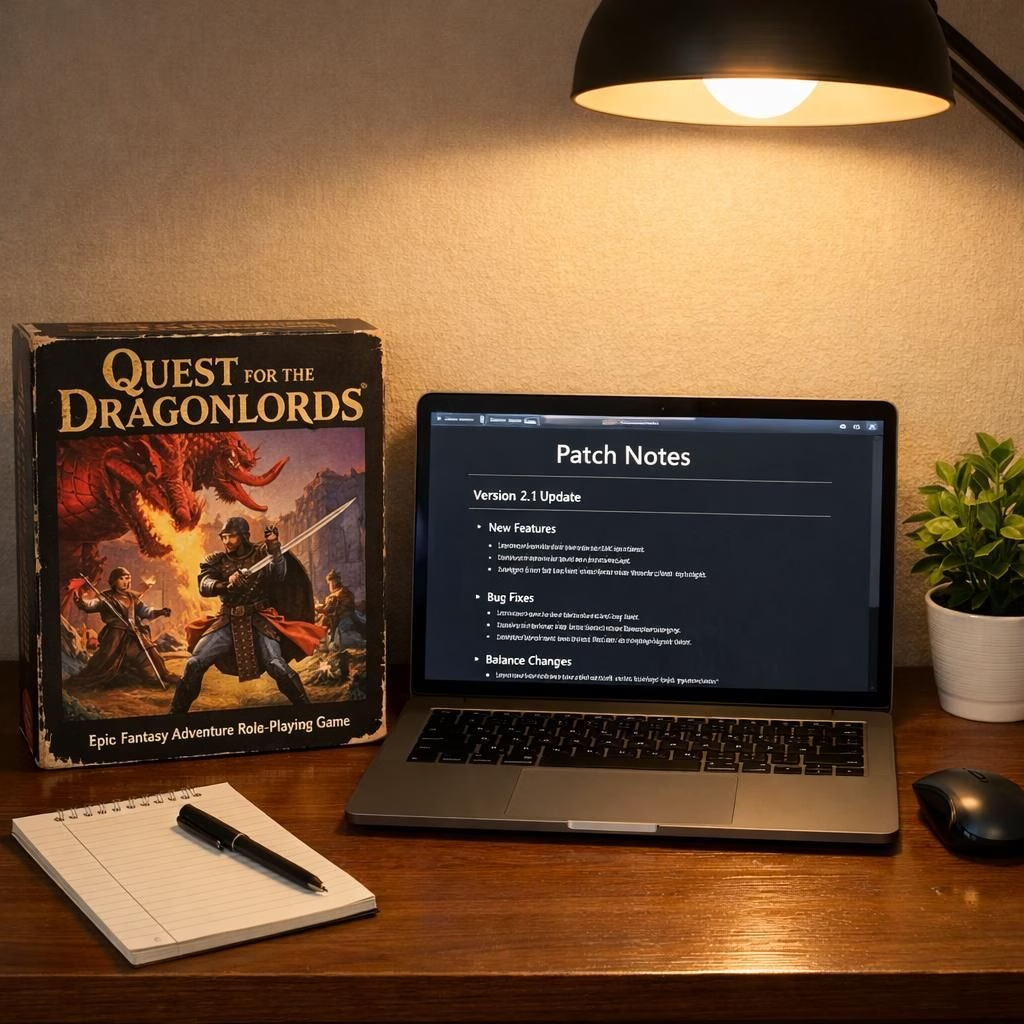
Image credit: a simple, realistic desk scene suitable for a DALL·E 3 prompt, described below.
Image prompt for DALL·E 3: A realistic, simple desk scene: a vintage RPG box beside a modern laptop displaying patch notes, warm overhead light, clean workspace, and a small plant in the corner.
Image filename: physical-copies-day-one-update-rpg-remake.jpg
For further context on patch notes and patch etiquette, see PC Gamer: What are patch notes? and the official Steam patch notes guide at Steam Docs.
References
- Original source: Gothic remake patch article on Kotaku
- PC Gamer: What are patch notes?
- Steam patch notes: Steam patch notes documentation