

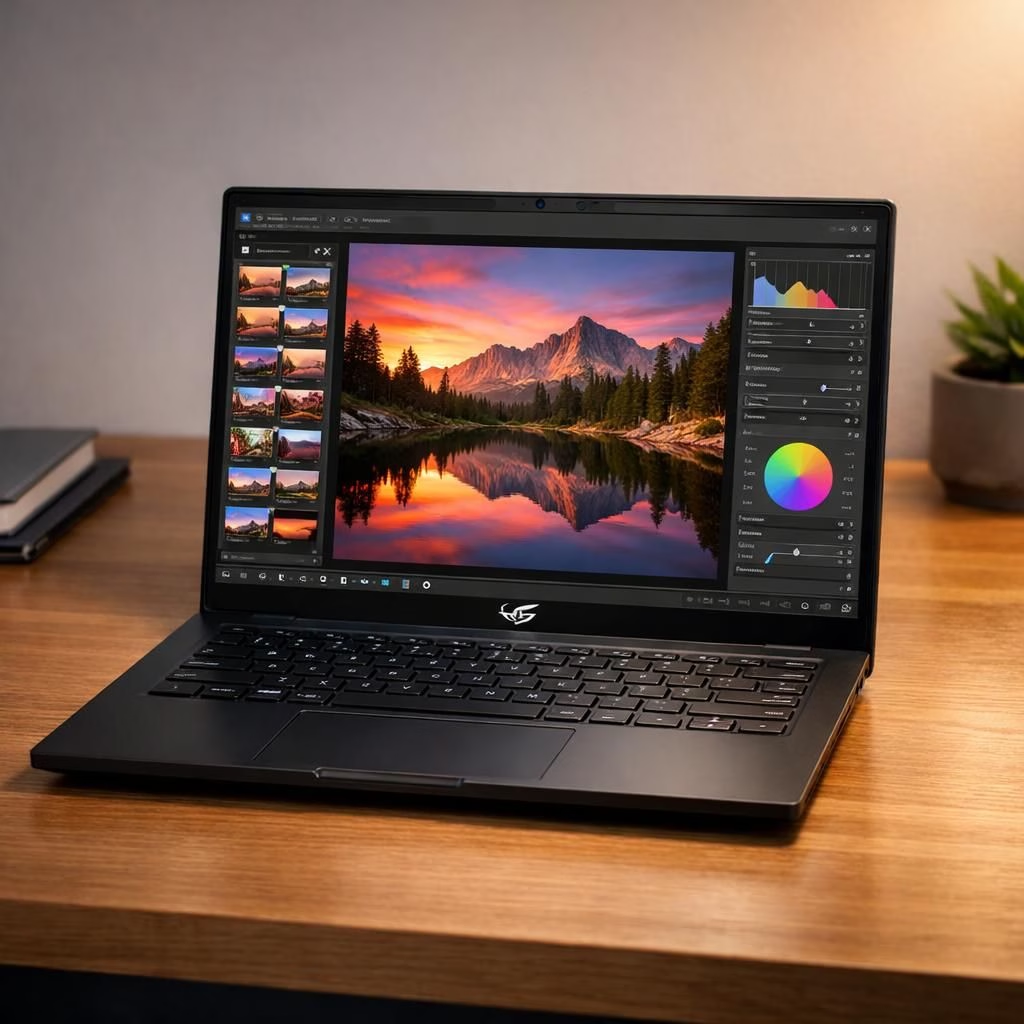
I’ve loved the ASUS brand for years, and in 2026 the Zephyrus G14 OLED still feels like a quirky, wonderful blend of featherweight portability and serious chops. This isn’t nostalgia dressed as a laptop; it’s a refined, modern take on what a small, capable machine should do for creative work and casual play. The OLED panel still steals scenes with punchy color, deep blacks, and brightness that doesn’t betray the rest of the package. Add a practical new feature—the full-size SD card slot—and you’ve got a laptop that respects photographers, videographers, and meme-makers alike. Yes, RAMageddon is real and prices have climbed, but the G14’s core idea stays intact: you get a compact, OLED-equipped machine that can edit RAWs, render timelines, and still survive a workday away from a wall outlet. The downside? The price tag now feels more like a premium flight than a coffee shop commute, and you’ll likely notice the premium when you’re checking out. Still, in a world where laptops drift toward growling behemoths, the Zephyrus G14 continues to offer a rare balance of portability, performance, and practical design.
What changes for 2026 is the move from AMD to Intel Panther Lake, which brings a fresh warmth to the battery and a new benchmark for efficiency. Our review unit features an Intel Core Ultra 9 386H, a GPU in the RTX 5070 Ti class, 32GB of RAM, and a 1TB SSD. The setup is aimed at users who edit on the go, juggle multiple desktops, and still want to game in spare moments. Yes, the price is steep for the configuration, but the experience has a certain nerdy joie de vivre: a laptop that feels almost cinematic in its ability to handle color-critical work on the OLED screen and then sprint through modern games when you’re off the clock.
In practice, the Zephyrus G14 remains a nimble performer. The keyboard offers deep travel and tactility that responsive typists will admire. The large touchpad is sturdy and not overly bouncy, even when you’re doing long Lightroom edits or a quick bring-your-own-device workshop. The 14-inch OLED display (2880 x 1800, 120 Hz) remains crisp, with SDR brightness better than previous years and HDR lighting that doesn’t blind you at the worst moments. The panel’s color accuracy is strong enough for photo work, and you’ll appreciate the contrast when you’re watching dark film scenes or editing night shots. The speakers punch above their weight for a laptop this size, giving a surprisingly full, cinema-like feel without a dedicated subwoofer stealing your desk space.
ASUS Zephyrus G14 OLED: 2026’s portable powerhouse
The beastly part of this package is the Panther Lake core. The 16-core Ultra CPU handles multitasking with ease, and the GPU can push high settings in modern titles like a champ—though you’ll want to tweak expectations at the extreme edge. Our testing shows the G14 remains competitive with larger laptops in some GPU-heavy workloads, but it’s still a compact machine. The 128–130W peak power range keeps frame rates respectable in games while ensuring thermals stay tame enough not to turn the chassis into a small sun. If you’re a creator who also wants a single device for light gaming, the G14 does a fine job of straddling those roles without feeling like you’re lugging an entire desktop to the coffee shop.
On endurance, Panther Lake shows its more efficient side. In mixed-use scenarios—browsing, Slack, music streaming, a handful of Chrome tabs—the G14 can glide through a workday with the display at a comfortable brightness. When you push it toward gaming or heavy editing, fans wake up, but they do so with a reasonable tempo. Battery life is notably improved versus older Intel generations, and the energy-saver modes still deliver usable performance without turning the experience into a crawl. In practical terms, you should expect roughly a full day of light to moderate use on a charge, with longer stretches if you dial back the brightness and tilt toward efficiency mode for tasks like light photo culling or web research between sessions.
Aesthetically, the Zephyrus G14 keeps its essence: a slim chassis, a compact footprint, and design cues that nod to the older models without feeling stale. The lid now features sleeker LED segments and more refined vent styling, giving it a touch of modern drama without shouting. The keyboard deck stays cool enough under normal workloads, and the distribution of heat remains forgiving for long sessions away from a desk. In short, the G14 is still a compact package that proves a thin-and-light laptop can be serious without losing its sense of humor.
Price is the elephant in the room. The new Intel-based G14 starts higher than its AMD predecessor, and the review configuration jumps into the premium zone. If you’re choosing between the latest Zephyrus G14 and a larger sibling like the G16, the decision often comes down to portability versus raw peak performance. The AMD variant remains around for those who want a cheaper entry point, but if you want the latest battery efficiency and Thunderbolt 4 with a full-size SD slot, the Intel model is the one that checks the most boxes. And yes, the RAM and storage configuration you select shapes the price more than you might expect. The takeaway: you’re paying a premium for modern features and a battery life that behaves like a real work companion, not a gimmick.
Under the hood, the Zephyrus G14 continues to ship with a feature-rich mix: Thunderbolt 4, dual USB-C ports, a couple of USB-A ports, HDMI 2.1, and the practical full-size SD card slot. The panel’s brightness and HDR performance remain a highlight for creators, while gaming performance is respectable in the 1080p and 1440p ranges with DLSS on. The webcam is still modest in low light, and like many laptops, the SSD’s speed is sensible rather than earth-shattering, but these trade-offs don’t derail the core value: a capable, portable machine that does not pretend to be a desktop replacement when it isn’t. If you’re chasing a single device that can handle professional tasks and casual gaming in equal measure, the G14 remains a compelling, if pricey, option.
OLED magic and everyday practicality for Zephyrus G14 fans
For creators who live in apps like Lightroom Classic, the G14 is a joy. The display’s resolution and color depth help you preview edits with confidence, and the 16:10-ish aspect ratio gives you extra room for tool palettes and reference images. The keyboard’s travel feels just right, and the trackpad’s tactile response makes precision edits less of a chore and more of a pleasure. The full-size SD card slot is a thoughtful addition for photographers who still rely on memory cards, and the port spread remains versatile enough for dongles and external drives alike. The overall ergonomics stay comfortable for longer sessions, and the chassis design keeps heat from seeping into your wrists during heavy editing or extended gaming marathons.
On the gaming front, the Zephyrus G14 handles most modern titles at high settings with a smooth frame rate, thanks to a capable GPU, a fast OLED panel, and adaptive power management. You’ll notice the fan curve when you push the system hard, but you’ll also notice how little the chassis needs to work to keep things cool. The experience sits in a sweet spot for a 14-inch laptop: compact enough for travel, capable enough for work, and surprisingly adaptable for a late-night gaming session or a quick content-delivery run.
From a value perspective, you’ll still feel the premium when you compare it to older models or to a Mac alternative with similar specs. The trade-off isn’t just price; it’s a willingness to embrace a thinner, more energy-efficient design that still plays games and runs demanding apps with confidence. If you’re after an all-in-one machine for photo and video editing, coding, and occasional gaming, the G14’s combination of OLED clarity, portable chassis, and modern I/O is hard to beat in this class.
Specs snapshot (as reviewed): Display: 14-inch OLED, 2880 x 1800; CPU: Intel Core Ultra 9 386H; GPU: RTX 5070 Ti Laptop; RAM: 32GB LPDDR5X; Storage: 1TB NVMe SSD; Webcam: 1080p with IR; Connectivity: Wi-Fi 7, Bluetooth 6; Ports: 2x USB-C, 2x USB-A, HDMI 2.1, full-size SD slot, 3.5mm; Weight: 1.58 kg; Battery: 73Wh; Price: around $3,600. Photography by Antonio G. Di Benedetto / The Verge
Bottom line: the ASUS Zephyrus G14 OLED remains a compelling compact workhorse that balances power, efficiency, and a dash of luxury. It’s not perfect, but it’s more than capable of handling a busy creative workflow while still delivering satisfying gaming performance when the mood strikes. If you prize battery life, a robust OLED panel, and a card reader on a 14-inch chassis, this is one of the few laptops that can genuinely wear both hats with style.
What do you think about the current state of premium Windows laptops in 2026? Do you value portability, or is raw performance your top priority? Share your thoughts in the comments below and join the conversation.
Special thanks to The Verge for the original article and material that inspired this rewrite. Your coverage helped shape a more approachable view of the Zephyrus G14’s ongoing evolution. Original material is gratefully acknowledged here: The Verge original article.
Practical notes and quick takeaways
- Portability: compact chassis with a strong emphasis on on-the-go productivity.
- Display: OLED clarity with strong HDR brightness for editing and media work.
- Battery: improved endurance, especially in mixed-use scenarios, but gaming still drains the pack faster.
- Upgrade path: RAM and storage are configured at purchase; RAM is not user-upgradable.
FAQ for the Zephyrus G14 OLED (2026)
- Is the RAM upgradeable on this model? No. The 32GB is soldered, so you’ll want to size it correctly at purchase.
- How does the battery hold up during gaming? Battery life drops with heavy GPU usage, but mixed-use scenarios push well past a typical workday when tuned for efficiency.
- How valuable is the full-size SD card slot? Very practical for photographers and videographers who still use cards for quick transfers and archiving.
- Would you recommend this over a larger gaming laptop? If portability and battery life matter more, yes; if you absolutely need desktop-level headroom for ultra settings, a bigger machine may fit better.
Conclusion: one device, many roles
In a market that often rewards either featherweight portability or desktop-grade power, the Zephyrus G14 OLED 2026 tries to balance both. It nails the essentials for creators who edit on the road and still want to game in spare moments, all in a compact chassis with better battery life and a thoughtful card slot. It isn’t cheap, and the price premium over the last-gen AMD model is hard to swallow for some buyers. Still, for a single, polished 14-inch tool that can be used all day and into the night, the G14 remains compelling — a rare mix of style, practicality, and performance that functions as a true workhorse with a touch of theater.
If you’re evaluating premium Windows laptops in 2026, the decision often comes down to whether you value portability or peak performance first. The latest Intel G14 leans toward a balanced approach with real-world benefits like a brighter OLED panel, faster data transfer, and a practical SD slot. For those who already own an AMD variant, the upgrade comes at a cost, but the payoff is a noticeably more efficient battery experience and modern I/O. In short: the G14 is a capable companion for creative work and casual gaming, wrapped in a sleek, portable package.
References
External sources:
- ASUS Official: ROG Zephyrus G14 product page
- Intel Newsroom: Panther Lake and mobile efficiency trends
- The Verge article (original)