

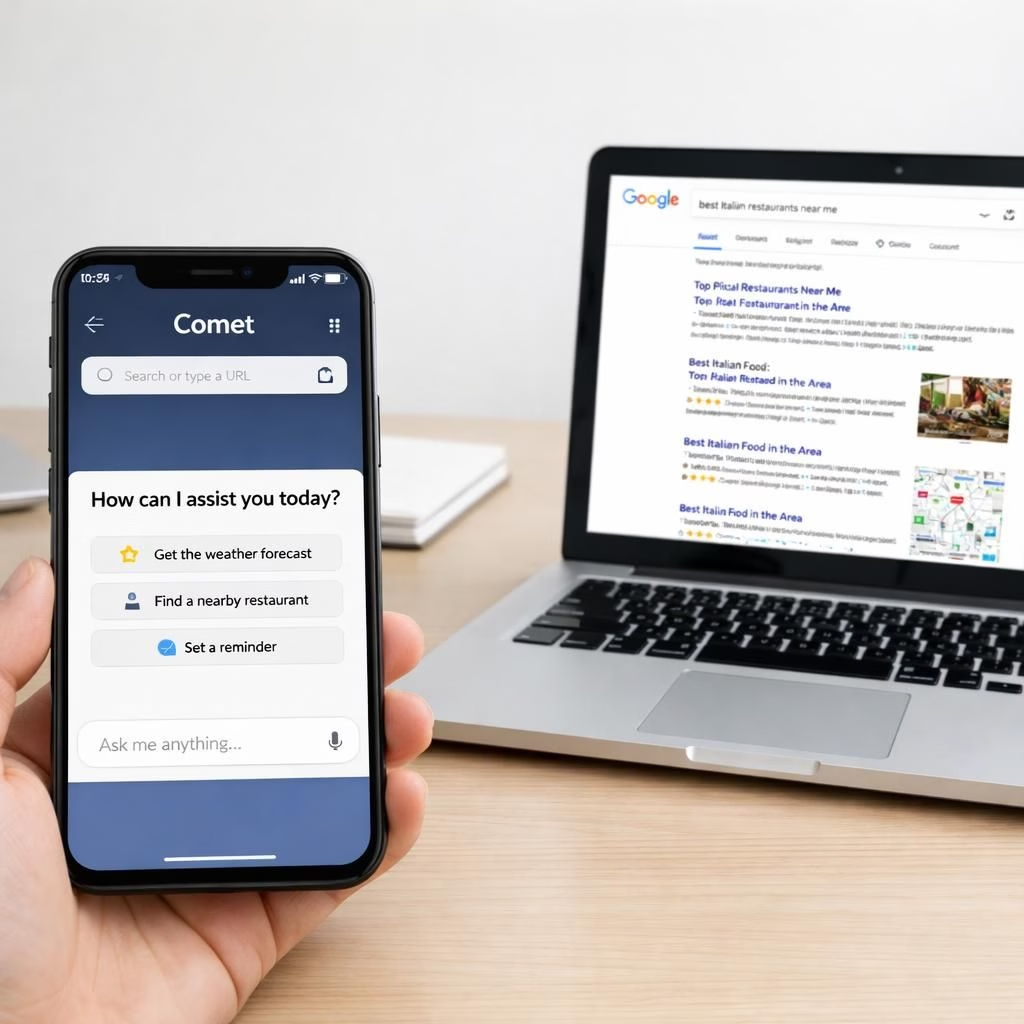
Perplexity and Comet: Pragmatic duo reshaping mobile browsing
From the user’s seat, the promise translates into faster navigations that still deliver meaningful answers. Comet‘s iOS implementation leans into the familiar, with navigation shortcuts that feel like fast lanes on a busy highway. Perplexity’s contribution? A focus on answer quality, structured results, and the sense that a browser should help you think, not just click. The team emphasizes multimodal cues and a search experience that respects context as much as speed. If you crave a little more sophistication without sacrificing flow, this pairing aims to deliver.
Google and Chrome: The hybrid flow that powers Comet
Behind the curtain, Comet rides a pragmatic wave, not a Google killer, but a browser that knows when to lean on Google and when to lead. The Chrome heritage gives Comet a familiar feel and strong multi-modal capabilities. The result is a product that blends voice input, visual results, and quick navigations into a single flow. Users who want the comfort of a well-known engine alongside Perplexity-style answer quality will find the approach attractive, and developers who crave a sandbox for mixed experiences will find it encouraging. In other words, this is not a quarrel about supremacy; it is a carefully choreographed dance of compatibility and capability.
In the background, the Chrome acquisition saga faded into a quiet page of history last year, as a court ruling nudged Google toward a path that favored continued integration rather than forced divestitures. Perplexity, meanwhile, kept building, refining its own path while keeping one foot in the big leagues. The Comet browser is now available across iPhone, Android, Windows, and Mac, with an eye toward broader reach and continual polish. The lack of a native iPad app remains a curiosity more than a blocker, a sign of measured risk and selective prioritization rather than a strategic blind spot.
The core takeaway isn’t a tale of collision, but a confession of realism. Srinivas’s latest comments read less like a victory speech and more like a practical memo: Comet should know when to hand off to Google and when to take the wheel itself. That honesty is rare in the high-drama world of tech pricing rounds and platform bets. It’s a reminder that user experience can be layered and nuanced, that speed can coexist with depth, and that a browser can be both a gateway and a guide, depending on what the user needs in the moment.
Perplexity’s move invites a longer conversation about how we search, how we read results, and how we measure usefulness in a mobile ecosystem that prizes speed without sacrificing accuracy. Chrome’s influence is visible in the interface’s cadence and the polish that makes pages feel native. Google’s role in this hybrid isn’t about conquest; it’s about support and convenience—a safety net that lets users lean on familiar strengths when speed matters.
If you’re curious about what all this means for your daily routine, you’re not alone. The designers are betting that people want fast results, high-quality answers, and the freedom to switch between quick navigations and deeper dives without changing apps.
The best part is that the experiment invites feedback. It’s not a closed manifesto; it’s a living, evolving approach to how we browse, search, and think while we tap on glass. And yes, we should expect new features, better integrations, and the occasional playful nudge that reminds us software can be polite and witty at the same time.
As we move through 2026, the practical takeaway remains clear: Comet isn’t seeking to replace a behemoth; it’s aiming to complement, enhance, and respect the patterns people actually use on mobile. Perplexity supplies the thoughtful edge; Google and Chrome provide the dependable backbone; together they form a browser experience that’s honest about its limitations while confident about its potential. That blend—humor, humility, and hustle—feels like a welcome shift in a landscape that has often talked louder than it listened to real users.
Are you excited about a future where a browser can be fast, helpful, and honest about when to call in a search engine? Do you want more clarity on who’s guiding the ship when you tap on a result? Share your thoughts in the comments below; your experience can help shape the next round of refinements.
Original article and background
Practical takeaways for everyday browsing
- When you want fast navigations, Comet can speed things up on mobile, letting you skim and switch to Perplexity-style answers when needed.
- For deeper context, rely on Perplexity for structured results that help you interpret sources rather than just snippets.
- On mobile, take advantage of native features like ad blocking and background video to keep things smooth.
FAQ
- What is Comet? A Chromium-based browser that blends Google’s search capabilities with Perplexity’s answer quality.
- Is Perplexity aiming to replace Google? No. It aims to complement Google and Chrome by offering smarter results when users want nuance and context.
- Where is Comet available? iPhone, Android, Windows, and Mac; no native iPad app yet as prioritization evolves.
References
Times of India source: Times of India article.