

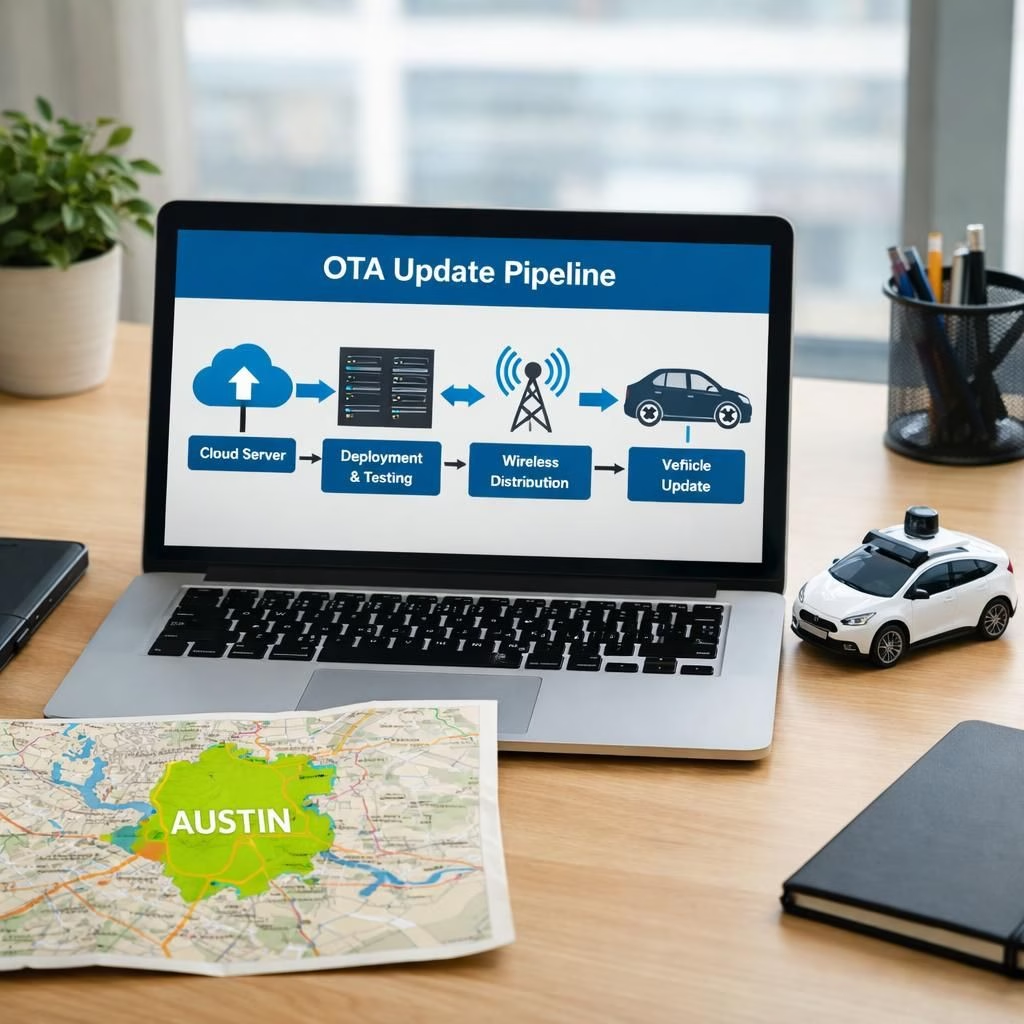
OTA and Robotaxi have become the twin stars of Tesla’s software universe.
After 11 years shaping the OTA update pipeline and the Robotaxi backend, Thomas Dmytryk announced his departure in a LinkedIn post titled "Why Now," citing family priorities for 2026.
He leaves with gratitude for a culture of relentless iteration and a reminder that life outside the code base also deserves attention.
This story isn’t just about a single engineer; it’s about how a small team can scale into a global platform when the mission is clear and the timetable ambitious.
In Dmytryk’s words, the journey was the ride of a lifetime, and timing has become part of the narrative—a reminder that even software pioneers must sometimes press pause to press play elsewhere.
OTA: The quiet engine behind millions of updates
In Tesla’s early days, OTA was a tiny dream: a five-person team, a lean stack, and a bold ambition to automate updates, connectivity, and in-vehicle commands.
Today, the OTA pipeline quietly supports a fleet approaching 10 million vehicles, delivering bug fixes, feature upgrades, and occasionally new visuals that delight users.
The tech truth is simple: a reliable OTA system lets cars improve over time without a trip to the shop.
Dmytryk helped codify practices that turned a fledgling update service into a dependable, scalable platform—one that modernizes vehicles while keeping them safe and calm under pressure.
The takeaway: focused teams with clear goals can move mountains when they preserve software discipline and distinguish speed from haste.
Robotaxi: The backend that mashes ride-hailing magic with safety checks
The Robotaxi backend matured from a bold concept into a robust, production-ready ride-hailing system.
It launched in Austin in 2025 and began unsupervised rides in early 2026.
The backend coordinates dispatch, safety, route planning, and fleet health with a calm, data-driven approach.
It’s not just about getting a car from A to B; it’s about ensuring that every ride is safe, traceable, and transparent for riders and regulators alike.
The team’s incremental improvement mindset—test, measure, iterate—paved the way for a platform that can handle scale, complexity, and the occasional surprise from weather, traffic patterns, or a curious customer feedback loop.
While speculation about fully autonomous rides persists, the pragmatic reality is that a solid Robotaxi backend is the precondition for responsible deployment, not a marketing stunt.
Here, the lesson is clear: behind every ambitious public demo is a quiet, stubborn engine ensuring reliability and safety.
Thomas Dmytryk’s departure sits among a broader pattern of leadership transitions at Tesla in recent years. Notable names include Drew Baglino in 2024 and David Lau in 2025, along with several program managers tied to major programs.
As OTA and Robotaxi stack mature, these moves raise questions about institutional knowledge and continuity. Yet the broader narrative remains optimistic: the company continues to promote internal talent, invest in training, and share its hard-won playbooks with teams that will carry the torch forward.
The core idea is simple—ambition is loud, but sustainable progress requires steady hands, robust architectures, and a culture that can replace leaders without derailing momentum.
For readers interested in the software side of big hardware ambitions, the takeaway is that OTA and Robotaxi aren’t separate silos; they are intertwined layers of a single platform. OTA delivers updates that improve safety and utility, while Robotaxi embodies the live service model that relies on those updates to function smoothly in the real world. The synergy isn’t accidental; it’s a deliberate design choice, a reminder that software-defined vehicles demand both robust deployment pipelines and thoughtful product design. The result is a game plan that can scale from a handful of vehicles to a global footprint without sacrificing reliability or safety.
As we look toward 2026 and beyond, the questions aren’t merely about who leaves and who stays. They’re about how well a company preserves institutional knowledge while welcoming fresh talent, how it sustains a culture of fearless experimentation without losing focus, and how it translates ambitious roadmaps into tangible, everyday benefits for customers. Dmytryk’s legacy suggests that the architecture—OTA, Robotaxi, and the supporting software suite—will continue to be the backbone of this journey. The future remains bright, even as the leadership landscape shifts, because the systems in place are designed to withstand change while keeping user experience at the center.
What does this mean for you as a reader? It means you can trust that a vehicle you might ride in 2026 is built on layers of careful engineering, not hype. It means the team’s emphasis on updates and safety will continue to evolve, bringing features that improve convenience, efficiency, and safety. It also invites us to celebrate the people who quietly make complex things look easy, even when their names aren’t headline news.
If you have thoughts or experiences with OTA updates or Robotaxi concepts in the real world, share your perspective below. Your insights help others understand how these technologies touch daily life and shape the future of mobility.
Source attribution and a note of thanks: Thanks to the Times of India article for providing the material that inspired this synthesis. We’re grateful for the thoughtful reporting that sparked this discussion. Original source: Times of India.
Practical OTA takeaways
- Align OTA and Robotaxi architectures around safety and reliability, with clear rollback paths.
- Build strong monitoring and observability to detect issues before users notice them.
- Preserve institutional knowledge during leadership transitions to maintain momentum.
- Encourage cross-team collaboration so software improvements translate into real-world benefits for riders.
Robotaxi safety and policy questions
Think about how regulators, operators, and developers work together to ensure that the Robotaxi backend remains safe as the fleet grows. The question isn’t only about capability; it’s about governance, transparency, and accountability.
FAQs about OTA and Robotaxi
- What is OTA in cars? OTA stands for over-the-air updates. It lets automakers push firmware and software improvements remotely, reducing trips to service centers and enabling faster vulnerability fixes and feature improvements.
- How does the Robotaxi stack rely on OTA updates? The live ride-hailing service depends on stable software delivery. OTA updates provide safety patches, route optimization, and reliability enhancements that the Robotaxi backend can deploy without manual interventions.
- What does leadership change mean for Tesla’s software stack? Leadership transitions can help scale the team and codify best practices. The core software products—OTA and the Robotaxi backend—remain the focus, with processes designed to preserve continuity and safety.
References
External sources and further reading: