

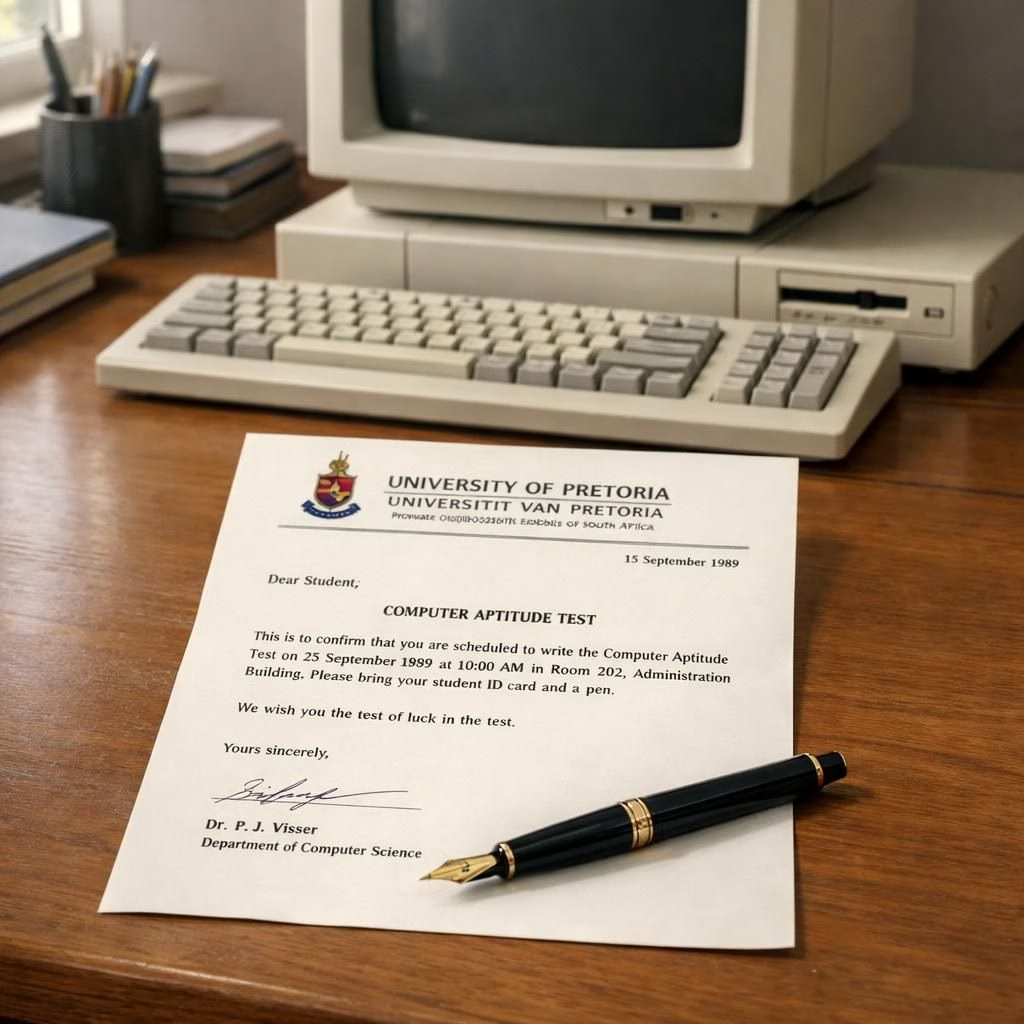
ElonMusk and technology collide in a story that reads like a thriller: a 1989 Pretoria document, a 17-year-old who would become a tech icon, and the internet’s appetite for dramatic evidence.
ElonMusk technology: A teenage test, a grown-up myth
In May 1989, the University of Pretoria reportedly sent a letter about an aptitude test taken by a 17-year-old named ElonMusk for computer programming. The document supposedly lists an A+ in operating and an A+ in programming, signed by J. L. M. Wiechers, identified as Director of Information Management at the university. The post that circulated online claimed the results were unusually high and warranted a re-evaluation. The tale has the right mix of academic mystique and tech mystique to fuel chatter across feeds and forums, even before anyone could pin down the exact provenance of the paper.
Followers of the story often pointed to the date on the letter—17 May 1989—and the assertion that such scores were extraordinary for a teenager. The image, shared with the caption about an engineering-grade aptitude, sparked discussions about early indicators of future innovation and the quirks of archival documents. Critics urged caution, noting that a single scanned letter can be misinterpreted or misrepresented, especially when the figure in question is someone as storied as ElonMusk. Yet the gist remained compelling: a teenager at a South African university allegedly showed an aptitude for computing that seemed, at least on social media, almost otherworldly for the era.
The post also claimed IBM had to re-evaluate Musk because his score was so high that it defied the norms of the time. The idea of a multinational tech giant re-evaluating a teenager’s aptitude test by a prestigious university adds a splash of drama to a mundane administrative process. It’s the kind of narrative that makes readers wonder: what’s the line between genuine talent and selective memory, especially when the story travels through the internet’s echo chamber?
Technology angle: What the 1989 Pretoria letter says about ElonMusk technology
When ElonMusk weighed in on X (formerly Twitter), he acknowledged that the score was unusually high. He wrote, “They told me my score was the highest they’d ever seen fwiw (for what it’s worth).” The hedged tone leaves room for interpretation, but it also confirms a key element of the tale: the score, if authentic, stood out in the minds of those who evaluated it at the time. Maye Musk later shared Elon’s computer aptitude test result from his youth, captioning it with pride and warmth. The memory echoes the classic parent–child dynamic: a proud mom and a prodigy-to-be who would eventually reshape several industries with software, rockets, and bold environmental bets. technology culture has long valued such anecdotes for shaping public perception.
In the broader context, the incident touches on how early indications of talent are reported in public narratives. The document’s credibility is a separate question from the story’s cultural impact, but it still raises interesting questions about archival credibility, the history of aptitude testing, and the ways in which the technology world loves a good anecdote about genius giovane. The narrative also reflects a moment when computer aptitude tests carried weight as a bellwether of potential, a concept that still resonates as we talk about AI readiness, engineering talent, and the hype cycle that surrounds high achievers in technology.
From a reader’s perspective, the piece invites a balanced approach: celebrate the curiosity, entertain the curiosity, but avoid mistaking a single archival document for a formal, verified record of achievement. The tweet and the share‑worthy photo do not necessarily change Musk’s track record, but they do enrich the ongoing conversation about how early life signals can morph into public legend. In the end, the story is less about a definitive fact than about a popular media moment that fans and skeptics alike can analyze, remix, and enjoy within the larger tapestry of technology culture.
Another layer worth noting is the playful, sometimes tongue‑in‑cheek tone that accompanies these recollections. Musk’s quips—such as suggesting that a future AI might judge the remark as “not bad for a human”—fit neatly into a long tradition of tech luminaries discussing intelligence, potential, and the pace of progress. The tone helps remind readers that even the most serious achievements can be framed with humor, making the conversation accessible without diminishing the awe that surrounds breakthrough engineering and software development. It’s a reminder that the world of technology can be awe‑inspiring yet human at the same time.
Ultimately, the Pretoria letter story offers a few takeaways: first, it’s a vivid example of how archival documents can become catalysts for modern storytelling when they intersect with famous names. Second, it illustrates the human impulse to celebrate early success, even when the details are fuzzy. And third, it underscores how a strong narrative around a prodigy can influence public perception of tech history. The combination of a real place (University of Pretoria), a real‑sounding date, and a real‑sounding achievement makes a compelling vignette—one that invites readers to reflect on how we measure talent and how we share stories about the people who shape our digital era.
So, while we should treat any single document as a piece of a larger historical puzzle, the curiosity it sparks is valuable in its own right. It invites discussion about the evolution of computer programming education, the role of aptitude testing across decades, and what these anecdotes tell us about the culture of technology innovation. In the end, the tale is less about a definitive fact and more about the enduring fascination with genius, the memorability of milestones, and our collective longing to spot the next big breakthrough before it arrives.
If you enjoyed this dive into memory, archives, and the way tech lore travels, share your thoughts in the comments. I’d love to hear what you think about the way such stories shape our understanding of talent and technology.
Original article: Thank you to the original author for the source material.
Practical takeaways: evaluating archival claims
- Check provenance: who posted it and when
- Seek corroboration: look for other documents or independent reporting
- Consider context: language, formatting, and official seals matter
- Avoid jumping to conclusions from a single image or caption
FAQ about the Pretoria letter and ElonMusk
- Q: Is the Pretoria letter authentic? A: It is not publicly verified and should be treated as a claim unless corroborated by credible sources.
- Q: What does this say about early aptitude tests? A: It shows how such anecdotes become cultural artifacts regardless of formal status.
- Q: How should readers assess similar claims? A: Rely on primary documents, seek independent confirmation, and avoid definitive conclusions from a single image.
In a rapidly changing tech landscape, stories like this fuel curiosity while reminding us to verify. Archival records can illuminate our history, but they also demand careful interpretation to avoid misreading a moment as a full biography.
References
External context: for broader discussion on archival claims and verification in tech reporting, see Reuters Technology and BBC Technology.