

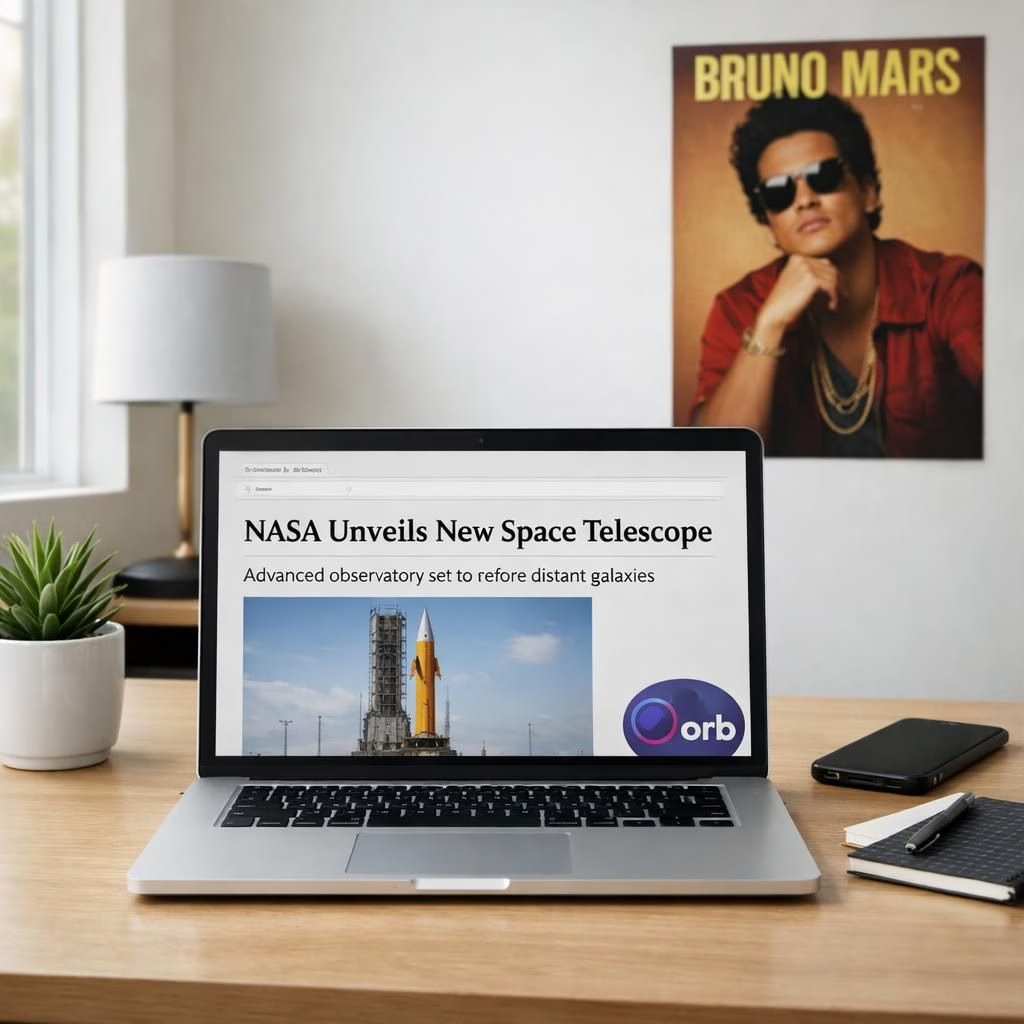
In 2026, Orb, the audacious AI venture steered by Sam Altman, floated a Bruno Mars partnership that never existed in public records. The promo blast sounded glossy, confident, and oddly shareable. Orb leaned on celebrity cachet to spark curiosity, and Bruno Mars—a star who guards his brand fiercely—stayed quiet while the chatter grew. The effect was simple: spark interest, drive clicks, and test the market’s appetite for big-name tech ties. The WIRED piece captured the momentum, then traced the breadcrumbs back to reality, where no signed agreement or press release appeared. The core truth is clear: this was a marketing nudge, not a real partnership. The episode invites readers to pause before they retweet, like, or invest in a story that travels faster than its facts.
Orb promo spark: from pitch to headlines
Orb deployed a narrative that felt credible to casual readers, yet it relied on a strategic blur between fiction and promo. The Orb message read as if a formal collaboration could be announced any moment, but the underlying documents never surfaced. The risk here is not only hype misalignment; it is a test of media literacy in a landscape full of AI-generated warmth and glossy dashboards. If you scanned the official channels, you would see cautious language about partnerships; if you scanned social feeds, you saw a sprint of speculation. The Orb team likely measured reaction, not contract terms, and that reaction proved powerful enough to trend. The Bravo of this tale is not a signed deal; it is the speed of perception, the way Orb and the public spiraled toward a narrative before the ink dried.
Bruno Mars and the celebrity partnership trap
Bruno Mars exists in a different orbit than most tech pitches. He has built a brand on artistry and control, not on spontaneous crossovers with tech startups. When a story claims a Bruno Mars partnership, skeptics ask for receipts, not rumors. The absence of official confirmation becomes a feature of the debate, not a flaw in the person involved. The lesson for brands is blunt: celebrity associations can amplify reach, but they magnify risk just as quickly. A non-existent partnership can still generate press, social chatter, and a measurable shift in audience expectations. The Bruno Mars angle exposes how easily fans, followers, and analysts can be drawn into a storyline that feels persuasive, even when there is no contract behind it. The result is a reminder that fame does not equal endorsement, and speed does not equal accuracy.
How to verify partnerships in 2026: practical tips
- First, check official channels. Look for press releases from the parties involved, not third-party posts.
- Second, verify with primary sources such as corporate filings, investor decks, or consented interviews.
- Third, watch for timing: if a story launches during a chaotic news cycle or a high-velocity promo push, suspicion is warranted.
- Fourth, consider the ecosystem: a tech startup seeking credibility, a Bruno Mars-linked narrative, and a media outlet chasing a hot topic can align briefly before reality catches up.
- Fifth, cross-check with multiple reputable outlets. If only one source amplifies a claim, treat it as provisional. Orb’s recent episode demonstrates the value of careful verification and a preference for clarity over cleverness. When a claim involves Bruno Mars, the bar for evidence rises even higher because both names carry weight and expectation.
Beyond the immediate hoax, this episode highlights how modern marketing blends storytelling with data analytics. Orb likely used audience sentiment as a proxy for potential interest, testing messaging across regions and platforms. The Bruno Mars component adds a layer of aspirational credibility that can tilt perception toward belief. Yet the longer you observe the pattern, the more obvious it becomes that the partnership was unvalidated theater rather than a real alliance. The lesson for readers is simple: embrace curiosity, but demand corroboration before you share.
From a strategic standpoint, the Orb misstep serves as a teaching moment about risk management in communications. When a project stirs up a sensation around a high-profile partner like Bruno Mars, the stakes rise quickly. A non-existent partnership can still affect stock imagery, influencer outreach, and consumer expectations. It can also prompt a response from the party named in the rumor, which in turn fuels further coverage. The cycle is fast, frenetic, and fascinating to watch from a distance. For teams building trust, the takeaway is to anchor messaging in verifiable facts and to illustrate potential partnerships with sample details that are clearly labeled as hypothetical if they are, in fact, hypothetical.
The bottom line is that the Orb episode with Bruno Mars did not yield a real collaboration. It did, however, yield a wealth of insights for marketers, journalists, and readers who want to separate signal from noise. It shows how a spark can quickly ignite a flame of speculation, even when the wood is not dry. It also demonstrates that celebrity associations can push a narrative into the mainstream faster than a press briefing can catch up. And in a 2026 media environment where AI, marketing, and celebrity culture collide, the most responsible path remains cautious optimism balanced by rigorous verification.
We invite readers to weigh in with their thoughts on how to navigate these waters. Do you think Bruno Mars tie was a clever test, a miscalculation, or something else entirely? Share your insights in the comments, and let’s dissect what happened together.
Original reporting by WIRED: WIRED — thank you for the thoughtful analysis and the foundational material that sparked this discussion.