

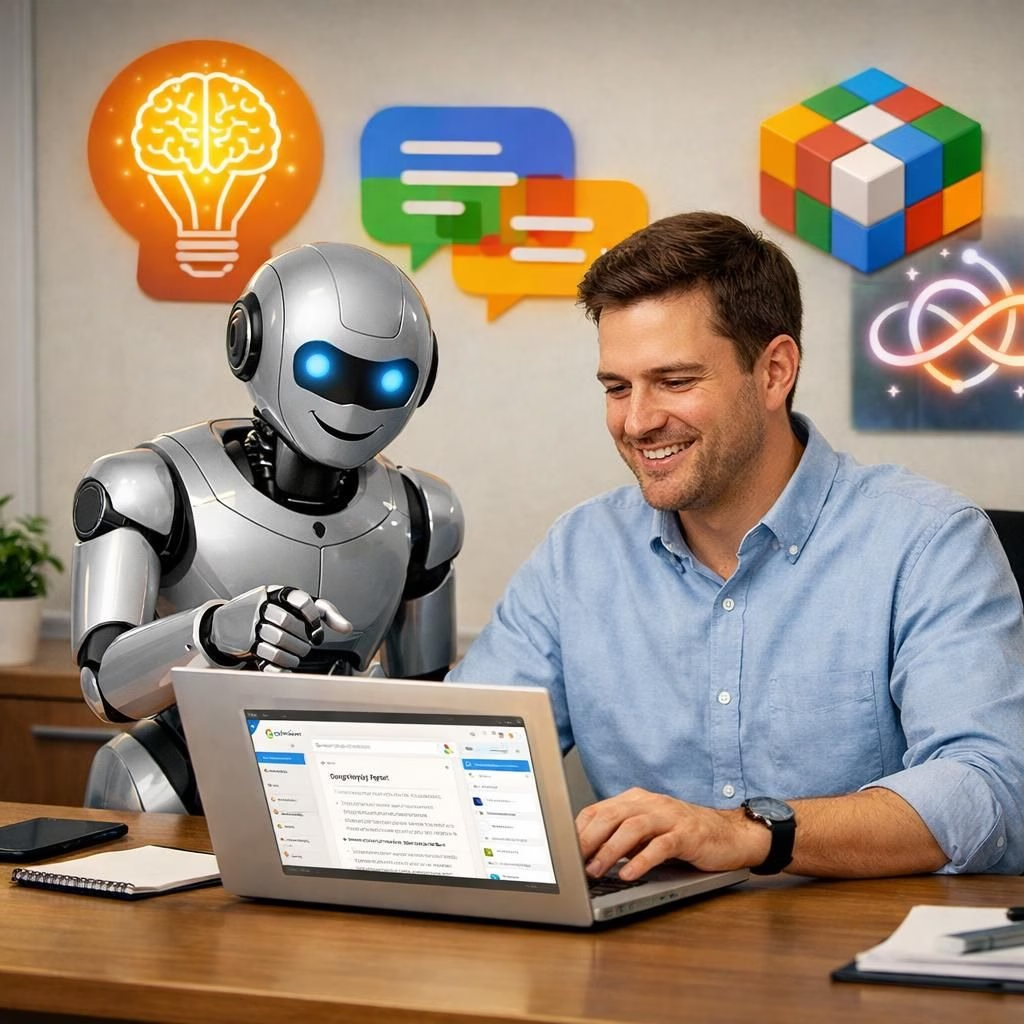
In 2026, AI takes a central role in Google Workspace. Familiar tools become a stage for an intern who helps teams move from idea to action. The promise is simple: an AI coworker who can draft notes, surface decisions, and nudge people toward the right tasks—often before humans realize they needed a nudge.
Tech outlets chase this shift with curiosity and humor. TechCrunch framed AI stepping into the office, while Inc. highlighted the AI co-worker angle. Other outlets like 9to5Google, The Verge, and Android Police describe practical features. The trend is not science fiction; it is a practical push to trim busywork and keep meetings moving. The broader story is that AI is being invited to participate, not merely observe, and the Workspace is being adjusted to make that participation feel natural rather than awkward.
AI in the Workspace: The new office intern
At the core, AI notes, live transcripts, and action-item generation form the backbone. In Meet, the AI can take notes, freeing human note takers for creative pursuits. In Workspace, it can tag projects and surface next steps. Tech outlets emphasize features like Take Notes for me and AI-driven project tagging. The trend is clear: AI becomes a collaborator, not a ruthless boss. Workspace serves as the platform where this collaboration happens.
Third, AI acts as a thinking partner. It can propose meeting agendas, hint at owners, and surface tasks that might otherwise slip through the cracks. This is not a petty automaton; it is a productivity companion that helps teams stay aligned with less friction. The goal is to reduce the routine grind so people can focus on real problem solving within Workspace, while a helpful AI handles the mundane by listening more than it talks.
For those wondering about privacy and control, the plan is not to replace humans but to augment them. The AI acts as an assistant that lives inside the tools you already use, not as a rogue spreadsheet with ambitions. It surfaces decisions and keeps track of action items so nothing slips through the cracks. The practical result is a cleaner, more navigable Workspace where AI sits in the background taking notes while humans make the calls that matter.
AI and Workspace synergy: A smarter meeting companion
Meetings become leaner and sharper. The AI offers live summaries, flags decisions, and nudges owners toward accountability. It can surface decisions from long threads, draft follow-up emails, and link notes to Drive projects. In-person sessions are captured too, not just chat transcripts. The aim is to turn scattered notes into a coherent story by the end of the session, all within the familiar cadence of Workspace.
Behind the shine, there are caveats. Teams must opt in, adjust privacy settings, and set guardrails to avoid information overload. The AI should respect boundaries and not replace human judgment. The Drive integration helps teams connect ideas to files, while calendar alerts keep timing honest. The end result is a smoother workflow rather than a machine run amok. In short, this is about amplifying human capability, not diminishing it.
Practical tips for teams include designating a few tasks for the AI, such as minute taking or agenda suggestions, and keeping a human in the loop for decisions and accountability. Start with a small pilot group, measure time saved, and adjust. Expect a learning curve, but also expect clearer notes and decisions that travel with the team from meeting to project plan. It is still early days, but the signal is loud: AI can remove repetition while human judgment keeps strategy sharp.
Beyond productivity, this shift invites a broader rethink of collaboration. If the AI can draft notes and propose owners, we still need human warmth to ask the right questions and read the room. The blend of Workspace and human insight keeps Workspace dynamic and organized, a balance that matters in 2026. The best teams will treat the AI as a co-author rather than a silent scribe who never speaks up when needed.
As AI makes inroads into everyday work, teams can choose how much help they want from their digital intern. The key is to use AI to amplify human judgment, not replace it. AI and Workspace can be a powerful duet when used with intention, letting the human lead and the machine handle the echoing clarity of notes, tasks, and reminders.
Special thanks to TechCrunch for the original reporting; you can read the forward-looking coverage at the source linked below. Original article: Google updates Workspace to make AI your new office intern.
References
- Google updates Workspace to make AI your new office intern
- The Verge coverage on AI in the workplace
- Inc. on the AI coworker concept