

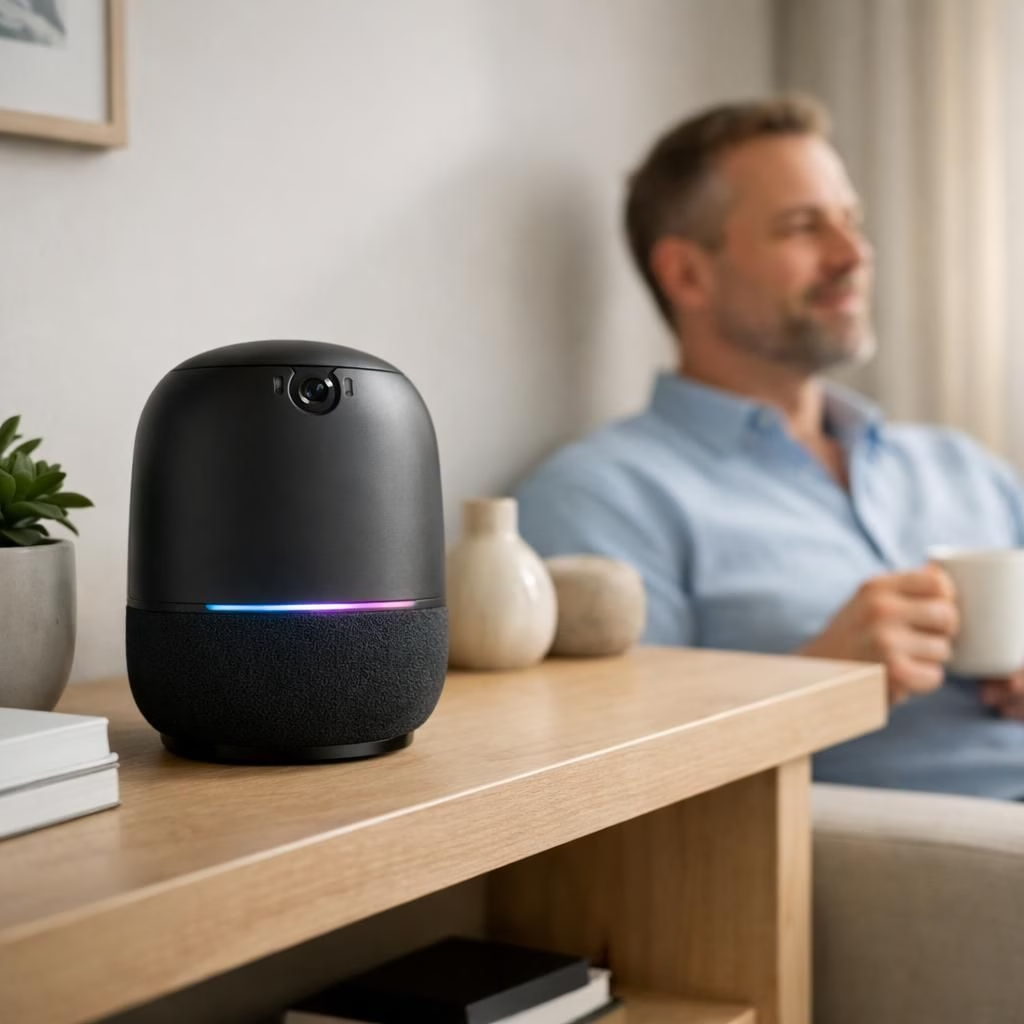
OpenAI has a knack for turning a sprint into a stroll, and 2026 is teaching us to smile while we sprint. The tech chatter hints at a bold pivot: a hardware push from OpenAI — designed by Sir Jony Ive, the design legend whose fingerprints are famous for turning good ideas into beautiful shapes. The project seems to be less a mythical unicorn and more a pragmatic bridge between software chops and tangible gear. In the language of the tag-set, AI devices that could live in living rooms, not just in code snippets. Financing remains a real-time constraint, but the vibe is hopeful: ship something useful, not just a press release. If the whispers are anywhere close to accurate, the first product is a smart speaker with an in‑built facial recognition camera, priced between $200 and $300, with a launch window no earlier than February 2027. The camera could enable familiar users to sign in or even purchase simple items by recognizing a face, though the exact flow will depend on milestones and demos that are still under wraps. In short, OpenAI appears determined to prove that hardware and software can dance together, rather than merely share the same stage.
OpenAI AI devices roadmap: a playful yet practical forecast
The Information’s sketchbook reportedly includes a few more pieces in the AI devices puzzle.
Beyond the smart speaker, there are plans for AI glasses—rumored to arrive in mass production only in 2028—and an AI-powered smart lamp to brighten up one’s evening routines. There’s even chatter about smart earbuds, though nothing is confirmed yet. The common thread? A hardware family that looks to learn from you, adapt to your rhythms, and nudge you toward convenient actions. The aim is not to create a gadget graveyard but to assemble a coordinated ecosystem where devices share context and help you stay on track — all while staying within the bounds of what a cautious, privacy-aware company can responsibly ship.
The central concept goes beyond a clever speaker with a camera. Imagine a device that quietly observes your routines and offers gentle, helpful nudges. If you stayed up late before a big meeting, it might suggest turning in, or if your coffee habit veers into overdrive, it might propose a calmer morning. This is not a science‑fiction dream; it’s a product direction that blends OpenAI’s software smarts with hardware that can perceive real-world use. The challenge, of course, is balancing usefulness with trust. The same camera that helps you sign in or pay for a cup of coffee could raise privacy questions. The company’s ad-supported model adds a twist: could the nudges come with an advertising relevance? The market’s reaction will hinge on crisp privacy controls, transparent data handling, and a clear value exchange for end users.
Privacy sits at the center of the conversation about AI devices. Apple has long championed privacy features as a core brand pillar, setting a high bar for integration of sensing tech with user consent. OpenAI, by contrast, is navigating a different business model that includes advertising in some strategies. That tension invites a careful balancing act: you want devices that are genuinely helpful without feeling like a perpetual data exchange. In the 2026–2027 window, expectations are for clear opt‑in choices, robust on-device processing where possible, and transparent explanations of how facial recognition data is stored and used. It’s not about scaring users away; it’s about building trust so people feel comfortable inviting AI devices into private spaces. The outcome may hinge on consent flows that feel natural, not punitive, and on privacy features that don’t require a graduate degree to configure.
From a consumer perspective, a well‑designed AI devices ecosystem could still respect boundaries while delivering real value. For instance, a camera-enabled device could recognize household members to tailor responses or secure access to shared appliances. When done thoughtfully, these features become helpful assistants rather than intrusive monitors. The tension between practical usefulness and privacy risk creates a fantastic product design challenge: make nudges helpful, not creepy; make recognition secure, not disorienting; and remember that trust is earned with consistent, user-friendly privacy controls. OpenAI’s journey here is as much about playing the long game as it is about a single, flashy launch. A strong product family with sensible defaults could turn a cautious forecast into a durable revenue stream, provided the devices genuinely improve daily routines without demanding unnecessary trade-offs.
What this OpenAI journey could mean for AI devices and users
Looking toward 2027 and beyond, the hardware roadmap appears to aim for a cohesive, user‑centric experience rather than a parade of one-off gadgets. If the smart speaker with a camera hits the market responsibly, it could set a tone for future AI devices: practical, user-controlled, and mindful of privacy. The early‑2027 launch would give developers a stable platform to refine interactions, and the 2028‑onward introduction of AI glasses and a smart lamp could extend the same design ethos across contexts—home, office, and even travel. Competition will be stiff; Apple’s rumored smart pin and other players will push the space toward more integrated, privacy‑preserving experiences. The big takeaway for families and early adopters is: this is less about a single gadget and more about a carefully curated ecosystem that respects user preferences while offering daily conveniences. If OpenAI nails the balance between helpful nudges and privacy, the company could find a path to profitability without compromising trust—an outcome that would feel like a win for both users and shareholders.
All of this reads like a carefully staged but optimistic roadmap. The strategy depends on execution, design quality, and a transparent approach to data. It also benefits from a willingness to pause and recalibrate if users push back on any of the more sensitive features. The heart of the story remains intact: OpenAI aspires to extend its software prowess into tangible devices that can observe, learn, and assist—while navigating the realities of funding and the fragile landscape of consumer privacy. If the team can deliver a product that is genuinely useful, well‑designed, and respectful of privacy, the path to profitability could emerge not as a sprint but as a steady, sustainable march.
Readers, your perspective matters. How do you feel about the idea of AI devices that observe habits and gently nudge you toward healthier routines? Do you trust a facial recognition camera in your living room if it helps you get better at bedtime or stay on track for meetings? What features would reassure you most about privacy and control? Share your thoughts in the comments so we can discuss how OpenAI’s hardware ambitions might shape daily life in 2026 and beyond.
Original reporting and details credited to The Information. Thank you to The Information for the original reporting and insights that inspired this hopeful forecast on OpenAI’s hardware horizon: The Information – OpenAI hardware roadmap.
Practical steps for evaluating OpenAI AI devices
- Assess how facial recognition would be used: sign-in, payments, or personalized responses; ensure opt-in controls.
- Check privacy settings: on-device processing, data retention, and clear data deletion.
- Review consent flows: how to disable or limit recognition features and who can access shared devices.
- Consider the ecosystem: interoperability with other devices and apps, and how nudges align with daily routines.
FAQ
- Q: Are AI devices safe to use in private spaces? A: It depends on data handling, user consent, and privacy controls; look for clear opt-ins and on-device processing where possible.
- Q: Will OpenAI’s hardware be ad-supported? A: The company has hinted at ads in some strategies; expect a strong emphasis on user value and privacy protections if ads are included.
- Q: When would these devices launch? A: The Information suggests a 2027 timeline for a smart speaker with a camera, with other hardware rolling out through 2028.
In short, OpenAI’s hardware ambitions blend software smarts with real-world devices, aiming to deliver value while guarding privacy. If you want to stay updated on OpenAI’s hardware horizon, consider following official channels and privacy-focused product reviews as they emerge.