

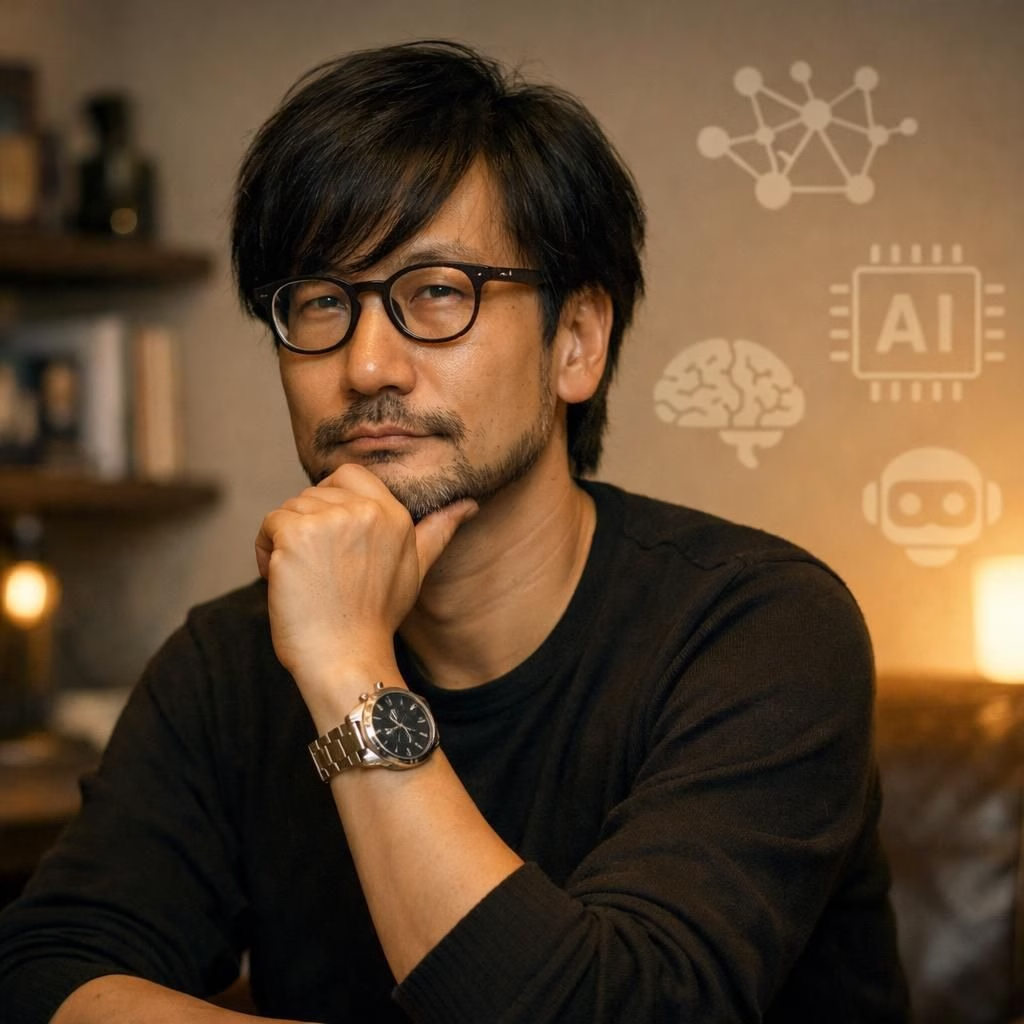
In 2026, the game designer Kojima delivered a sunny pivot on AI. He says he’s no longer interested in AI as a shiny talisman for creativity. This isn’t a retreat from smart machines; it’s a deliberate pivot toward human storytelling. The message lands with a wink: it’s possible to admire artificial intelligence without letting it drive every decision. Kojima reminds us that a great game begins with a voice, not a protocol. When the creator speaks first, players hear a personality before a processor. And yes, the irony is that a man famous for intricate plots and wild concepts is teaching moderation to a culture that loves automation.
Over at Kotaku, the coverage frames Kojima’s stance as a careful recalibration rather than a ban on new tools. He isn’t hostile to innovation; he wants smarter boundaries. He argues AI can assist with world-building, data analysis, and accessibility, but should not overshadow the core craft—character, pacing, and surprise. The interview (as summarized) feels like a manifesto for authorship in an era of algorithms. It invites fans to ask what we owe to the human touch versus the machine’s memory.
His stance also speaks to a wider debate in game culture. Fans often celebrate AI as a partner in design, yet the risk is a chorus of similar islands in a sea of generic quests. Kojima, with his trademark humor, invites players to critique quickly, celebrate deeply, and keep curiosity alive. The principle here is not anti-technology; it’s pro-distinction. In practical terms this could mean more handcrafted scenes, experimental pacing, and surprise that cannot be precomputed.
AI and the Creative Path: Kojima Reflects
When Kojima talks about the mid-2020s reality, he eases concerns while keeping doors open. He suggests that AI should do repetitive tasks and offer inspiration rather than replace the designer’s instincts. In practice this means fewer generic NPCs, more bespoke moments, and a narrative approach that tests the player’s curiosity. The takeaway isn’t fear; it’s craft-forward optimism.
AI can store countless permutations, but art demands risk. One glitch can become a memory; a single character line can carry a theme. The best moments in games come from tension between automation and intention. The audience tastes authenticity when the designer listens as much as they speak. Thus, in 2026, interactive media favors authors who curate tools rather than surrender to them.
Kojima on AI: Ethics, Art, and Audience
Kojima frames AI as a tool with moral weight. It can accelerate production but also hazard authenticity if misused. He urges studios to safeguard human oversight, to preserve surprise, humor, and risk-taking. For players, that means games that reward exploration and interpretation, not just speed-runs through chessboard logic. The conversation in 2026 frames a future where technology serves story, not the other way around.
He notes that AI can lower barriers by localizing content or providing adaptive help to players. Yet accessibility should enhance agency, not erase surprise. The ethics discussion goes beyond code to ownership, consent for machine-generated content, and transparency about AI involvement in production. In short, creative labor remains valuable, and the best studios will honor editors, writers, and composers as much as programmers.
So what does this all mean for fans and developers? It means a reminder to stay curious, to celebrate innovation while defending the messy beauty of human control. It means we can enjoy smarter tools without surrendering the messy joy of making mistakes and learning from them. It means that the best games will blend algorithmic insight with reckless imagination, the kind of mashup Kojima has always thrived on.
Have thoughts on this stance? Share them in the comments below and join the discussion.
Original article: Kotaku — Thank you to Kotaku for the original material: https://kotaku.com/hideo-kojima-ai-not-interested
Image attribution note: This post includes a prompt for a simple, realistic image intended for DALL·E 3 generation.
Practical perspectives for creators
- Use AI to handle repetitive tasks (localization, QA checks, data organization) so designers can focus on character and pacing.
- Craft bespoke moments—handwritten dialogue beats and set-piece scenes that surprise players beyond algorithmic expectations.
- Document ethical boundaries for AI involvement, including transparency with players about machine-generated content.
FAQ
- What does this mean for AI in game design? It suggests AI is a support tool rather than a replacement for human storytelling and direction.
- Will games become less ambitious? Not necessarily—ambition may shift toward more distinct, author-driven experiences with smarter tools aiding production.
- How should studios handle ethics? With clear oversight, consent for generated content, and openness about where AI contributes to the work.
Takeaway
For fans and developers alike, the message is to balance curiosity with craft, embracing smarter tools while preserving the messy, delightful risk of human-led storytelling. The goal is experiences that feel personal, not pre-programmed.