

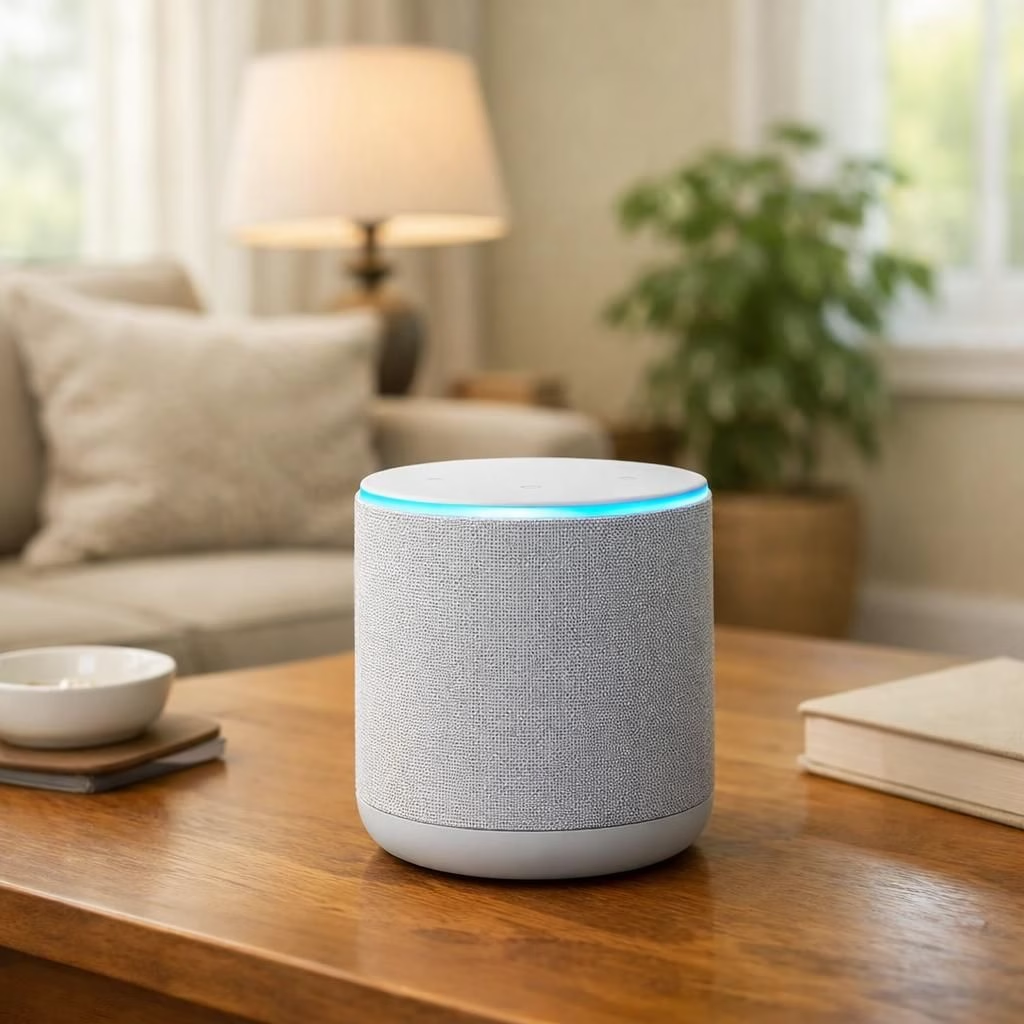
OpenAI hardware and AI home devices have captured the imagination of gadget watchers, and this piece treats the chatter as a curious but ultimately useful forecast. This OpenAI hardware push could redefine how we interact with connected living spaces. The coming lineup centers on a smart speaker that talks back kindly, a smart lamp that glows with mood, and maybe AI glasses that finally peek from the shadows of science fiction. Expect the first product to surface in early 2027, with 2026 serving as the year of blueprint doodles and optimistic post-its. The intent is simple: OpenAI hardware could become a familiar presence in your living room, while AI home devices promise a future where your house pitches in without stealing the show.
OpenAI hardware in the 2026-27 rumor stream
Inside the rumor mill, Jony Ive has teamed with OpenAI in a partnership that sounds more like a design studio romance than a corporate leak. The Information sketches a prototype that marries restraint with usefulness: a compact speaker that includes a camera and learns about who is around. The device would use facial recognition in a Face ID-like fashion to tailor interactions and could facilitate purchases through voice or gaze. The goal is to anticipate needs, nudging you toward an earlier bedtime or a calmer morning routine.
AI home devices and the privacy puzzle
Yes, there are privacy questions. OpenAI emphasizes opt-in features and transparent controls. You can turn off the camera, limit what data is saved to the cloud, and decide how much the device should observe versus help. The design calculus aims to be friendly: the camera watches without watching you all the time, and any recommendations stay on device when possible. The practical takeaway is that AI home devices must earn trust by being useful while respecting boundaries. The balance matters: a device that nudges you gently is better than one that yells from the couch every hour.
OpenAI hardware meets Apple’s home hub rival
Apple isn’t sitting on the sidelines. The company reportedly wants a home hub with an integrated camera and speaker for video calls and home control, plus deep Siri integration. The two camps share a goal: a peaceful yet active participant device that doesn’t bark at you from every corner. Ive’s LoveFrom design group provides the visual intuition, while OpenAI engineers tackle the actual experience. Some tension exists, but the vibe remains playful and professional as both teams chase a home companion that feels inevitable rather than invasive.
Pricing, launch windows, and the broader hardware arc
Pricing is pitched at $200–$300 for the initial speaker, with a launch penciled in for February 2027 at the earliest. Beyond the speaker, there are talks of a smart lamp and smart glasses, but those products might slip to 2028 or later. Outside of the speaker, hardware progress is still in early stages, and cancellations are a real possibility. Yet the optimism persists: if the planning sticks, we could see a friendly, not-too-obtrusive helper in every home, one that respects your routines while offering a dash of novelty when you need it. We’re watching this OpenAI hardware push for signs of how the market adapts to more capable, voice-led assistants.
What this means for users and the long arc of AI at home
From a user perspective, the real draw is a device that feels like a quiet partner rather than an extra person in your space. The peaceful approach promises to avoid loud interactions and busy UI tangents. It aims for practical memory, thoughtful suggestions, and a demeanor that makes daily tasks feel a touch easier rather than interrupted. If done well, AI home devices could become trusted helpers that move from novelty to everyday usefulness without turning your home into a showroom for gadgetry.
The OpenAI hardware concept aims to blend charm with capability, helping with routines rather than dominating space. It should feel welcoming and dependable, a fixture you hardly notice until you need it.
We can also imagine a future where the hardware push nudges contented tech usage forward: smarter routines, better energy management, and a living room that knows when you’re hosting guests and adapts the mood lighting accordingly. The path is uncertain, but the emphasis on a peaceful, active participant—one that helps without nagging—keeps the conversation constructive rather than chaotic.
As we watch these developments, the most important takeaway is to stay informed and curious. The collaboration between OpenAI and designers like Ive signals a blend of science-forward ambition with a human-centered touch. If the devices arrive, they should feel like a natural upgrade to daily life, not a forced upgrade to your privacy and attention.
We’d love to hear your thoughts. Do you want a camera-equipped helper in your living room, or would you prefer a camera-free zone where your data stays private and local? How would you design a device that supports your morning routine without turning your home into a showroom? Share your perspective in the comments below and help shape the conversation around AI at home.
Original article: The Information — thank you for the original reporting and for sparking this thoughtful discussion.
Practical scenarios: How it might fit your day
- Morning routine: AI home devices adjust lighting, read the day’s schedule, and wake you with a gentle sound.
- Hosting guests: mood lighting, reminders, and collaborative video calls with remote attendees using AI home devices.
- Energy management: monitor energy use and suggest optimizations across devices.
FAQ
- What is OpenAI hardware?
- A line of devices developed with OpenAI that integrate AI capabilities for everyday tasks around the home.
- Will the speaker include a camera?
- Reports indicate a camera is part of the initial design, with privacy controls and opt-out options.
- When is the launch?
- The first product could arrive in early 2027, with other hardware rolling out in later years as plans evolve.
Conclusion: What to watch for
OpenAI’s hardware push remains rumor-forward, but it signals a trend toward more capable, user-friendly home AI. If the devices arrive, they could deliver practical help without intruding on privacy—provided that controls are clear and robust.
External links
References
Original source: MacRumors: Jony Ive, OpenAI smart speaker 2027