

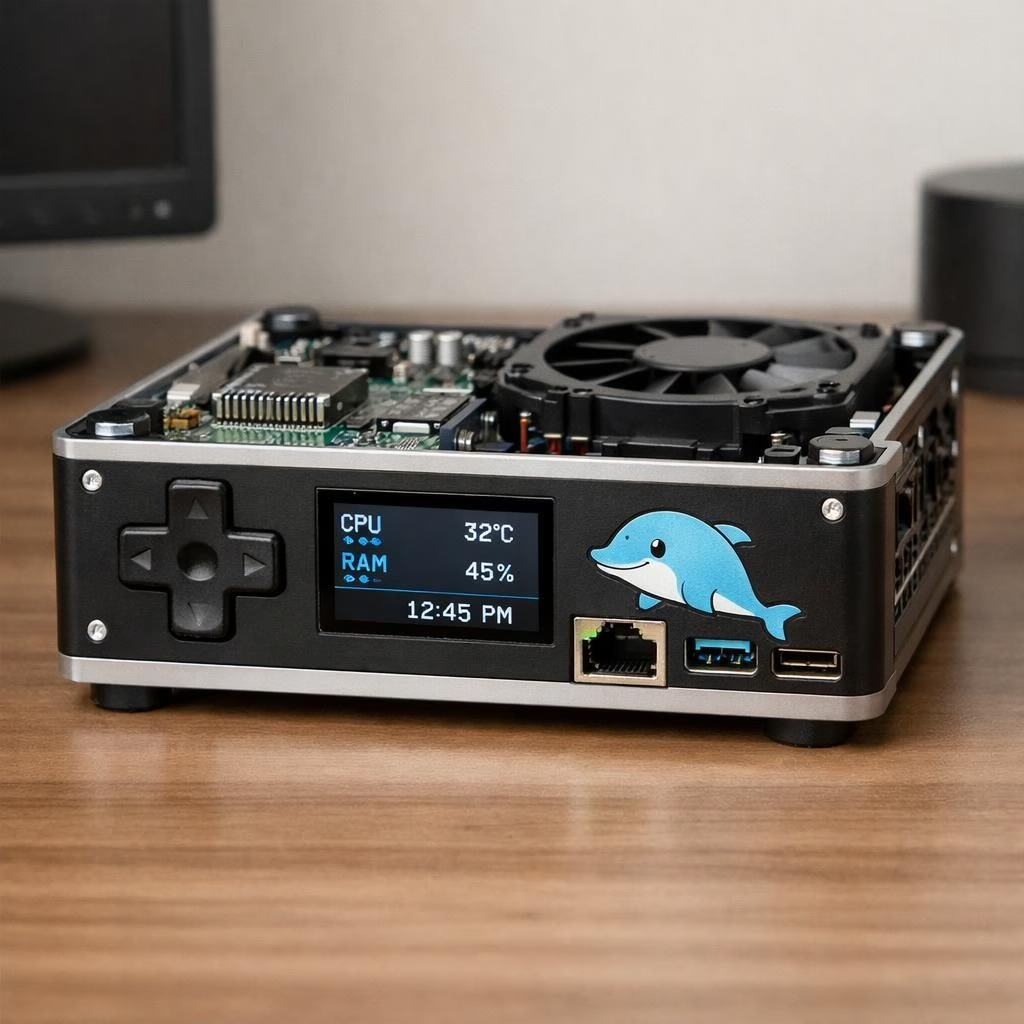
In 2026, Flipper unveils Flipper One as a true network multitool. It is a tiny PC built to tackle usability gaps in DIY Linux setups. The goal is simple: a versatile, customizable platform you actually need. Flipper One runs on a Rockchip RK3576 CPU, delivering solid multi-core performance for network tasks. The dolphin mascot signals a friendly quest to make learning and tinkering more approachable. This team gave us Flipper Zero, a memorable symbol of hardware curiosity. The plan is practical: replace several gadgets with one device you actually reach for. Kickstarter is planned for later this year, with a target around 350 USD. Flipper One aims to balance openness with real-world usability.
network multitool Momentum with Flipper One Features
The core idea is simple: one board can replace several gadgets. The Flipper One aims to fix the one-cable power gripe and the need for a separate mouse. It uses a D-pad UI and programmable buttons so navigation feels tactile, not fiddly. The team is talking about a potential Flipper OS and an app store, inviting the community to contribute ideas and firmware. Open development has earned real fans who love tinkering and learning.
Flipper One as a True Network Multitool Platform
Hardware-wise, the RK3576 choice aims to beat the Raspberry Pi 5 in multi-core tasks while staying fair on single-core. The device targets networking and IP-based tasks, from travel routers to edge functions. It supports Wi-Fi 6E, Ethernet, and even 5G via an M.2 module or eSIM, plus a PCIe expansion slot for extra components. In size, it’s about the fist-and-a-half of a typical board—larger than a Flipper Zero, but compact enough to sit among routers and cables. The aim isn’t only speed; it’s a more intuitive interface that makes Linux feel personal, not vendor-locked.
Beyond the hype, usability is the focus. Flipper One envisions multi-user profiles to switch between roles—travel router, home TV box, or emergency desktop—without painful reconfig. Profiles could keep distinct networking rules, firewall policies, and screen layouts. The goal is to avoid “one setup fits all” and offer smoother, more personal modes. The hardware hints at resilience: a strong power profile, USB-C charging, and a path for hobbyists to open and tinker without barriers. In short, Flipper One is designed to be usable, not just interesting—a network multitool that respects your time and curiosity.
Kickstarter is on the horizon for Flipper One this year, with an ambitious target price around 350 USD. The final price will depend on backer support and manufacturing realities. The plan remains to offer an open hardware path with a community-driven OS. The team emphasizes this isn’t a fashion gadget but a platform to teach and enable. The balance between openness and thoughtful usability feels rare in today’s gadget world.
So far, Flipper’s development has thrived on transparency: the team shares process notes online, and fans weigh in with firmware ideas, UI sketches, and feature requests. The Flipper Zero remains a reference point—not as a clone but as a legacy of making open hardware approachable. Critics may point to RFID misuse; the answer is better guidance, clearer use cases, and safer defaults. If you’ve ever wanted a mini computer that acts like a Swiss Army knife for networks, this is the kind of product you cheer for—more than a gadget, a culture.
In 2026, the idea of an open, modular Linux device that fits into daily life feels like a real possibility. If you have opinions on whether a tiny PC can replace a router or a media streamer—or whether the D-pad UI sounds clunky or brilliant—share your thoughts in the comments. If you’re curious about the journey, watch the design process unfold as community feedback shapes iteration.
Special thanks to Gizmodo for the original coverage while we reframe the story for a broader audience. Original Gizmodo article here: Gizmodo coverage on Flipper One.
Why the network multitool idea matters
Modern devices often lock you into a single vendor or a one-size-fits-all UI. The network multitool approach promises real flexibility for small setups, making Linux feel personal again. The idea is to lower friction for tinkers who want to customize a compact PC for networking tasks.
For enthusiasts, the network multitool concept means more than a gadget—it’s a philosophy that invites hands-on experimentation in daily life.
External Resources
Practical scenarios for the network multitool
- Travel router: configure a secure shared network, VPN, and firewall rules for hotel Wi‑Fi or mobile hotspots with the Flipper One.
- Home edge box: run a lightweight media interface or local DNS/cache to speed up streaming and browsing using the Flipper One.
- On‑the‑go workstation: switch profiles for mobile coding or quick data tasks without rebooting with the Flipper One.
FAQ
- Q: When will Flipper One ship? A: The team plans a Kickstarter later this year; actual ship dates depend on backer funding and production.
- Q: Can it replace my router? A: It’s designed to function as a travel or home router and more, with flexible profiles.
- Q: Will it run Flipper OS? A: The project intends to support an open hardware path and a community-driven OS ecosystem.
- Q: Is it open hardware? A: Yes, openness is a core goal, balanced with practical usability.
So far, the launch strategy aims for around 350 USD, subject to backer support and manufacturing realities. The device is positioned as a platform for learning and experimentation, not a fashion gadget. The journey is ongoing, and community input is welcomed as iteration proceeds.