

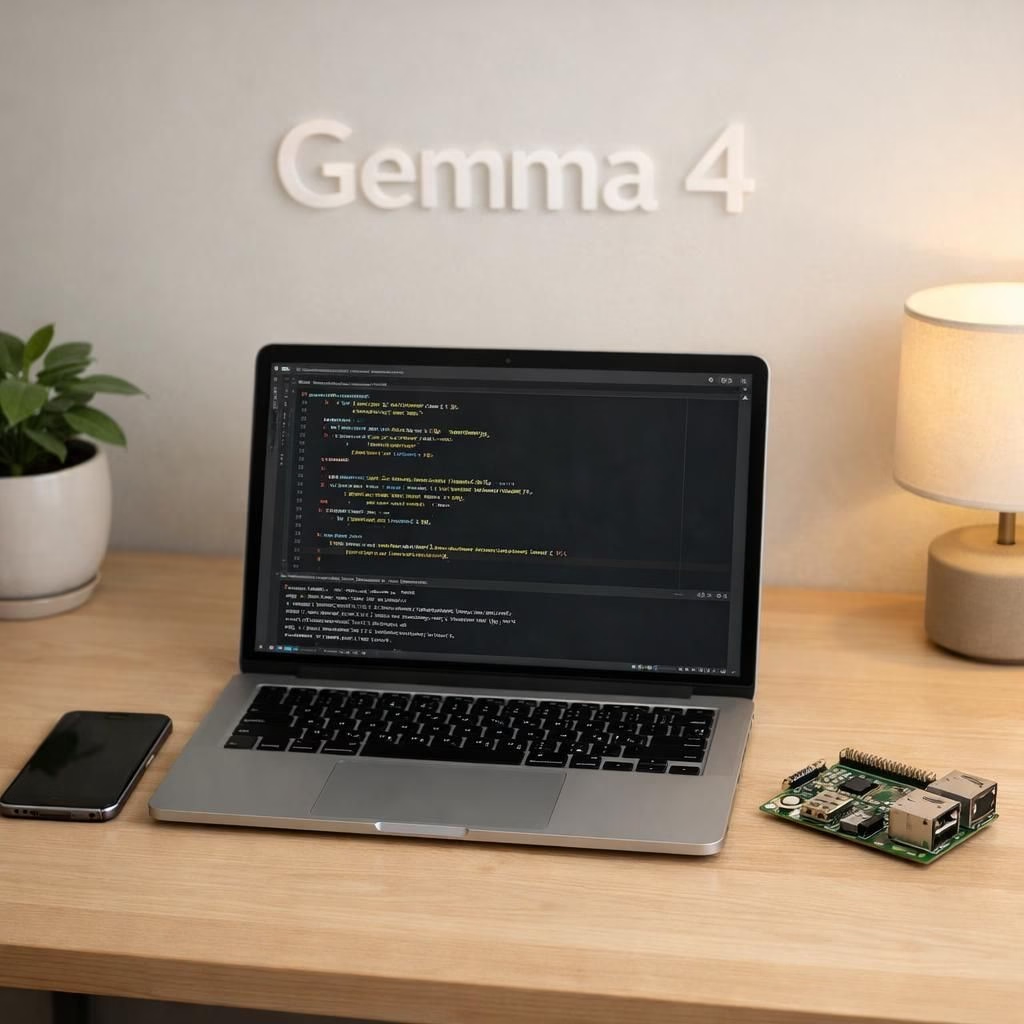
Gemma 4 marks Google’s latest push to bring frontier-grade AI to developers, from data-centre powerhouses to a phone in your pocket. With open models at its core, Gemma 4 promises a scalable future where ideas flow freely from laptop to pocket-sized gadget.
Gemma 4: open models go four sizes to fit every task
Google packages four models in four sizes, each designed to cover everything from mobile devices to high-powered developer machines. E2B (Effective 2 Billion parameters) is built for phones and IoT devices. E4B (Effective 4 Billion parameters) is tuned for edge and mobile use. 26B MoE balances latency and capability, serving as a mid-range powerhouse. 31B Dense is the flagship, currently ranking among the top open AI models on major benchmarks. The 31B claim is striking: some comparisons say it outperforms competitors many times its own size.
- E2B — Effective 2B parameters: ideal for phones and IoT.
- E4B — Effective 4B parameters: optimized for edge and mobile use.
- 26B MoE — a mid-range powerhouse balancing latency and capability.
- 31B Dense — the flagship, a strong general-purpose model.
In practice, this open models lineup demonstrates what’s possible for developers who want offline power, rigorous reasoning, and real-world usefulness.
Gemma 4 on devices: offline, private, and fast
The best thing about this release is the scale without sacrificing locality. These variants can run offline on everyday devices, including phones, Raspberry Pi boards, and Nvidia Jetson hardware. This means near-zero latency, better privacy, and less cloud dependency. The collaboration with Pixel, Qualcomm, and MediaTek helped tailor the chips for Android devices. The result is a practical AI that developers can drop into devices and apps without tripping over network calls or licensing hurdles. The lineup ensures you don’t have to choose between raw power and edge compatibility.
Whether you’re prototyping a mobile assistant, smart camera, or offline code editor, this family brings frontier-level AI closer to home. Gemma 4 offers a permissive Apache 2.0 license and a thriving ecosystem for remixing, optimizing, and shipping variants that fit tiny devices or thunderous desktops. The promise is clear: accessible, customizable AI for use cases and geographies worldwide.
Each size serves a purpose: E2B for phones and IoT, E4B for edge and mobile, 26B MoE as a balanced mid-range option, and 31B Dense as the general-purpose powerhouse.
The official statements emphasize a friendly licensing scheme and a commitment to enabling hands-on experimentation by developers worldwide. And yes, it’s designed to work offline, ensuring that your private code and data stay where they belong: on your machine.
To end on a practical note, the four-size lineup offers a spectrum of power and portability that fits most project budgets, timelines, and device constraints.
In short, this release makes AI neighborly: practical, capable, and useful across devices and developer environments.
In your own words: share your thoughts in the comments below.
Original article: Times of India – Google launches Gemma 4.
open models in practice: offline workflows
The open models approach makes it practical to develop tools that work without a cloud connection. For teams building offline cameras, private coding environments, or edge-only apps, Gemma 4 enables private inference and quick iteration. You can test ideas locally, adjust prompts, and ship updates without waiting for a data center round-trip.
FAQs about Gemma 4 and open models
- What licensing covers Gemma 4? It’s released under the Apache 2.0 license, encouraging experimentation and remixing while preserving user freedoms.
- Can Gemma 4 run entirely offline? Yes. Several sizes are designed to run without a live connection, on devices from phones to edge hardware.
- How many languages does Gemma 4 support? The model has native support across more than 140 languages, making it globally usable.
- Where can I find official information? Start with Google’s public AI channels and the Times of India feature linked in the references.