

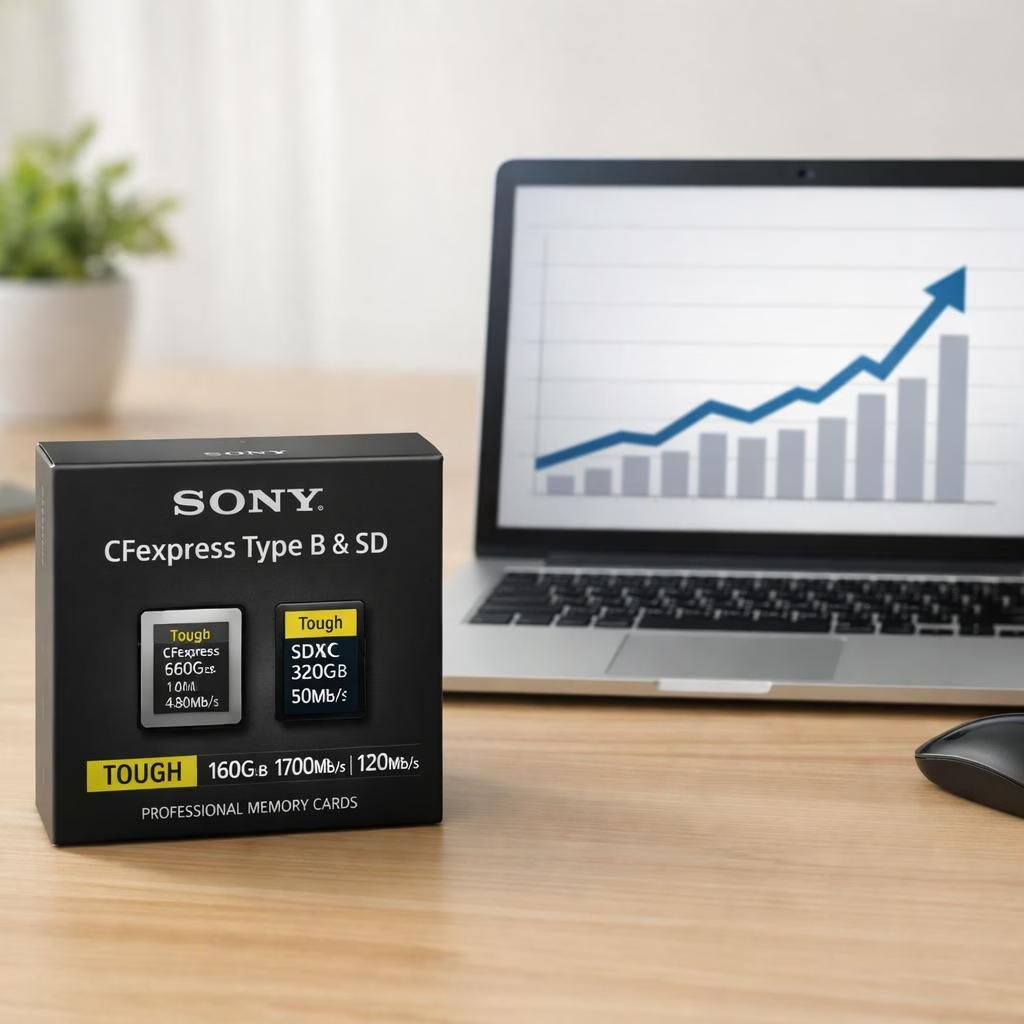
When memory cards meet AI demand, the result isn’t a sci‑fi nightmare but everyday reality. Sony has paused orders for almost its entire memory cards lineup—CFexpress Type A, Type B, and SD—after confirming that supply cannot keep pace with AI demand. The notice appeared on Sony’s Japanese site on March 27 and covers both authorized dealers and Sony Store customers. No end date is listed, which makes patience a required feature for photographers, videographers, and creators who rely on memory cards to capture high‑bitrate gigs. Sony promised to monitor the situation and to announce a resumption separately on the product information page when conditions improve. This isn’t a boutique issue; it’s a broad constraint affecting pros who use memory cards on the job and hobbyists who back up shoots on the fly. The core takeaway is that AI demand is a hardware appetite that gobbles NAND and DRAM, not just a software trend.
Memory cards and AI demand in 2026: the supply chain tightrope
The affected catalog reads like a who’s who of current memory cards strengths. Every CFexpress Type A card from 240GB to 1,920GB is gone. The 240GB and 480GB Type B cards are out of stock. And Sony’s SD line has been swept almost clean—from premium TOUGH-branded models down to budget V30‑rated 64GB memory cards. Only the 960GB CFexpress Type B and the SF‑UZ SD cards remain available. This is a blunt signal: if you need memory cards soon, plan ahead or consider alternatives now. The scale of the pullback underscored that this isn’t a narrow shortage; it’s a broad retreat across the entire memory cards category.
What this means in practice is a scramble for backups and cross‑checks. Shops warn customers to expect delays, and buyers may turn to alternate brands or form factors. For creators who rely on high‑speed transfers during shoots, the gap can disrupt schedules and risk missed opportunities.
Why is this happening? AI demand is the culprit, and the NAND flash and DRAM markets show it clearly. TrendForce’s Q1 2026 forecast shows DRAM contract prices jumping 90–95% quarter over quarter, with NAND flash up 55–60%. Memory cards prices have roughly tripled in recent months. A helium shortage tied to the war in Iran—a critical gas used in chipmaking—may be compounding the problem. The first big player to pause orders outright? Sony. The larger lesson is that this isn’t a one‑off pricing blip; it’s a systemic constraint that touches every tier of NAND production and every brand, including memory cards.
Memory cards for creators navigating AI demand realities
For shoppers, the pause means recalibrating expectations. The announcement came on the same day Sony confirmed PS5 price hikes of up to $100 worldwide. Existing US stock at retailers like B&H remains for now, but once it’s gone, it’s gone—no guaranteed restock date until production catches up. If you already own memory cards, use this time to audit backups, test your cards, and map out a safe workflow for future shoots. For creators who chase high‑capacity memory cards, the situation favors planning and resilience over impulse buying. The broader implication is simple: AI demand isn’t a distant concern; it’s a field of play shaping how we source and safeguard our essential equipment, including memory cards.
Practical tip: diversify brands where possible and maintain a small stash of backups tested regularly. Keep an eye on the information page that Sony uses to announce resumptions; timing matters as soon as suppliers signal relief. Review your post‑production workflow—consider faster transfers and more robust backups so you don’t hit a bottleneck when memory cards reappear. If you’re tempted to stock up now, balance purchases with actual usage and storage needs, avoiding overstock that ties up capital.
Tag A focus: memory cards for creators
Practical tip 2: run regular tests on devices and keep a simple inventory. This reduces the risk of failing memory cards mid‑shoot and helps you reallocate budget toward more reliable storage options. When the market recovers, you’ll be ready to move quickly without overspending.
Practical tips for riding out the AI demand crunch on memory cards
In the long run, the memory card ecosystem will adapt, prices could normalize, and supply will catch up with AI demand. The industry shows resilience, a hint of humor about our gadget‑driven world, but also a clear message: plan ahead. For photographers, videographers, and everyday users, learning to navigate this landscape can save time, money, and frustration when memory cards reappear in the market.
- Maintain a small, diverse stock of memory cards across brands to reduce risk of a single point of failure.
- Test backups regularly and keep coverage across capacities (e.g., 128GB, 256GB, 512GB) to fit different shoots.
- Invest in a portable data reader and fast USB‑C transfers to speed up on‑set data handling.
- Audit and simplify your post‑production workflow to prevent bottlenecks when re‑stock occurs.
Have thoughts or experiences to share about memory cards and AI demand? Please drop them in the comments below.
Source and gratitude: Thank you to the original article for material and context. You can read the original article here: Original article.
References
External resources
For additional context on the market dynamics driving NAND and DRAM, you can explore: Sony memory cards and TrendForce market forecast. You’ll also find broad tech coverage at Reuters Technology: Reuters technology.