

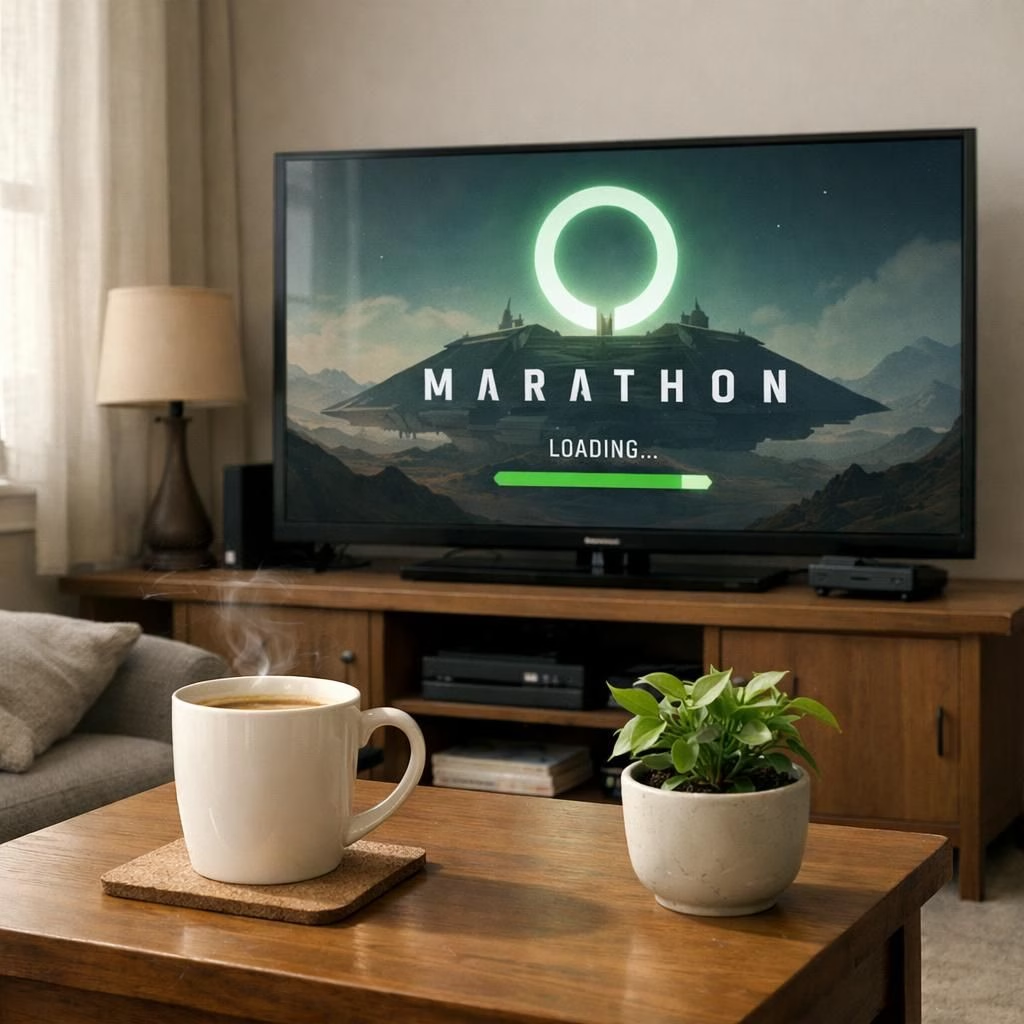
Welcome to a sunny, slightly sarcastic tour through Marathon and the chatter it sparked in 2026. The game lands with a thrill of anticipation, then a chorus of reviews settles into the living room like a cat in a sunbeam. Marathon isn’t just a launch trailer. It’s a test of reflex, strategy, and stamina. Marathon remains the star here, and the reviews reveal a spectrum: some cheer, some critique, and a few delightful surprises. Put together, they sketch a game that respects players’ time and curiosity.
Marathon Reviews: A Cheerful, Critical Look
Across Forbes, The Guardian, Game Informer, IGN, and Polygon, the mood ranges from impressed to intrigued. The headlines mostly praise Marathon’s pace, its clever level design, and the way it balances risk and reward. Forbes calls it a solid sprint with room to grow. The Guardian notes the ruthless yet fair combat tempo. Game Informer digs into the systems, and IGN gushes a bit about the weapon variety. Polygon draws a line to Armored Core 6, seeing Marathon as a cousin with its own quirks.
Two weeks later, the reviews scores arrived in a flurry, like a parade of clocks chiming at once. Some outlets sing the loudest, others whisper about balance and accessibility. The pattern is less a verdict and more a map: Marathon rewards patient play and punishing precision, but it doesn’t chase trends. It invites players to adapt, then to tell the world what they felt in their own tempo.
Why Marathon’s reviews Matter (for players and designers)
One clear thread in the reviews is the design philosophy. Marathon dares to deliver a clean, unforgiving time-to-kill cadence, yet it never uses that pain as a blunt instrument. IGN’s take on time-to-kill emphasizes speed, but also tact. It’s not about flashy kills alone; it’s about reading the map, choosing weapons, and surviving long enough to learn from each misstep. The Guardian and Polygon note that the game nods toward Armored Core 6 in certain rhythms, yet Marathon stands on its own legs with more restraint and character. The result is a shooter that feels sharp but welcoming, even when it bites back.
As players dive in, they describe Marathon as a marathon of skill rather than a sprint of instant gains. The pacing can be punishing, but it’s consistently fair. Many players appreciate the system mastery required, the way loadouts align with mission goals, and the small, thoughtful touches that show a designer’s hand. In short, the reviews converge on a simple truth: Marathon is ambitious, but it handles ambition with care, humor, and polish.
Marathon in 2026: A Genre Bending Review
Beyond the platform chatter, the game seems to thrive on curiosity. The reviews are not about a single metric but a tapestry of moments: a clever encounter, a tough choice, a near miss that sparks a new plan. If you enjoy speculative design with a pulse, Marathon will feel familiar yet fresh. The balance of challenge and reward is the thing critics keep returning to, with a smile and a nod to the effort behind the scenes.
As you read these impressions, you’ll notice a shared sentiment: Marathon offers a compelling ride with personality. It dares to be difficult in a friendly way, rewarding memory and creativity as much as reflex. If you’re curious about what the critics think, you’ll find the same thread running through the essays: respect for the craft, enthusiasm for experimentation, and a welcome dose of humor. And yes, the game earns its keep without selling its soul to trends.
Original material and attribution: a big thank you to Forbes for the initial Marathon review round-up. Read the full article here: Original Marathon review round-up on Forbes. Special thanks to The Guardian, Game Informer, IGN, and Polygon for their perspectives that fed this reflection.
Have thoughts to share about Marathon? Tell us in the comments below.
Marathon Practical Tips for Players
- Start with a flexible loadout that can adapt to mission goals and map rhythm.
- Spend time learning maps and enemy patterns to read engagements before committing.
- Track timing and resource use to avoid overextends and to learn from each run.