

In Marathon and Tag B‘s latest collaboration, players step into a corridor of graphic retro futurism where the action feels alive, not scripted. The live narrative unfolds with every mission, shifting as you play, like a chatty companion who happens to hold the replay key. Marathon isn’t just a new box to tick on a shelf of sci-fi shooters; it’s a playful nudge to the genre’s past and a promise for its future. The pairing is bold, but it knows its strengths. Marathon and Tag B bring energy, wit, and a little mischief to a category that sometimes takes itself too seriously.
Marathon: The Graphic Retro Futurism You Can Believe In
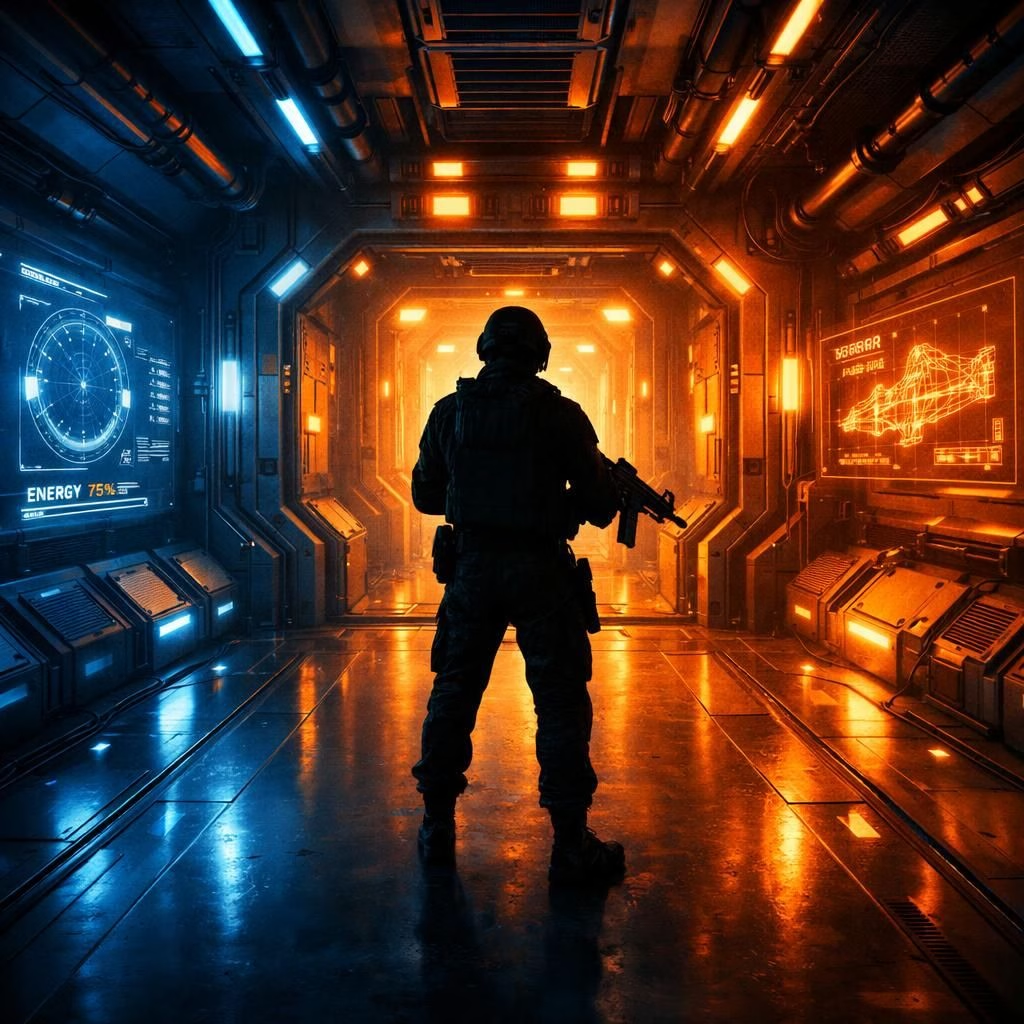
The aesthetic choice—graphic retro futurism—acts like a stylish lens on a familiar shooter mold. Neon accents slice through shadowed corridors, and UI elements glow with a deliberately chunky, almost arcade-like charm. It’s not merely decoration; it’s signaling. The design tells you this is a game that respects its roots while inviting you to push forward. The texture work, weathering on metal plates, and soft bloom create a tactile sense of space that makes you feel present rather than merely playing. Even when the action soars into hectic moments, the visuals keep a readable rhythm, so you don’t lose track of your plan. In short, Marathon looks confident because it treats its retro futurism as a tool, not a gimmick. Tag B‘s fingerprints are visible, but they never overwhelm the core idea: a sharp, scalable shooter world where style supports pace and tension.
Bungie-Designed Live Narrative Elevates Marathon
The live narrative mechanic is the heart of Marathon’s cleverness. Tag B shifts away from a fixed cutscene cadence and toward a dynamic storytelling approach. Your choices, your routes, and even your missteps can ripple forward, updating missions and altering outcomes in real time. It’s not a choose-your-own-adventure pasted into a shooter; it’s a living thread that adapts to your playstyle. Destiny’s influence is audible in the sense that the game treats narrative as an ongoing conversation rather than a one-off set piece. Seasons arrive with clear cadence, tasks evolve, and rewards feel meaningful because they’re tied to a shifting world you helped sculpt. The tension remains high because you never fully know what comes next, and that anticipation is precisely what keeps Marathon engaging for players who crave both story and sprinting reflexes. Every encounter feels earned, not scripted, because the narrative keeps pace with your decision points, not the other way around. Marathon and Tag B thus craft an experience that rewards curiosity and risk in equal measure.
Alongside the live narrative, the extraction shooter backbone remains intact. The core loop—locate, extract, survive—gets refined by the new flavor: smarter enemies, adaptive pacing, and moments that reward planning as much as quick reflexes. The game doesn’t pretend to be a pure rogue-lite or a pure story lane; it fuses both into a hybrid that feels fresh without losing its edge. The result is a sense of momentum where a failed run still teaches you something about the next one. It’s a credit to both teams that Marathon doesn’t lean on spectacle alone. It leans into behavior: how players learn, adapt, and chase the next objective with a sense of curiosity rather than mere adrenaline.
To deepen the replayability, the designers introduced thoughtful seasonal content and live events that avoid the trap of endless sameness. Seasons in Marathon aren’t cosmetic fluff; they subtly shift mission layouts, enemy roster, and loot pools. This keeps the loop feeling new, even after multiple sessions. The pacing remains healthy: a constant stream of small, meaningful upgrades with occasional big, memorable moments. It’s a balancing act that Tag B handles with a calm confidence that suggests a long-running relationship with this game space. And yes, the progression curve respects your time—no grind-for-grind’s sake, just purposefully placed incentives that reward exploration and risk-taking.
- Atmosphere and design: The retro futurism palette and tactile textures create a vivid world you want to explore.
- Narrative mechanics: Live narrative shifts with your decisions, making each run distinct.
- Seasonal cadence: Structured updates prevent stagnation and keep the game’s world alive.
From a technical standpoint, Marathon runs smoothly on current hardware, with stable frame rates, responsive controls, and minimal loading interruptions. The sound design deserves its own note: synth textures and careful layering sell the sense of being within a living, breathing facility rather than a static set piece. Performance and audio balance are well-tuned, contributing to the overall immersion. The game doesn’t pretend to be perfect, but it does deliver a consistently engaging experience that respects players’ time and curiosity. The collaboration between Marathon’s world-building and Tag B’s narrative instincts yields a product that feels purposeful rather than opportunistic, a rare blend in a field crowded with flashy but hollow demos.
As a reader-friendly takeaway, players should expect a game that invites experimentation. You’ll likely discover your preferred routes, weapon loadouts, and extraction strategies across multiple sessions. The design supports learning, not punishing you for mistakes. If you’re chasing a shooter with a strong narrative spine and a stout sense of style, Marathon offers a compelling case that the genre can be both cerebral and kinetic. The combination of graphic retro futurism and a responsive live narrative makes Marathon feel timeless in a year that constantly shuffles its trends.
Original material inspiration and sincere thanks to Push Square for the original article that sparked this thoughtful, humorous reflection. Additional insights from Space, PCMag, the official site, and Polygon contributed to a broader context for understanding Marathon’s ambition, and I’m grateful for their coverage as well.
We invite you to share your thoughts in the comments below. How does Marathon strike you—the aesthetic, the live narrative, or the seasonal cadence? Your experiences matter, and your perspective helps others decide whether to dive in.
Image credits and prompt summary attributions follow. Image prompt: A realistic, simple render of a sci-fi shooter corridor with retro-futuristic UI glow, a lone presenter silhouette, and cool blue-orange lighting, suitable for a mid-century modern sci-fi vibe. Image filename: Marathon_Bungie_2026_Shooter.jpg
Original material attribution and gratitude: Push Square — thank you for the foundational material that made this piece possible.
FAQ
-
What is the core concept of Marathon on PS5?
Marathon blends a live narrative with a classic extraction-shooter loop, delivering missions that adapt to your choices and your timing.
-
How does the live narrative affect pacing?
Rather than curated cutscenes, decisions reverberate across missions, changing routes, objectives, and rewards in real time.
-
Is Marathon worth it for story-driven shooter fans?
Yes—especially if you enjoy a kinetic blend of atmosphere, strategic planning, and evolving events that keep each run fresh.
Conclusion
Marathon presents a compelling case that the shooter genre can be both cerebral and kinetic when aided by a thoughtful live narrative and a confident retro aesthetic. The result is a title that invites experimentation, rewards curiosity, and keeps momentum through seasons and evolving missions. If you value a strong design language coupled with meaningful progression, Marathon offers a fresh, timely take on a familiar blueprint.