

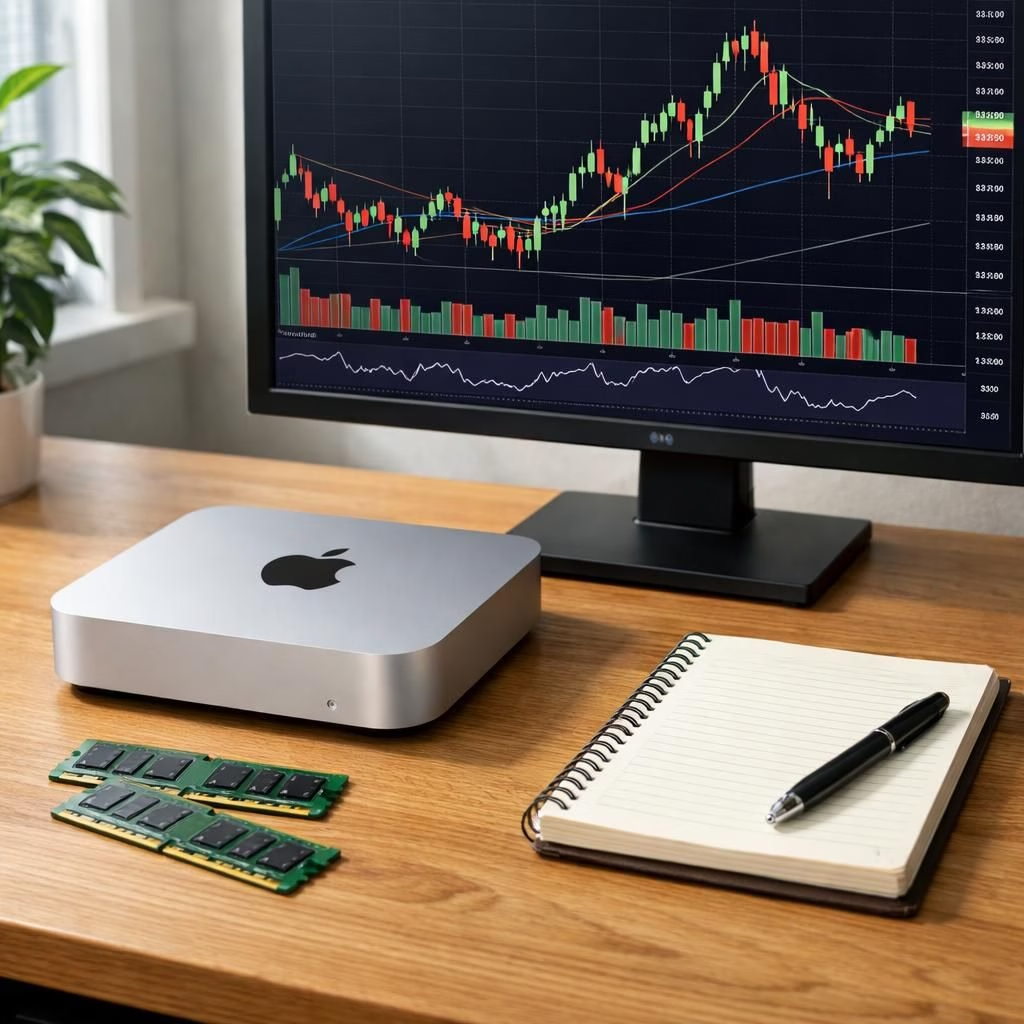
Mac mini and RAM headlines drive the 2026 chatter. The base model with M4, 256GB storage, and 16GB RAM is listed as temporarily unavailable in the online store. The news cycle moves fast, but the deeper story is about demand, supply quirks, and market timing. If you were hoping for a dramatic reset, you might still get a patient long view rather than a sudden lightning bolt. In the real world, people buy these machines for code, experiments, and tiny local AI projects, which keeps demand high even as the catalog shifts.
Mac mini stock reality in 2026
Across the year, the product line shows a mixed picture. Some configurations with the M4 chip and 256GB or more remain accessible, while others with larger storage are rarer. The base unit occasionally surfaces in stock in short bursts, and enthusiasts keep a close eye on the storefront. RAM availability also fluctuates with demand. In practice, this means a careful dance between price, pace, and patience. The market behaves like a quick coffee shop queue: always moving, sometimes slow, and peppered with online notices that flash ‘limited stock.’
RAM pricing and supply pressures in 2026
Memory costs have risen due to global demand. Suppliers push higher prices as AI, cloud services, and consumer devices compete for chips. Some buyers postpone upgrades, while others adjust configurations to fit budgets. A notable move we saw this year was the removal of the 512GB Mac Studio from the official store, a hint rather than a rumor. The upshot is clear: RAM costs rise, and the shopping cart tends to shrink, with wait times stretching enough to test anyone. Even higher storage configurations also face RAM constraints, as suppliers prioritize other devices.
Mac mini upgrade paths and RAM choices in 2026
The 2026 roadmap hints at M5 and M5 Pro variants, but timing hinges on supply chain realities. Expect faster CPUs, more storage tiers, and occasional price tweaks. For those who need local AI capability, the question comes down to payoff: how much RAM is worth paying upfront, and whether waiting for a refresh pays off in your use case. The community will debate heat, power draw, and practical workloads as much as numbers on a spec sheet.
Developers and hobbyists weigh RAM capacity against price, power, and code workloads. If your workload touches AI models or local inference, you might justify higher RAM now; otherwise, you can opt for a leaner setup and upgrade later.
All signs point to a lively yet patient market for the base machine as 2026 unfolds. RAM configurations, memory options, and price shifts will shape buying decisions for developers, small shops, and curious hobbyists. Stay sharp, plan ahead, and don’t forget to test your workload before buying. Please share your thoughts in the comments.
- Practical steps for buyers: check RAM choices, compare storage plans, and time your purchase for best stock windows.
- Consider a lean setup now if you plan a mid-year upgrade and want to minimize upfront risk.
- Test your workload locally before pulling the trigger to avoid mismatches in memory needs.
FAQ
- Why is the base Mac mini model currently unavailable?
Apple often adjusts stock in response to demand and supply chain shifts; a brief shortage doesn’t guarantee a refresh timing. - Should I buy now or wait for a 2026 refresh?
If your work relies on local AI or rapid prototyping, buying with current RAM capacity can be sensible; waiting may pay off if a newer model offers clear gains for your workloads. - How does RAM pricing influence configurations?
Higher RAM costs tend to push buyers toward mid-range options and strategic upgrades rather than over-specifying a machine upfront. - What configuration is best for local AI experiments?
A balance of CPU speed, plenty of RAM and storage, and efficient cooling typically yields the best experience for experiments without frequent bottlenecks.
References
Original article: https://www.macrumors.com/2026/04/22/base-mac-mini-sold-out-from-apple-online-store/