

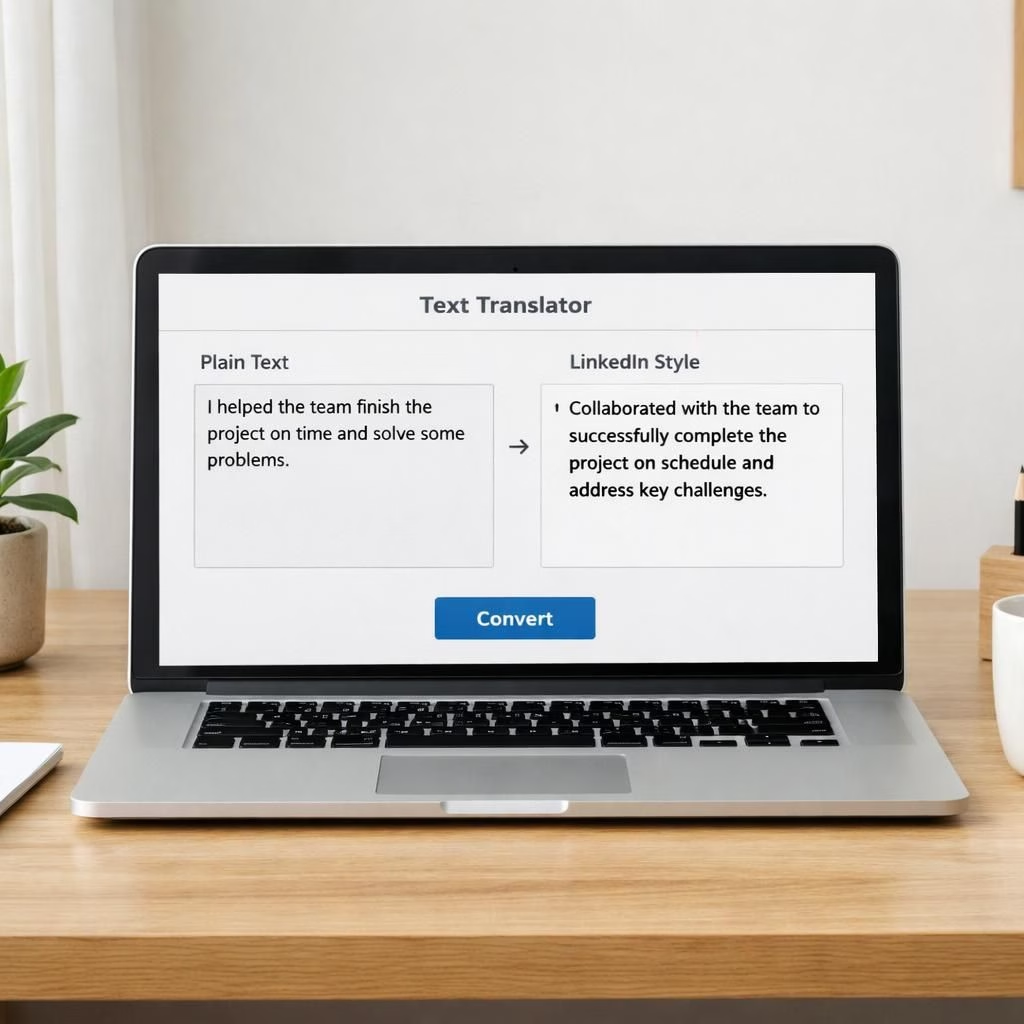
In 2026, Kagi Translate is no longer just a curiosity; it’s a mirror and a prank at once. The trend we call LinkedIn Speak shows how language can be engineered for a particular professional vibe. This playful tool translates everyday English into a LinkedIn-friendly tone, and it works surprisingly well. It helps you sound confidently network-ready, and just a tad overachieving. The core truth remains: clear meaning beats cleverness, but clever can help you land ideas in the right feed. Kagi Translate and LinkedIn Speak illustrate a broader shift toward role-specific communication in tech and media. The result is not tyranny of buzzwords but a curated, accessible voice that travels well across platforms. The phenomenon deserves a calm, curious look rather than scorn.
Kagi Translate demonstrates how a style translator can turn plain text into a confident, readable draft. LinkedIn Speak colors the output with a familiar professional cadence. Kagi Translate shows how words can carry intent without shouting. LinkedIn Speak remains a friendly shorthand that helps explain ideas with a wink.
What Kagi Translate Reveals About LinkedIn Speak
The mechanism behind Kagi Translate is less like a literal dictionary and more like a tone mapper. It uses pattern matching on phrases and sentence structures that read as polished but not stilted. The result is a stream of output that keeps essential meaning while nudging the voice toward a business-friendly register. LinkedIn Speak in action can feel practical for crossing language lines without losing personality. The underlying idea is simple: you want your message to land, not to look like a dry memo.
In practice, it helps to know when to lean into LinkedIn Speak and when to pull back. The trick is to preserve nuance, accuracy, and intent while embracing a consistent cadence. As you experiment, you may notice how the tone influences engagement: readers skim less, and comprehension improves. The goal is not to replace authentic voice but to provide a readable, approachable frame that supports ideas.
Practical Takeaways: Kagi Translate in the LinkedIn Speak Era
- Draft quicker professional summaries with Kagi Translate to hit the main points succinctly.
- Use LinkedIn Speak to maintain clarity in posts without overloading with buzzwords.
- Always verify facts; don’t rely solely on auto-translation for important details.
- Blend the style with your authentic voice; it’s a tool, not a mask.
- Test with a small audience and adapt using LinkedIn Speak experiments to improve readability.
Ethics and Best Practices for Kagi Translate and LinkedIn Speak
Use these tools to clarify meaning, not to misrepresent. Avoid pretending you have experiences you don’t, and respect readers who may want plain truth underneath the gloss. The best practice is to pair the translator with fact-checking, citations, and transparent authorship. By treating LinkedIn Speak as a tone option rather than a personality replacement, you keep your writing honest and effective.
A Practical 2026 Toolkit for Writers: Kagi Translate and LinkedIn Speak
Readers can mix Kagi Translate with your own editing process. The tool shines for framing ideas, drafting introductions, and shaping abstracts. As with any automated aid, the human editor must set the final cadence and verify accuracy. This approach yields content that reads well, ranks well, and respects readers’ time. The goal remains to inform, entertain, and clarify—without losing your unique voice.
Have you tried Kagi Translate or experimented with LinkedIn Speak? Please share your thoughts in the comments below.
Special thanks to Ars Technica for the original coverage. Original article here: Ars Technica. Thank you for the thoughtful reporting.
References
Original source: Ars Technica