

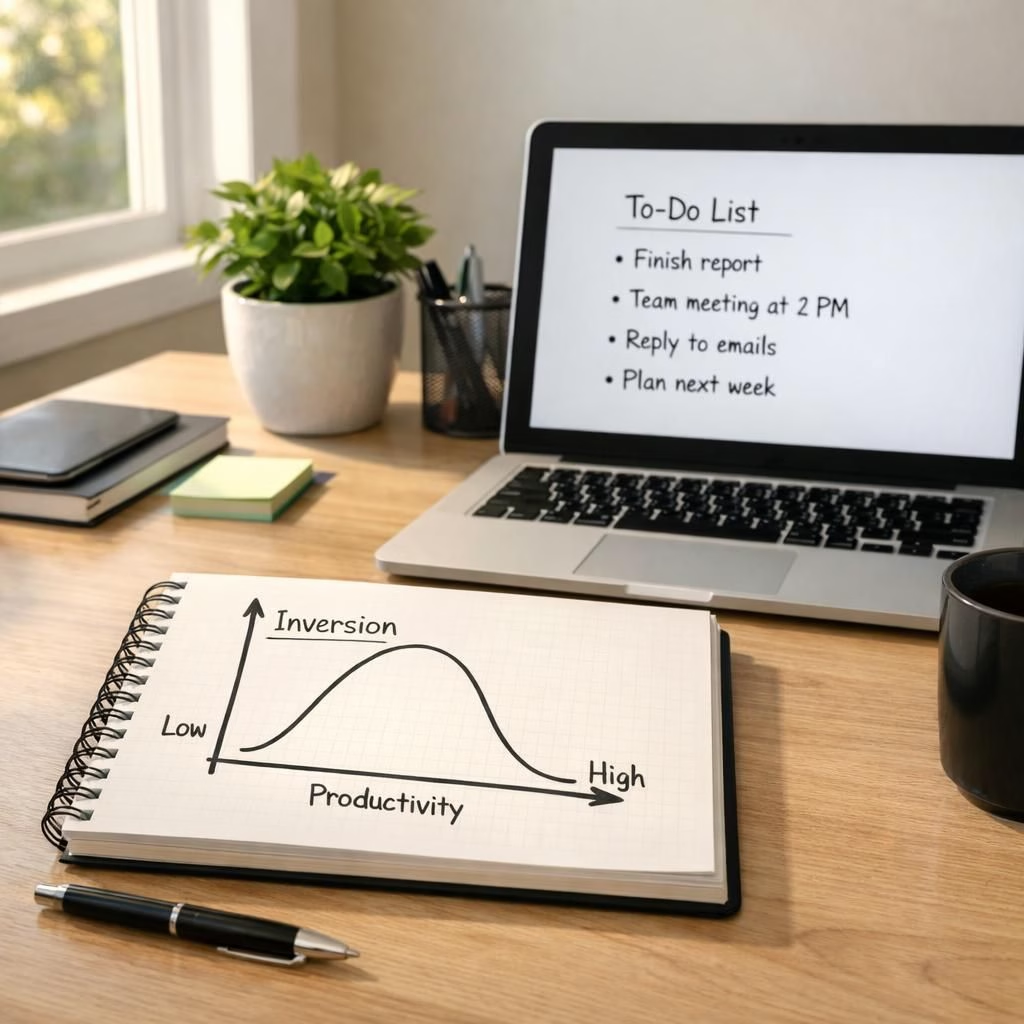
When I asked ChatGPT to apply Charlie Munger’s inversion rule to my ambitions, I expected a neat checklist. Instead, I got a practical tour through inversion and productivity that felt as constructive as it was entertaining. The premise is simple: instead of chasing the usual victory signals, flip the problem on its head and ask what would cause you to fail. The result is a calmer, clearer plan for 2026—one that respects human limits and sidesteps the shiny apps that promise miracles but rarely deliver on day one.
inversion tactics: rethink goals by asking the opposite
The inversion method boils down to a few habits. First, define a clear goal, then list the top five things that would guarantee not meeting it. The point is not gloom but clarity: naming the traps helps you dodge them. With ChatGPT as co-pilot, I drafted a tiny, brutally practical plan that centers on avoiding wasteful steps rather than chasing louder metrics. Inversion nudges us toward restraint, which is often the most powerful form of progress.
Step by step:
- Identify a concrete goal and a deadline.
- Ask: what would sabotage this goal in the next 30 days?
- Document the top three to five derailers.
- Eliminate or minimize those derailers with small, doable actions.
- Track progress by a single, honest metric—no vanity dashboards.
This approach feels counterintuitive at first. We expect more inputs equal more results, but in practice, fewer, better options often yield faster gains. The inversion mindset also reduces decision fatigue by giving you permission to drop experiments that look interesting but won’t move the needle. The code name for this practice could be “smart decluttering.” It aligns with the idea that productivity shines not when we do more, but when we stop investing in things that aren’t working.
In practice, the process becomes a compact, repeatable ritual you can lean on during busy weeks. You can test a plan in 30 days, then rinse and repeat with sharper constraints. The magic is not in miracle tools but in a disciplined, contrarian method that makes space for real progress.
Practical inversion steps also surface in the idea of timeboxing and simple decision trees. If you’re curious about how these habits fit with broader workflow thinking, you can explore related ideas in other areas of tech and media workflows, such as How Emerging Platforms Are Rethinking Video Delivery for Global Audiences.
Yes, this is a playful experiment, but it is anchored in real-world outcomes. The inversion approach reduces the risk of feature creep and stops you from collecting gadgets you won’t use. The productivity element emerges when you treat your energy as a precious resource and deploy it where it counts. The two ideas work together: inversion reveals what to avoid, productivity shapes what to do with the time you have left.
Case study snippet: a friendly collaboration with an AI assistant to test this approach in a typical workweek. The assistant prompts, and you answer with honest constraints. The result is a set of daily actions that feel light but purposeful, a routine that doesn’t threaten creative flow yet still pushes a deliberate, incremental improvement. The best part is the tone: you feel in control, not chased by hype.
Two additional practical tips: anchor your goals to real outcomes (not vanity metrics) and schedule a regular “inversion check.” If a plan relies on a tool or habit that doesn’t demonstrably move the needle, remove it. The process is iterative: you invert the problem, choose constrained actions, and then measure what matters. This makes progress tangible and sustainable in 2026 and beyond.
Original article attribution: I want to give a sincere thank you to Tom’s Guide for the inspiration behind using Charlie Munger’s inversion rule to rethink goals and compare them with productivity apps. If you want to read the original, visit Tom’s Guide and explore how a simple inversion concept can illuminate a smarter path.
Readers, I would love to hear your thoughts. Please share your experiences with productivity or inversion in the comments below.
Internal reading and related topics
For broader context, see How Emerging Platforms Are Rethinking Video Delivery for Global Audiences and Crypto Inflows Top $11B but Global Investors Are Rethinking Exposure.
productivity by design: let constraints guide the plan
The companion idea is to design productivity around constraints rather than chasing endless features. With the inversion rule, you build a plan that respects limits: time, energy, and focus. Instead of loading your day with apps and hacks, you create a compact toolkit. A single high-impact task, a strict timebox, and a friendly reminder to revisit the plan later. This is not laziness; it is precision scheduling that keeps you moving without burning out.
For example, I replaced a dozen productivity apps with a tiny routine: 15-minute morning review, one top priority for the day, a 25-minute focused work block, and a 10-minute reflection. The rest is optional, and the optional is not mandatory. This structure mirrors Munger’s preference for simple, robust systems. The result is a cleaner inbox, a calmer mind, and a schedule you actually enjoy following.
Practical techniques drawn from the inversion principle include timeboxing, decision trees, and a weekly “kill list” that removes one recurring task that exists only to give a false sense of progress. When we couple this with a light, readable plan, progress becomes visible and repeatable. And yes, ChatGPT can help refine the plan, remind you of constraints, and keep you honest without turning into a nagging coach.
Yes, this is a playful experiment, but it is anchored in real-world outcomes. The inversion approach reduces the risk of feature creep and stops you from collecting gadgets you won’t use. The productivity element emerges when you treat your energy as a precious resource and deploy it where it counts. The two ideas work together: inversion reveals what to avoid, productivity shapes what to do with the time you have left.
Case study snippet: a friendly collaboration with an AI assistant to test this approach in a typical workweek. The assistant prompts, and you answer with honest constraints. The result is a set of daily actions that feel light but purposeful, a routine that doesn’t threaten creative flow yet still pushes a deliberate, incremental improvement. The best part is the tone: you feel in control, not chased by hype.
Two additional practical tips: anchor your goals to real outcomes (not vanity metrics) and schedule a regular “inversion check.” If a plan relies on a tool or habit that doesn’t demonstrably move the needle, remove it. The process is iterative: you invert the problem, choose constrained actions, and then measure what matters. This makes progress tangible and sustainable in 2026 and beyond.
FAQ: Inversion and productivity
-
Q: What is the inversion rule?
A: It’s a way to plan by asking what would cause failure and then removing those steps first. -
Q: How can I apply it with limited time?
A: Set one clear goal, identify 3–5 derailers, and pick tiny actions to block those derailers within a 30-day window. -
Q: Does this really boost productivity?
A: It tends to focus effort on high-impact work, reducing busywork and decision fatigue. -
Q: How should I measure progress?
A: Use a single honest metric that reflects real outcomes, not vanity signals.
Conclusion: a simple, repeatable path forward
Invert the problem to gain clarity, then constrain your actions to what moves the needle. Start with a 30-day pilot, learn, and repeat with sharper constraints. This approach protects energy, avoids gadget fatigue, and emphasizes real progress over hype. If you try it, share what worked for you and what surprised you.