

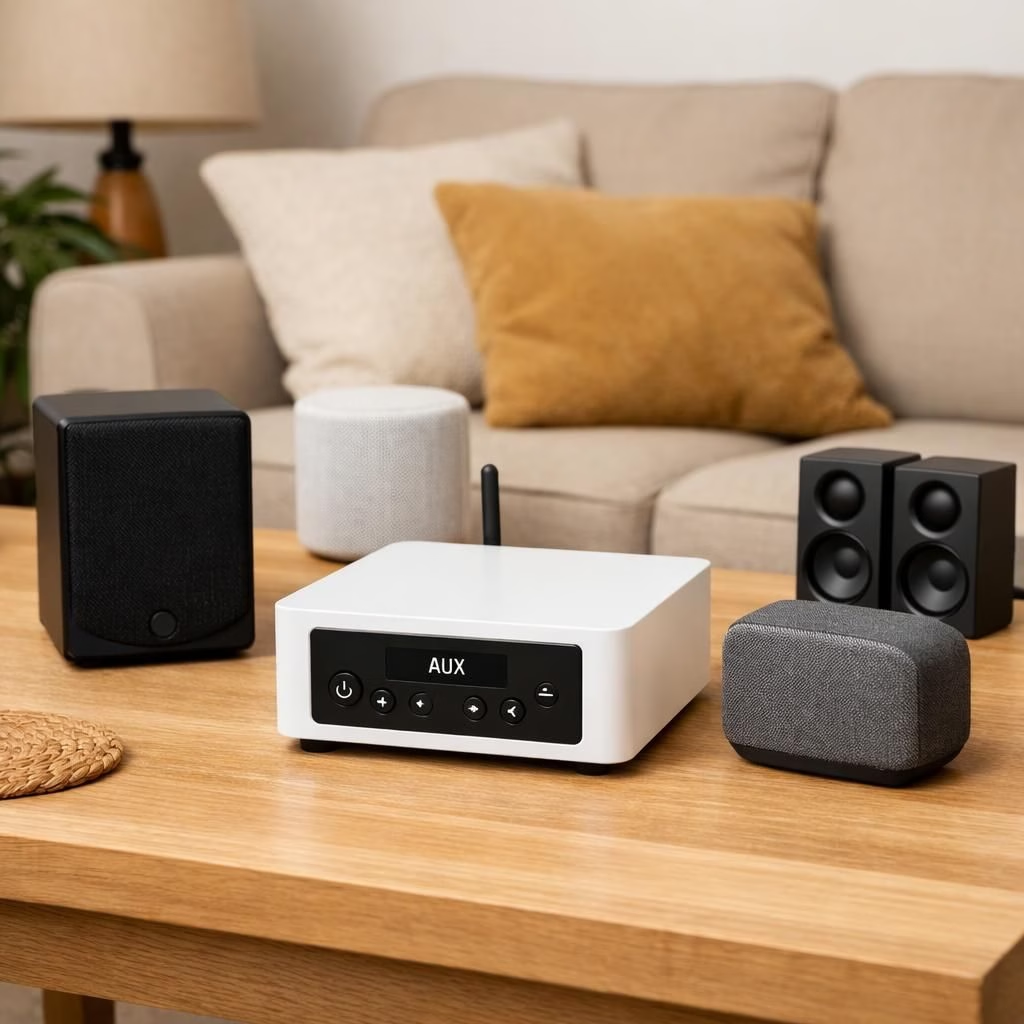
Last week, The Verge reported on a curious bargain that sounds too good to be true: a tiny IKEA speaker, priced at $10, said to connect 100 units at once. The idea sits at the intersection of IKEA price discipline and multiroom audio dreams, and yes, it raises eyebrows while sparking a grin. In audio gear, price often equals compromise. This IKEA speaker story lands in a useful, silly quadrant. Welcome to the era of multiroom audio experiments that your budget can actually afford.
IKEA speaker: budget curiosity grows
Design-wise, the IKEA speaker wears its price tag with pride. It is small, unglamorous, and built for a simple job: join a little army of speakers and play the same tune across rooms. The Verge notes it can connect 100 devices, a stadium choir, yet the result is a simple, scalable party mode. For students, roommates, or occasional hosts, this approach to multiroom audio lowers the barrier to experimentation without a heavy investment.
At its core, the IKEA speaker is less about audio fidelity and more about scale. If you want to fill a space with sound quickly, this little unit makes it easy. The phrase ‘IKEA speaker’ carries whimsy and real-world utility. One great use is a budget-friendly network for shared spaces.
From a consumer electronics POV, the tale is as much about mindset as hardware. It asks us to rethink what ‘connect 100’ means in the era of cheap silicon and streaming. Sure, you won’t achieve studio-quality sound, but you may finish a DIY home-audio project that actually scales with your needs. The IKEA speaker thus serves as a playful reminder: technology can empower, not just impress. For a broader look at connectivity hiccups, see Ikea’s Matter thread connectivity issues and solutions.
multiroom audio: scale your listening without breaking the bank
Setting up is delightfully unglamorous. You plug in the hub, press a button to pair, and you name the rooms you want to fill. If you want a synchronized chorus, you enable group playback. If you prefer staggered vibes, you can split into zones. The idea is that one great speaker plus many average speakers matters less when the price stays low in multiroom audio setups.
Real-world audio quality, of course, will reflect the budget origin. Bass is polite, highs are forgiving, and you won’t mistake it for a hi-fi system. But the beauty lies in its potential: a low-cost launchpad for creative listening setups that don’t demand a mortgage. For a party, a workshop, or a home gym, the IKEA speaker could be more practical than perfect.
Latency, interference, and power draw are not glamorous topics, but they matter. In busy Wi‑Fi homes, the 100-connected dream may show some timing quirks. In a quiet apartment with a single router, the setup feels snappy and straightforward. The lesson here is not that you need audiophile-grade sound; it’s that you can ship a bold experiment at near-zero cost and still have usable output.
Two or three use cases shine: background music across a studio, synchronized momentum for a workout, and a kid-friendly soundscape in a playroom. The IKEA speaker, in this scenario, becomes a practical enabler rather than a vanity gadget. For families who want to experiment with room-filling audio, this device invites trial, error, and surprising results.
From a consumer electronics POV, the tale is as much about mindset as hardware. It asks us to rethink what ‘connect 100’ means in the era of cheap silicon and streaming. Sure, you won’t achieve studio-quality sound, but you may finish a DIY home-audio project that actually scales with your needs. The IKEA speaker thus serves as a playful reminder: technology can empower, not just impress. For a broader look at connectivity hiccups, see Ikea’s Matter thread connectivity issues and solutions.
Looking ahead, 2026 might bring more budget-friendly hubs that nudge the market toward bigger ideas without bigger price tags. The original Verge piece proves the point: cheap gear can inspire clever setups, and sometimes curiosity yields more value than perfection. If you want to experiment with a weekend project, you could start with a handful of IKEA speakers and a plan. For context on upcoming budget-minded smart home upgrades, you can also read about IKEA’s Matter-smart devices price cuts and future fun.
Would you try a 100-way IKEA speaker setup in your living space? What rooms would you connect first? IKEA’s smart home revolution: the iconic product gets a tech upgrade—share your thoughts in the comments. Then tell us about your creative multiroom audio experiments.
Thanks to The Verge for the original article. Read more: The Verge original article.
Practical setup steps
- Choose a central hub location and power source.
- Plug in the hub and power on the system.
- Open the app, name your rooms, and pair additional speakers one by one.
- Decide between a synchronized group or separate zones, and test in real rooms.
FAQ
-
Can the IKEA speaker truly handle 100 devices?
In practice, it’s best viewed as a scalable party mode. Real-world performance varies with network traffic and router capability.
-
Is the sound quality good enough for daily listening?
Not as a hi-fi system, but it’s perfectly usable for background music, casual playlists, and playground soundscapes.
-
What are the best use cases?
Background music across a studio, group workouts, or a child-friendly sound environment in playrooms.
-
How do I start quickly?
Set up the hub, add 2–3 rooms first, test group playback, then expand to more speakers as your budget allows.