

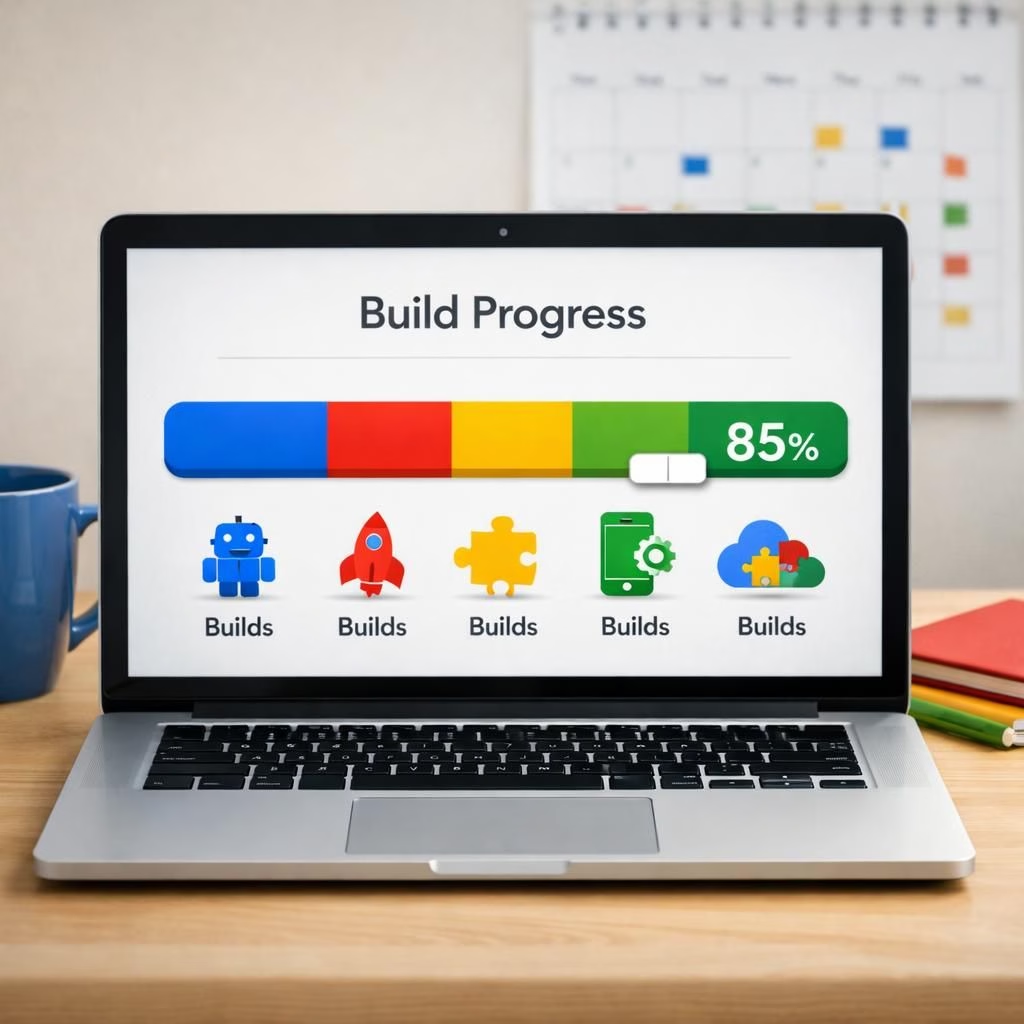
Google has kicked off the ritual countdown to its annual developer conference with a friendly I/O 2026 alternate reality puzzle.
The game invites the global community to play through builds to unlock the final dates, with a playful nudge to solve together. This may be the most social, and also the most cerebral, kickoff Google uses for I/O.
In classic Google fashion, nothing is announced with a press release; instead we get an alternate reality puzzle that lives on the official I/O site. The challenge unfurls across multiple builds, each a tiny lab of pattern recognition, logic, light cryptography, and Easter eggs. The unlock is global, not a sprint by a lone genius, and a public threshold will reveal the dates and the opening tracks.
Early signs suggest this year’s experience is staged, with progress ticking up as more participants clear each build. This mirrors past editions where a visible counter or progress state climbs as the global solve rate rises. When the goal is met, Google traditionally flips the switch and reveals the conference dates and the initial agenda tracks.
Google’s I/O teasers are designed to be social as much as cerebral. Expect tasks that require cross checking clues, parsing developer jargon, and spotting UI quirks that hint at what comes next. In prior years players have encountered alternate reality puzzle cues tucked into page elements. The format rewards coordination across forums and chat groups as solvers trade partial breakthroughs.
The final bonus language hints at a culminating challenge once all builds are cleared, likely tied to the reveal itself. Tech outlets have already noted a live page that briefly redirected to last year’s landing area—an expected hiccup as Google rolls out the experience worldwide.
Although the puzzle is a teaser, it signals that the I/O news cycle is starting. Developers can reasonably expect deep dives into the next Android release cycle, expanded Gemini capabilities across devices and cloud services, and updates to the web platform, Chrome, and Material Design. Wearables, home and ambient computing typically get stage time, and Google often spotlights on-device AI advances and performance work in memory safety and battery life.
I/O keynotes routinely draw millions of views on Google’s video channels, and sessions often set the year’s agenda for Android, AI tooling and cloud native development. The puzzle’s build motif may hint at emphasis on tooling and pipelines—think faster app builds, improved testing, and more robust AI-assisted coding flows—though the clues are usually thematic rather than literal.
To participate, visit the official I/O site and look for the new puzzle entry point. If the page redirects temporarily, try again later as rollouts complete. Signing in with a Google account often preserves progress across builds, and past puzzles have functioned well on both desktop and mobile. Collaboration helps: compare notes with developer communities, document each step, and keep an eye on small UI changes that can signal progression. For context, see Everything Google Announced at I/O 2025.
If you are new to these challenges, start by checking page elements for hidden hints, tracking recurring symbols or color patterns, and testing assumptions incrementally. The goal is cumulative: every solved build contributes to the global meter, edging everyone closer to the date reveal. The experience also serves as a practical reminder of how collaborative problem solving can speed up complex tasks.
Beyond the fun, the puzzle is smart outreach. It primes the developer community, boosts awareness without traditional advertising, and models the problem solving mindset at the heart of the conference. It also functions as a low friction on ramp for newcomers who might not follow every product area but enjoy the communal chase.
Media trackers have already noted the telltale “all builds” message on the puzzle page, reinforcing that a crowd-based threshold will govern the reveal once again. Expect the pace to accelerate as the wider community notices the challenge and starts contributing solves. When the counter hits its target, the I/O 2026 dates should drop—and the sprint to keynotes, sessions and code labs will officially begin. For perspective, see discussions like The 13 biggest announcements from Google I/O 2025 and 12 exciting Google I/O 2025 tools.
I/O 2026 alternate reality puzzle deep dive: community and cadence
As with any ARG, the cadence matters. Each build comes with a time window, a clue batch, and social chatter that moves from forums to chat groups to plan a synchronized solve. The I/O 2026 alternate reality puzzle experience aims to braid developer communities into a single forward-facing momentum.
What to watch for as the meters climb? Expect hints about Android themes, Gemini across devices and cloud, and updates to the web platform, Chrome, and Material Design. On-device AI and memory safety remain in focus, with practical takeaways for engineers trying to squeeze more speed and stability out of real apps.
For teams building across platforms, the game is a playful reminder to tighten CI pipelines, automate tests, and streamline builds. If the global meter reaches the target, the official dates and the opening agenda tracks will land with fanfare, just in time to kick off the conference hype cycle.
To participate, visit the official I/O site and keep your eye on the progress meter. Sign in with a Google account to sync rewards across devices, and collaborate with colleagues to pool your clues. The experience rewards curiosity, careful note-taking, and respectful sharing in forums and groups.
For broader context, industry coverage has repeatedly highlighted the I/O cycle’s cadence and the way these challenges build momentum across the community. See how past roundups framed the event in a way that resonates with developers today, including Everything Google Announced at I/O 2025 and related pieces.
Practical steps to join the I/O 2026 puzzle
- Visit the official I/O site and locate the puzzle entry point.
- Sign in with a Google account to keep your progress synchronized across devices.
- Collaborate with colleagues and fellow developers to share clues and document steps.
- Track the global progress meter and stay alert for UI cues that signal the next build.
FAQ: I/O 2026 alternate reality puzzle
- Q: What is the I/O 2026 puzzle?
A: A collaborative, multi-build challenge on the I/O site designed to reveal the conference dates when a global threshold is reached. - Q: When will the dates be announced?
A: When the community as a whole reaches the target meter; Google then announces the dates and overview tracks. - Q: How can I participate?
A: Visit the I/O site, sign in with a Google account, and join communities to compare notes and track progress. - Q: Where can I follow official updates?
A: The official Google I/O site, with coverage also appearing on major tech outlets like The Verge and TechCrunch.
For additional perspective on how these cycles evolve, see The Verge and TechCrunch for broader coverage of I/O 2025 and beyond. You can also revisit the AI and tooling themes highlighted in Everything Google Announced at I/O 2025.
Conclusion: what this means for the I/O 2026 hype cycle
The I/O 2026 alternate reality puzzle serves as both entertainment and a strategic teaser for developers. It primes the community, demonstrates Google’s problem-solving ethos, and lowers the barrier for newcomers who enjoy the communal chase as much as the product previews. As the meters climb, expect a steady stream of deep-dives into Android, Gemini, web tooling, and on-device AI advances—all building toward a focused, highly anticipated conference.
When the reveal lands, you’ll want to have your calendar ready, your notes synced across devices, and a few trusted forums bookmarked for the post-show breakdowns. The countdown is as much about collaboration as computation, and the next phase of I/O 2026 will begin the moment the global meter hits its target.