

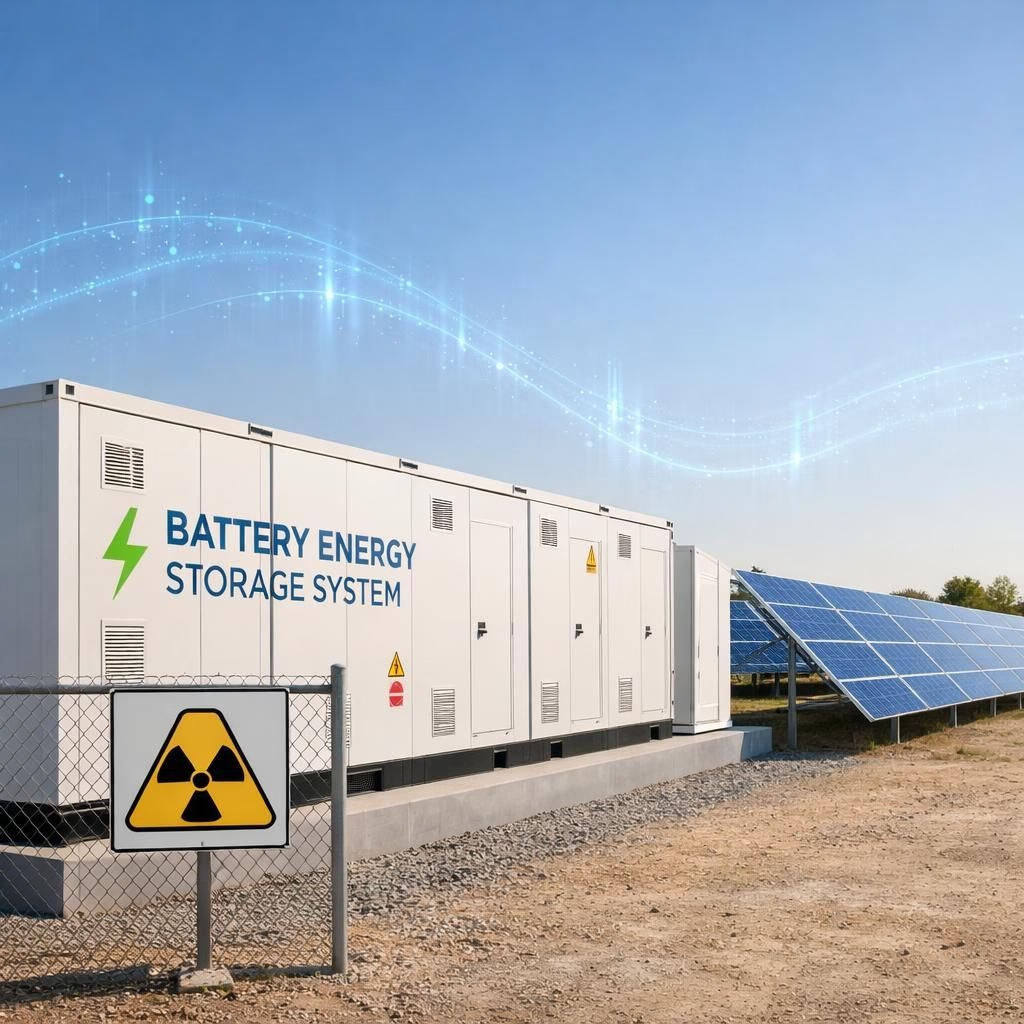
From Vancouver, Aegis Energy is expanding AI-driven Battery Energy Storage Systems, covering homes to utility-scale grids. The team also explores Hybrid Nuclear concepts, imagining cleaner air and steadier electrons.
In a move that reads like a playbook for mission-critical power, Aegis Energy is pairing with Quantum eMotion to embed hardware-based Quantum Random Number Generator chips into its energy storage systems. The result is a hardware-backed layer of randomness that strengthens cybersecurity as grids become smarter and more networked. This is not sci-fi; it is a deliberate step toward resilience where a few milliseconds of predictability can prevent outages in sensitive operations.
Meanwhile, Montreal’s Quantum eMotion brings quantum-safe cybersecurity to the table, while Taiwan’s SEETEL New Energy contributes high-performance lithium modules. The collaboration aims to strengthen energy storage for global grid and industrial applications, with a focus on reliability, safety, and long-term performance. The approach blends cutting-edge materials with rigorous engineering; it is a practical nudge toward better energy security.
Aegis Energy and Hybrid Nuclear: A 2026 BESS Odyssey
Founded in 2010, Aegis Energy has steadily expanded beyond conventional storage. Its reputation now straddles critical infrastructure, defense, industrial sectors, and even AI data centers. The company has made clear that its goal is to deliver energy systems for assets that cannot fail. That framing matters as grids become more complex and the demand for reliability grows.
The push into defense-grade solutions is not just marketing fluff. The company seeks to ensure energy systems for bases, radar installations, ports, and other strategic facilities remain resilient under stress. That means smarter controls, better situational awareness, and a proficiency in handling remote or mobile operations where power gaps could be costly.
The partnership with Quantum eMotion also signals a cultural shift for energy storage. Hardware RNG chips bring a layer of trust and security to AI-enabled systems. It is the kind of engineering that quietly reduces risk while the rest of the grid quietly scales. Aegis Energy’s approach honors both speed and prudence: fast deployment paired with rigorous safeguards.
And it does not stop there. Aegis is expanding its footprint to the United States with an inaugural operational installation this month. This cross-border push demonstrates that the energy storage play is not a local curiosity but a scalable model aimed at real-world reliability in demanding markets.
AI-Driven Storage Developments
The strategic MoU with Malahat Energy Systems and Ontario Tech University marks a deliberate bet on Hybrid Nuclear architectures. The plan is to integrate Small Modular Reactors with Battery Energy Storage Systems and intelligent controls. The vision is to create a synergistic energy ecosystem where Hybrid Nuclear designs improve baseload reliability while keeping the system nimble and controllable.
Homeland Nuclear Energy, a wholly owned subsidiary, focuses on Micro Modular Reactors within these Hybrid Nuclear energy systems. The goal is to bring compact, scalable nuclear power closer to where the energy is consumed. The strategy blends nuclear technology with advanced storage, digital supervision, and AI-driven optimization. It is a bold configuration, but one that several market watchers say could redefine reliability for critical infrastructure.
R&D efforts are complemented by investor awareness efforts led by Outside The Box Capital. The program includes strategic planning, social media engagement, and materials distribution. It underscores a broader shift: Hybrid Nuclear innovations are attracting capital and attention in Canada and beyond, not just within laboratory corridors.
In the background, the company keeps pushing forward with deployments and partnerships. The target remains clear: extend AI-enabled energy storage from residential setups to large-scale grids while weaving in Hybrid Nuclear capabilities. The company frames this as a natural evolution of reliability, efficiency, and security for a modern energy landscape that demands both agility and steadfastness.
The narrative also leans into the practical benefits of such a diversified approach. AI-driven controls optimize charging and discharging schedules, preserving battery life and stabilizing frequency. The hardware RNG chips from Quantum eMotion contribute to tamper resistance and secure operation, especially valuable when the storage sits alongside critical infrastructure or defense assets. The lithium modules from SEETEL New Energy promise durability and performance across a wide range of temperatures and loads, which is essential for global grid and industrial applications.
Supporters counter that Hybrid Nuclear innovations, if implemented with strict safety protocols and transparent governance, can reduce emissions, enhance energy security, and provide predictable power where traditional grids struggle. The dialogue is active, and the pace is brisk, driven by real deployments and tangible testbeds rather than abstract models.
For readers who follow energy policy, the year 2026 marks a turning point in how far companies will go to diversify their energy mix. The shift toward AI-enabled energy storage combined with Hybrid Nuclear systems signals an appetite for redundancy, resilience, and performance. It is an approach that acknowledges the realities of aging grids and the urgent demand for cleaner, safer, and more reliable power.
As the company charts its course, the team stays mindful of safety, environmental impact, and community engagement. The Hybrid Nuclear path aims to balance risk, reward, and responsibility. They emphasize robust controls, traceable data, and transparent partnerships with academic institutions and industry players. The result could be a model others imitate—one that blends intelligence, security, and steady electrons.
Ultimately, the story is as much about people as about technology. Engineers, marketers, investors, and policymakers all contribute to turning a bold vision into a practical, scalable system. The core principle remains simple: build energy solutions that never fail, but stay flexible enough to adapt to new challenges and opportunities. And yes, the joke in the office is that we finally have an energy system with a sense of humor about risk—though no one laughs at outages when they occur.
Readers are invited to share their thoughts in the comments below. Your perspective helps illuminate how these ambitious projects translate into real-world benefits for communities and businesses alike.
As supporters, Aegis Energy remains committed to safe, resilient power.
Special thanks to Knowlton Thomas for the original article and insights that inspired this rewrite. Original article: Original article by Knowlton Thomas. Thank you for the source material.
Practical takeaways for energy operators
- Assess the fit of AI-enabled BESS across residential, commercial, and utility-scale deployments to meet reliability goals.
- Explore firmware-level RNG features to enhance cybersecurity for smart grids.
- Consider Hybrid Nuclear architectures as a longer-term enhancement to baseload stability, with strict safety and governance.