

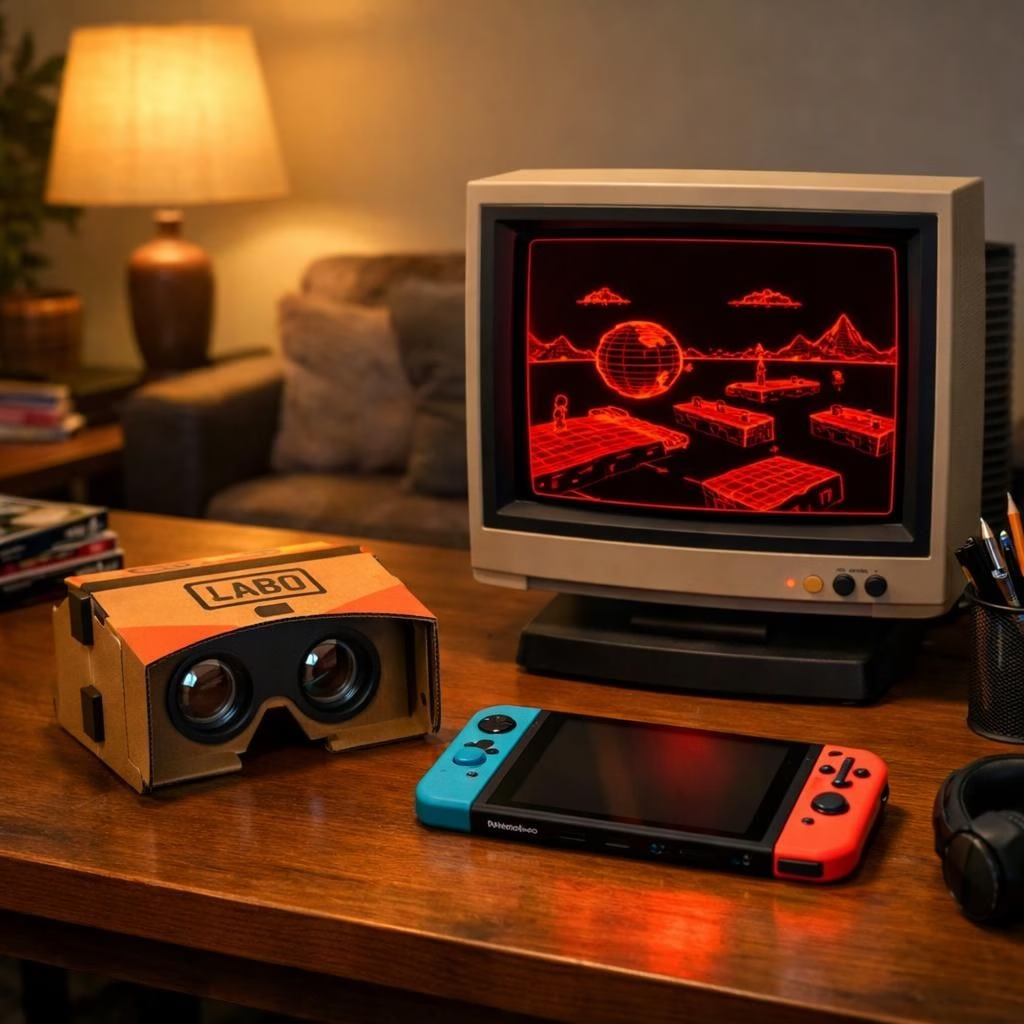
Welcome to 2026, where nostalgia meets silicon and screens. The Virtual Boy era feels ancient, yet the Nintendo Switch era still borrows its bold spirit. In this lighthearted tour, we explore how the Virtual Boy vibe sneaks into modern Nintendo Switch VR experiments, and why both worlds still spark curiosity. We celebrate the ideas, acknowledge the quirks, and keep a friendly tone for both historians and gamers.
Virtual Boy moments in modern VR on Nintendo Switch
Back in the day, Virtual Boy teased 3D without glasses. It aimed for immersion but delivered headaches instead. Fast forward to 2026, and Virtual Boy vibes appear in modern Nintendo Switch VR experiments. The idea isn’t to replicate the old hardware. It’s a playful nod to Virtual Boy’s bold aim. The Labo VR goggles unlock cardboard-based immersion. They nod to the red-on-black era without risking eyestrain. On the Nintendo Switch, you can test whether the classic lines survive under modern screens. Lighting and motion add new twists. The result is a curious mix. Virtual Boy fans will feel the nostalgia with a gentle upgrade. Casual gamers and skeptics alike can try it.
The modern setup isn’t about perfect fidelity. It’s about capturing flavor: a sense that you are peering into a retro future where hardware limits become design challenges. When developers and players engage with this space, they discover surprising moments of delight—the kind you only get when constraints become catalysts. The Nintendo Switch becomes a playground where curiosity can roam without needing a PhD in arcade history. And yes, Virtual Boy still sounds like a bold idea with a wink, while the Nintendo Switch offers the flexibility to test ideas in short bursts rather than marathon sessions.
For fans of Virtual Boy, the aesthetic remains compelling: a compact, single-purpose vibe that tried to push perception. On the Switch, that vibe translates into simpler, faster experiments that teach us about display brightness, eye comfort, and latency. The experience is deliberately approachable, which is essential when you want to attract both retro enthusiasts and new players. The bottom line: you can enjoy the nostalgia without sacrificing safety or accessibility. The software layer may be modest, but the design lessons are surprisingly rich.
The fun of Retro VR on the Nintendo Switch is not about a revolution in gaming hardware. It is about storytelling through hardware constraints. It is about the joy of trying something audacious, even if the scope is deliberately modest. It is about recognizing that some failures are foundational because they fuel better experiments later. If you enjoy a wink at the past with a modern coat of paint, this is exactly the kind of space where the Nintendo Switch earns its keep—and the Virtual Boy gets a gentle, respectful encore.
Original article: Can You Use Labo VR Goggles For Virtual Boy Games On Switch? & Other Nintendo Classics VB Questions Answered. Thank you to Nintendo Life for the inspiration and the thoughtful look at retro meets modern hardware.
We’d love to hear your take on this playful intersection of past and present. Tell us what you think in the comments and join the discussion about how you would design the next retro-modern mashup.
Why VR on Nintendo Switch scratches a nostalgic itch for Virtual Boy
When people talk about VR on the Nintendo Switch, they often mean a practical, portable approach to immersion. The combination seems odd at first glance: a handheld console with a hobbyist VR accessory. Yet the pairing works because it respects user comfort and accessibility. It also invites a conversation about why Virtual Boy fueled a generation of bold ideas, even if the execution was imperfect. In 2026, we see that the Nintendo Switch can host lightweight experiments that capture the spirit of Virtual Boy without replicating its drawbacks. The result is a respectful homage that invites players to consider how far display technology—and design thinking—has come.
In this context, the VR experiments on the Nintendo Switch operate like a friendly remix: you borrow the best bits of the past and reframe them through modern clarity. The red-on-black color lunacy Carmine-tinged charm remains part of the mood. But the modern hardware adds smoother motion, better battery life, and safer viewing angles. The net effect is a bridge between eras: you glimpse that bold ambition, while appreciating the safeguards and polish of current tech. For someone who grew up with Virtual Boy, this is a tasty bite of nostalgia that does not demand heroic sacrifices from your eyes or your wallet.
From a developer standpoint, this is a practical exercise in user experience. We learn about latency tolerance, screen brightness choices, and the importance of comfort in short play sessions. The Nintendo Switch acts as a proving ground where ideas are tested quickly and iterated with feedback. The goal isn’t to recreate a failed hardware launch; it is to explore how retro-inspired concepts can thrive on modern platforms. That mindset benefits both indie teams and curious players who enjoy a clever nod to the past.
Across the board, the conversation centers on accessibility and delight. The Virtual Boy nostalgia remains compelling precisely because it invites play without risk. The Nintendo Switch makes it approachable: a palatable entry point for fans who want a taste of history and for newcomers who enjoy a playful, slightly satirical take on gadgets that promised much more than they delivered. The result is a culture where retro curiosity meets practical design, and the outcome feels pleasantly inevitable: progress does not erase history; it lets history sparkle with a new audience.
As you explore these ideas, you begin to see a broader pattern. The fun of Retro VR on the Nintendo Switch is not about a revolution in gaming hardware. It is about storytelling through hardware constraints. It is about the joy of trying something audacious, even if the scope is deliberately modest. It is about recognizing that some failures are foundational because they fuel better experiments later. If you enjoy a wink at the past with a modern coat of paint, this is exactly the kind of space where the Nintendo Switch earns its keep—and the Virtual Boy gets a gentle, respectful encore.
External references and context: Nintendo, Engadget, Video Games Chronicle help frame how retro-inspired ideas meet current hardware.
Practical Tips: Virtual Boy-inspired VR on Switch
- Setup: Choose lightweight, comfort-friendly experiences and a seating arrangement that minimizes strain during short sessions.
- Safety first: Set brightness lower than the max and take regular breaks to avoid eye fatigue.
- Experiment in small bursts: Try brief scenes that emphasize color contrast and motion rather than long play sessions.
- Accessibility: Use built-in screen and text options to tailor the visuals for easier viewing.
FAQ
- Q: Can you play Virtual Boy games on Switch with Labo VR?
A: These experiments aim to evoke nostalgia with lightweight tooling rather than full compatibility. Treat them as a tribute rather than a direct port. - Q: Do these VR ideas cause eye strain?
A: Eye comfort depends on brightness, latency, and break times. Start with short sessions and adjust accordingly. - Q: Is this a serious feature or a playful homage?
A: Primarily a playful homage that highlights design lessons from past hardware while showcasing modern capabilities.
Conclusion: Retro-inspired VR on the Nintendo Switch offers a safe, approachable way to explore history while testing today’s hardware. The Virtual Boy remains a bold idea that still sparks creative thinking, inviting designers to experiment with new perspectives. The future of retro-modern mashups may blend storytelling, visuals, and comfort in fresh, useful ways.