

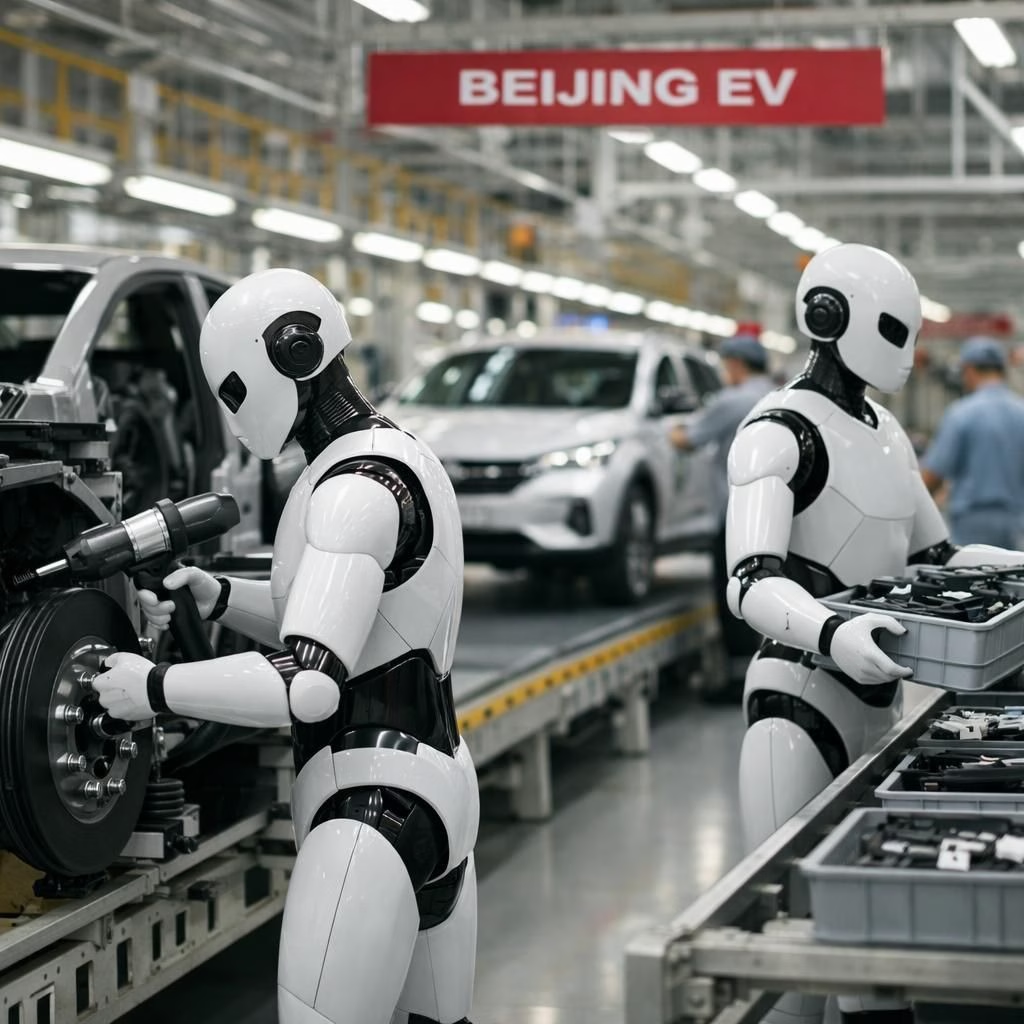
In Beijing, humanoid robots are stepping onto the electric-vehicle production line, and Xiaomi robotics has the industry’s attention as two CyberOne units run a three-hour test, completing more than 90% of their tasks.
humanoid robots on the line: Xiaomi’s cautious pilot
Lu Weibing, Xiaomi’s president, described the effort as a measured pilot. The CyberOne duo demonstrated lug-nut duties in a company-released video, a task that is repetitive but essential for a car’s assembly. The 76-second cadence reflects the line’s pace, not a miracle, and RBC Capital Markets sees a global market for humanoid robots approaching trillions by mid-century, with China driving much of that growth. In the Beijing test, the math becomes tangible as you watch nuts turn and chassis edges slide toward completion, signaling careful steps toward real production for humanoid robots on the factory floor.
The test raises questions about safety and teamwork on a busy line. The robots handle gripping, lifting, and torque control with consistent rhythm. That cadence brings a smile to some human workers and demonstrates that lean automation can work alongside flexible human labor on a moving line. While modest, the result matters as other manufacturers watch and factory modernization accelerates in 2026.
humanoid robots and Xiaomi robotics on the edge: a 2026 field test
On the global stage, the trend is not unique to Xiaomi. XPeng and Honor have also explored humanoid robots, now with more practical tests and tighter safety protocols, creating a lively market dialogue about automation and scale. China already deploys more industrial robots than any other nation, but moving from controlled demonstrations to live production raises safety, quality, and workforce-adaptation challenges. This field test provides a practical data point without overpromising a sci-fi leap for Xiaomi robotics on the production line.
Looking ahead, reliability, maintainability, and smart scheduling will shape broad adoption. Humans and robots will need safe collaboration, shared training, and clear task boundaries. The next milestones include improved tool integration, error handling, and maintenance routines. If you want to see progress, watch whether the 76-second cycle becomes a standard and if the pace remains steady as tasks grow more complex; 2026 may be the year practical deployments outnumber headlines.
Have thoughts or questions about factory robots? Share your thoughts in the comments below.
Original article: CNBC coverage. Thanks to CNBC for the original coverage.
External sources:
CNBC,
RBC Capital Markets,
IEEE Spectrum robotics.
What this means in practice
- Safety protocols are prioritized on every new line integration.
- Maintenance routines must be designed for quick triage and rapid part replacement.
- Scheduling tools help balance human and robot workloads on high-speed lines.
FAQ
-
Are these humanoid robots ready for broad production?
Not yet. The test signals progress, but scalability, reliability, and safety must improve before mass deployment.
-
How does Xiaomi robotics compare with peers?
Early-stage field trials are common; each company is testing practical capabilities rather than flashy demos.
-
What would enable faster adoption?
Better tooling integration, predictable maintenance, and clear human-robot collaboration standards are key.
References