

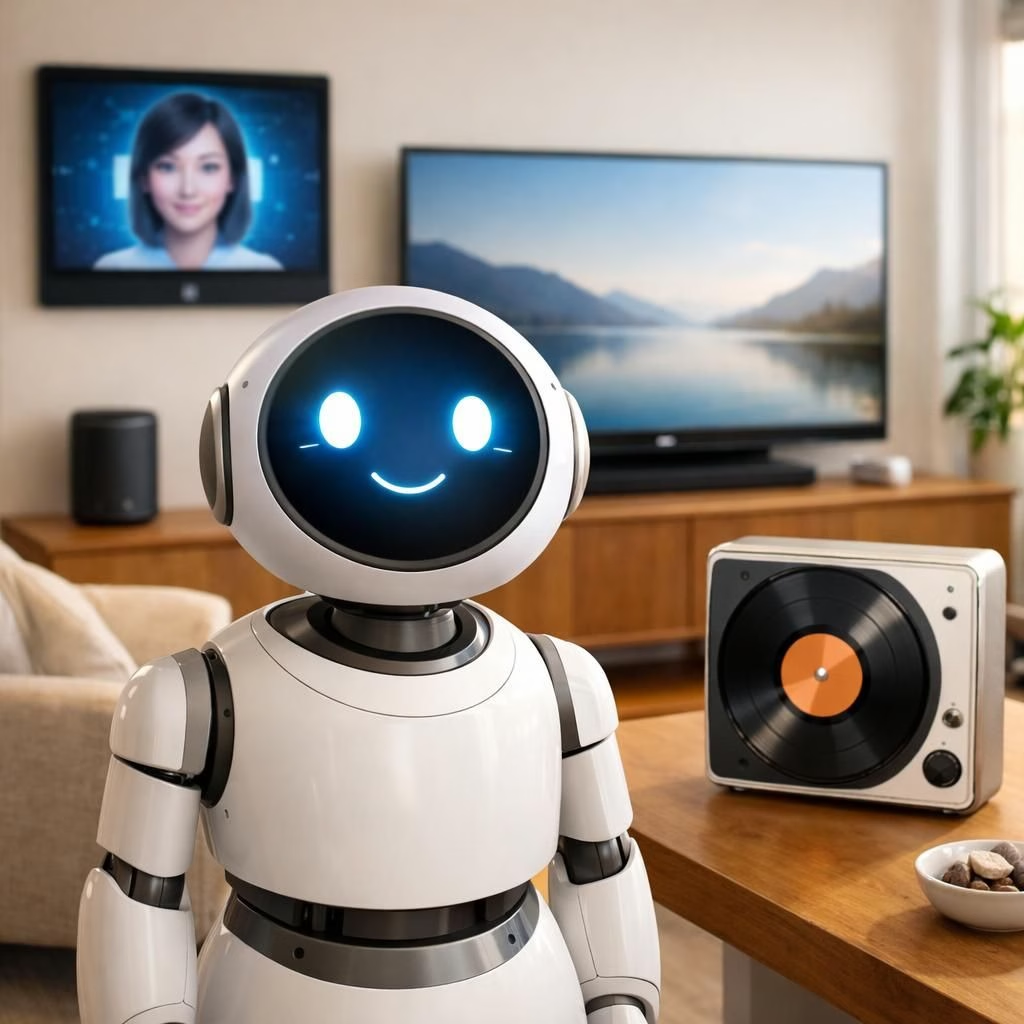
At Milan Design Week 2026, Samsung unveiled Project Luna, a hopeful, human-sized glimpse into the future. It isn’t a full-blown robot army but a friendly home automation companion designed to fill gaps in a smart home. The reveal was framed as a concept rather than a guaranteed product, signaling a grounded, design-forward approach. It centers on better coordination between devices and people, with AI companionship at the human center.
Home automation and AI companionship in Luna
From the moment you meet Luna, you notice a deliberate effort to blend warmth with utility. The device centers on a round screen perched on a swiveling head, allowing it to turn and make eye contact with you in meaningful ways. The design team pushed for approachability, steering away from an intimidating gadget and toward a character you can enjoy sharing a slice of your day with.
The interface relies on playful beeps and boops rather than a robotic voice, giving Luna a personality that fans of sci‑fi might actually welcome into the kitchen. Its face—a pulsating orb graphic—acts as both eyes and mouth, translating mood with subtle glow and rhythm. This is not a pure utility robot; it is a social cue engine that aims to be understood at a glance.
The broader intent behind the Luna concept is not to merely add wheels to a gadget but to reframe how a home can be orchestrated. Samsung positions Luna as a conductor that helps your living space behave as a coordinated system. The AI persona can slip from the Luna robot to a TV, a smart speaker, or even a projector, creating a continuous thread across rooms. If you drift from the kitchen into the living room, Luna can appear on the closest screen or speaker, ensuring a consistent, less frantic user experience.
That seamless transition matters because many homes today juggle multiple ecosystems, and fragmentation often leads to friction rather than flow. The Luna demo suggests a future where your conscious choices in one room ripple elegantly through the rest of the house.
Mauro Porcini, Samsung’s chief design officer, emphasized that these prototypes are about vibe and language as much as hardware. The idea is to give a feeling for the kind of language the company wants to use when it builds more products. A key takeaway is not just the gadget’s cute face but the social contract it signals: devices that anticipate needs, coordinate with one another, and do so with a human touch. The project signals a shift from personal AI, which many devices currently inhabit in small, isolated ways, toward communal AI that helps groups of devices work together with people at the center. In practice, that means Luna could guide you through routines, suggest a better lighting setup for a movie night, or help a family scroll through the morning calendar without demanding your attention in every room.
The square speaker with an exposed spinning vinyl record on its side is a deliberate design nod to retro futurism meeting real-time intelligence. The glowing interface and a dynamic equalizer come alive when music plays, providing a tactile sense of presence that complements Luna’s more subdued visual language. The emphasis on a tangible, playful aesthetic helps soften the tech edge that often accompanies home robots. AI companionship sits at the center of the envisioned ecosystem rather than being an afterthought.
The Luna prototype is also a cultural artifact in the conversation about where consumer AI lives. It moves away from the idea of a single device controlling every possible function and toward a system of collaboration among screens, speakers, and projectors. This approach mirrors broader shifts in smart-home thinking—systems that prioritize coordination, predictability, and a sense of companionship rather than automation for its own sake. The design language aims for consistency, not chaos, with Luna acting as a constant, friendly presence that reduces the cognitive load of managing many devices at once. The result is a more relaxing user experience that still leaves room for delightful surprises—the small, bright pulses that say, “I’m listening.”
Samsung’s demonstration also included a distinctive, AI-powered square speaker — a nod to how sound can become a central, shared experience in a connected home. The device features an exposed vinyl record motif on its side, a visual cue that retro tech can coexist with futuristic intelligence. It uses a glowing interface and an evolving equalizer to come to life when music starts, blending nostalgic charm with modern capability. This blend of tactile design and smart behavior is not just about looking good; it’s about creating a sense of belonging in a space that centers AI companionship.
To educators and designers watching this space, Luna represents a pragmatic step toward communal AI companionship. The focus on cross-device collaboration avoids the “one gadget to rule them all” trap and invites a more humane approach to home technology. The project’s messaging acknowledges that many households juggle multiple brands and ecosystems, and it hints at future standards that prioritize people and daily rituals.
The 2026 moment is less about a single gadget and more about a design language that makes the home feel more cooperative, less intrusive, and a touch more playful. And that, in turn, might make the future a little brighter for everyday living.
Original article and inspiration: Special thanks to Fast Company for coverage of Project Luna and Milan Design Week 2026.
Interested readers are invited to share their thoughts in the comments section below. How would you balance convenience with privacy in a communal AI companionship? What features would you value most in a home automation system that also aims to be a friendly companion?
Practical steps to see Luna in action
- Luna coordinates lights, TV, and projector across rooms to present a cohesive home automation experience.
- When you move from kitchen to living room, Luna appears on the closest screen or speaker to maintain continuity.
- It can guide routines—like a morning calendar or movie-night lighting—without demanding your attention in every room, enriching AI companionship in daily life.
- The system hints at a future where devices cooperate around people rather than forcing control from a single gadget.
FAQ
- What is Project Luna? A concept study from Samsung that envisions a communal AI companion designed to orchestrate smart devices with a human-centered touch.
- Will Luna become a consumer product? Samsung has described Luna as a concept, signaling a design language and potential directions rather than a guaranteed launch date.
- How does Luna address privacy? The concept emphasizes coordinated interaction and user-friendly experiences; real-world privacy controls would be essential in any eventual product, including opt-in data sharing and clear controls for what is collected and when.
In conclusion, projects like Luna illustrate a shift from isolated devices to coordinated, humane systems that respect daily rituals. If the approach proves viable, it could push brands toward more cohesive, person-centered experiences in the home.