

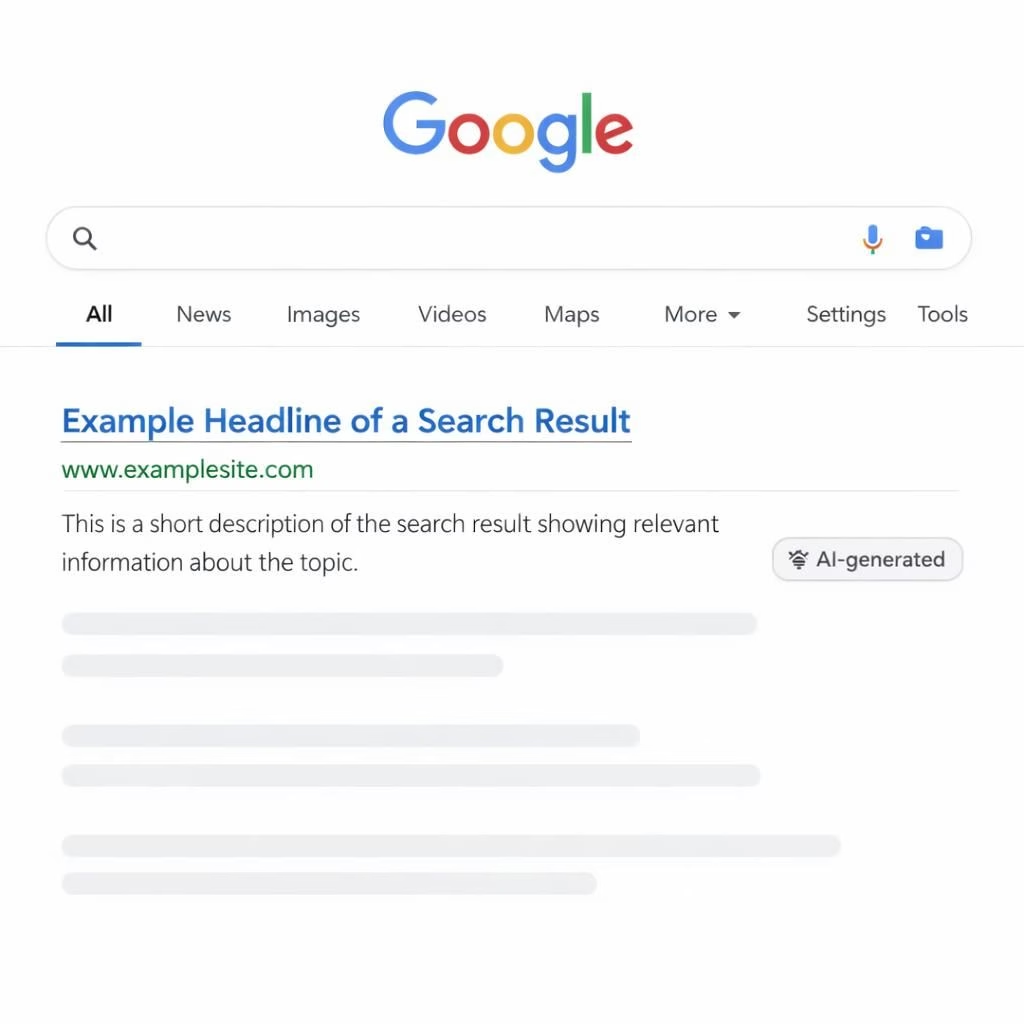
In 2026, Google titles and AI-generated titles are playing new roles in the SERP, with Google sometimes crafting its own title links instead of copying your headline tag. This isn’t entirely new—back in 2021 Google began customizing title links, but the scale and frequency have evolved. A recent report by The Verge (and discussions across the industry, including 9to5) notes that Google is using AI to generate title links for some fresh articles and beyond. Danny Goodwin of Search Engine Land described Google’s test as “small” and “narrow,” a phrase that doubles as a jab at anyone who overthinks tech. The test touches news sites but isn’t limited to them. The result is a mix of relief and anxiety: publishers want control over messaging, while readers may appreciate snappier, more relevant headlines presented by Google itself.
Google titles: what’s changing on the SERP in 2026
As Google tests a broader set of title links, the line between what publishers write and what the SERP shows blurs. The phenomenon affects more than traditional news sites; e-commerce, blogs, and niche publishers also see shifts. For people who optimize for SEO, this is a reminder that markup and metadata are important, but they may not be the final word on visibility. Google titles may pull in keywords from the page content, the article body, or even trending phrases; they might also borrow from alt text or image captions. The result can be better alignment with search intent, but it can also create mismatch if the page content diverges from the link label. In practical terms, publishers should monitor their site’s title tag health, ensure clear, unambiguous headlines on the page itself, and be prepared to adapt to Google’s evolving logic for title links. That might mean testing different headline structures, improving metadata consistency, and ensuring that the user experience on the landing page matches the headline that Google shows.
AI-generated titles: pros, cons, and practical tips for publishers
AI-generated titles bring both promise and peril. The promise: when implemented thoughtfully, these titles can capture reader interest, emphasize true value, and reduce the risk of having a stale or misleading tag. The peril: if the AI drifts toward clickbait or off-brand phrasing, readers may feel misled, and trust drops. The reality is more nuanced. In many contexts, AI-generated titles are not here to steal your job; they are tools that surface what readers find engaging. Editors can set guardrails, specify tone, and provide example templates that the AI can follow. For publishers who do not routinely optimize titles, AI-generated titles can provide a baseline quality lift, bringing in more consistent, keyword-relevant links without requiring hours of human tinkering. The best practice is to combine human oversight with AI assistance: define a few canonical title patterns, let the AI propose variations, and approve the best-fitting ones before publication. If you want to succeed with AI-generated titles, you need to feed it clear guidance and robust metadata that aligns with your content strategy. In this arrangement, AI is a collaborator, not a dictator.
In this evolving landscape, many site owners have found themselves balancing control with convenience. Some practitioners remember a time when Google would simply mirror the title tag; today, a more dynamic approach appears to be emerging. Some of the earliest adopters saw improvements in click-through rates when titles matched reader intent and user search behavior. Yet we should not pretend that the change is universally beneficial. There are scenarios where the AI-generated title might misinterpret industry jargon, brand voice, or local nuance. The key is to maintain a resilient content strategy that prioritizes accuracy and audience trust. If Google’s engine finds a better way to present your story, celebrate the win; if it chooses a path that feels misaligned, you have a chance to adjust the page’s metadata, internal linking, or content so that your core message remains intact.
From a developer perspective, the shift means one more variable in the SEO mix. Webmasters and content teams should implement robust title tag practices, audit title consistency across pages, and maintain clean, accessible header structures. They should also document the decision process: what prompts an AI-generated title, what signals trigger manual overrides, and how performance is measured. After all, this is not a black-and-white issue. It is a spectrum where human expertise and machine pattern recognition can cooperate to deliver better user experiences. The test-case nature of the current experiments means results will vary by jurisdiction, topic, and content type, but the underlying trend is clear: search engines want to present the most useful snippets to readers, and publishers must adapt accordingly.
To help readers navigate this, here are a few practical tips. First, ensure your page has a strong, descriptive headline on the page itself, even if Google or the AI-generated titles edits the link. Second, craft metadata that reflects the article’s actual content, not just the keyword dessert of the day. Third, maintain a small set of tone guidelines that the AI can follow for your brand—humor is great, but it should never overshadow accuracy. Fourth, track performance metrics such as click-through rate, dwell time, and on-page engagement to determine whether the title strategy is helping or hurting. Fifth, maintain a human-in-the-loop workflow to review AI-produced variants and override when necessary. If you implement these steps, you can keep your brand voice intact while embracing the efficiency of AI-assisted title generation.
As a final note, the broader SEO community remains curious about how far this AI-assisted title approach will go. Some argue for a cautious embrace, others urge steady skepticism. The safe path is to treat AI-generated titles as a complementary tool rather than a replacement for thoughtful headline writing. If you care about clarity, trust, and user satisfaction, you will probably end up leaning toward a hybrid approach: let the AI propose a few strong options, then pick the one that best reflects your article’s essence. In short, consider Google titles and AI-generated titles not as enemies but as teammates in the ongoing mission to connect readers with meaningful content.
Original article attribution: A heartfelt thank you to The Verge for the original reporting on this topic, and to 9to5Google for additional discussion that sparked this broader reflection. Original sources: The Verge and 9to5Google. We appreciate the community’s ongoing dialogue that makes these observations possible.
Want to share your thoughts? Please drop them in the comments below; your perspective helps everyone refine their approach in 2026 and beyond.
References
References note: The original source linkback to SERoundtable is provided above. This article preserves that attribution and expands on the topic with current best practices for 2026.