

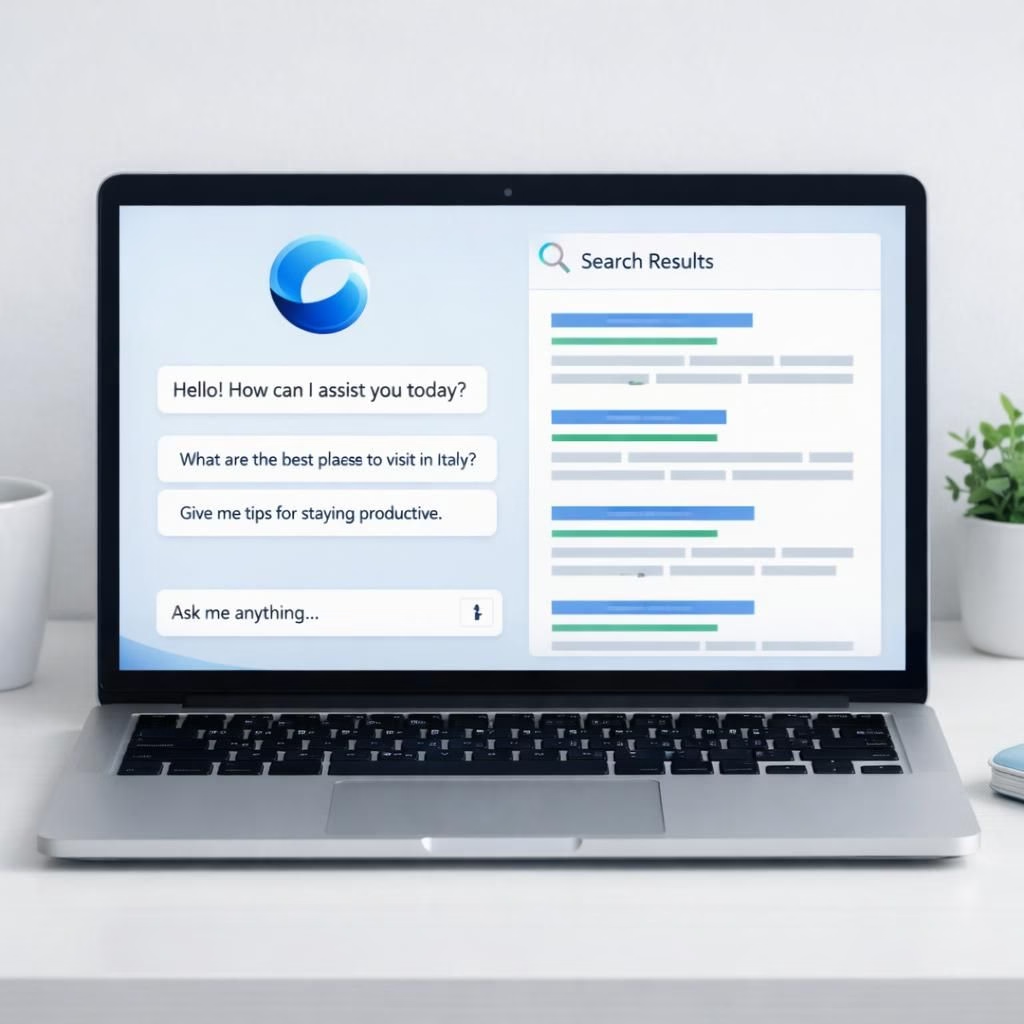
In 2026, AI in Search rewrites the old rulebook. Google Gemini now chats with you, replacing the old click-driven model. AI Overview started this trend by surfacing summaries above the classic blue links. The result is a search box that serves as a conversation starter with Google Gemini.
The shift is more than a cosmetic facelift. AI Overview surfaced concise results at the top. Now Google Gemini can deploy AI agents to tailor a reply. The reply might include charts, bullets, or a mini publication. The search box invites collaboration, not just navigation. You can correct the course in real time if the AI wanders—which it often does, but with a joke and a quick pivot, it finds a better path.
We are told that more than a billion people a month use AI Mode, a separate tab where links are even more peripheral. The queries double every quarter as people grow comfortable asking for explanations, schedules, and quick explainers. The raw data still comes from billions of pages. Creators and credible reporters deserve credit for their work, even when an AI creates a briefing on the fly. The promise is useful; the risk is real, so we stay vigilant and curious.
AI in Search and Google Gemini reshape discovery
In this new world, search is less about collecting a list of links and more about assembling a guided experience. AI in Search crafts a tailored journey with Google Gemini at the helm. The system assembles dynamic layouts, interactive widgets, and contextual explanations. If you ask about black holes, the AI might render a simple infographic while noting the underlying cosmology and the scientists who contributed. The apparatus remains powered by human labor—the cosmologists, science writers, and visual artists—who created the sources, even if their visibility shifts.
The human voice does not disappear; it shifts. Reid, Google’s VP of Search, frames the mission as more than organization; it is about making information truly useful and accessible. The company scans billions of pages daily, but the aim is to surface facts and insights that feel personal. Yes, errors happen. The tech is not perfect. Yet users see tangible improvements in clarity and speed. If you want the old feel, you can still opt for a straightforward set of links. The mix is deliberate, not accidental.
Some friction remains. Critics worry that AI-supplied results could drown out authentic voices. Google argues that content with firsthand perspectives and careful reporting remains essential. The company says it is learning what counts as relevant in a world where a Gemini briefing can be created instantly. The balance matters, and we should keep a close eye on it. The goal is to honor original voices while leveraging AI to reveal new connections and context.
From a user experience lens, Gemini offers interactive graphics and clean reasoning. You can still click through to sources if you want more background. The system aims for transparency, attribution, and smoother navigation. This is not a race to replace traditional links; it is a blend—an adaptive dance between AI-generated briefing and the robust web that underpins it. The real win is saving time without sacrificing trust.
Google Gemini in practice with AI in Search at the center
In practice, the shift feels practical rather than gimmicky. Reid’s philosophy centers on usefulness: information that is organized, accessible, and actionable. The platform scans pages, surfaces insights, and helps you decide what matters. With Google Gemini in the center, the experience aims to save time without sacrificing trust.
Meanwhile, the web’s diversity remains essential. Some fear the new approach might bury niche voices under a glossy AI page. Google counters that quality reporting and distinct perspectives still reach audiences; the AI layer should illuminate, not erase. The platform is learning to direct traffic toward sources with firsthand reporting and credible expertise. The expectation is not perfection but purposeful refinement over time.
In this evolving ecosystem, consumer experience grows more cooperative. You ask a question; Google Gemini responds with a briefing, a chart, and a few links. You can then decide whether to explore more deeply or to follow the AI’s suggested path. It is a new flavor of search—one that invites back-and-forth dialogue rather than a single click quicksand. The outcome is a more efficient browser, a neater pathway to understanding, and a human-in-the-loop that keeps knowledge honest.
By early 2026, the trajectory is clear. The AI-driven approach will keep refining, expanding, and rebalancing what we see first. The internet did not disappear; it got smarter about how we access it. The mood in halls of conferences swings between cautious optimism and a healthy skepticism, but the direction is practical and undeniable. Gemini’s capabilities grow with time, and the prompts they handle become more nuanced as teams tune the experience. The balance between speed, accuracy, and fair attribution remains the guiding star.
Bottom line: the future of search is a collaboration between human creators and AI partners. The AI in Search universe rewards clear questions, credible sources, and careful context. Demand robust attribution and thoughtful context, and the system will reward you with better, faster answers. Whether you embrace the change or watch from the sidelines, AI is becoming a normal part of how we search, learn, and decide in 2026.
Thank you for sticking with this exploration. If you have lived experiences with AI in Search and Google Gemini, share your thoughts in the comments below. Your real-world examples help everyone understand the practical side of this shift.
Original article attribution: Thank you to Steven Levy’s Backchannel for the original material. Original article link: https://www.wired.com/story/even-if-you-hate-ai-you-will-use-google-ai-search/.
Practical steps for AI in Search users
- Ask precise questions with a bit of context to guide the AI’s briefing.
- Request a UI-friendly briefing that includes visuals or bullet points.
- Follow up to refine results and surface firsthand perspectives.
- Compare the AI briefing with traditional links to verify accuracy.
FAQ
- What is AI in Search?
- It’s a shift toward AI-generated briefings that integrate insights and visuals, not just lists of links.
- How does Google Gemini personalize results?
- By combining AI agents, dynamic layouts, and user data to tailor responses.
- Are sources credited in Gemini briefings?
- Google emphasizes attribution and surfacing credible sources, though practices evolve.
- What if the AI gets something wrong?
- Use follow-ups and check the underlying sources; you can correct the course in real time.
Bottom line: the future of search is a collaboration between human creators and AI partners. The AI in Search universe rewards clear questions, credible sources, and careful context. Demand robust attribution and thoughtful context, and the system will reward you with better, faster answers. Whether you embrace the change or watch from the sidelines, AI is becoming a normal part of how we search, learn, and decide in 2026.