

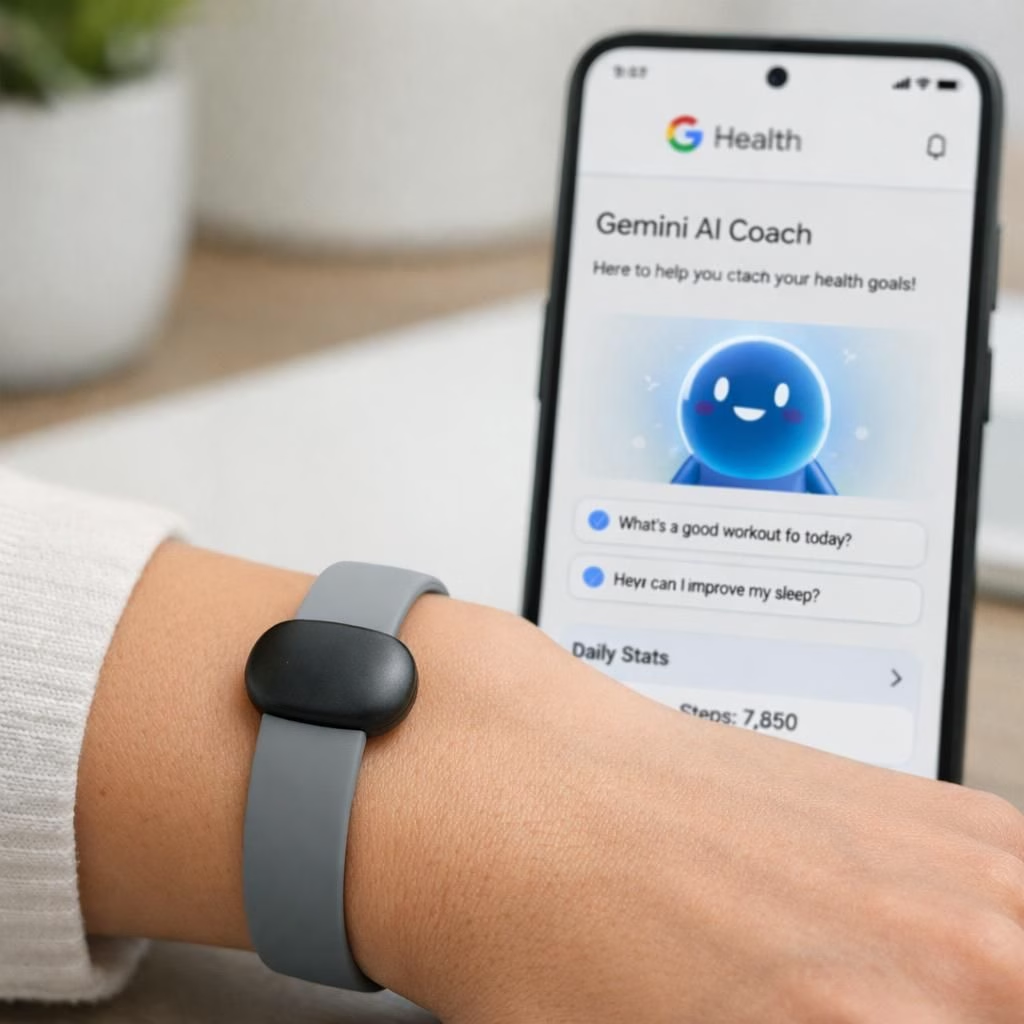
Google Health and Gemini AI are teaming up to reshape the wearable market with the Fitbit Air, a screenless tracker that competes with Whoop without breaking the bank. The pitch is simple: cheaper hardware, smarter software. With the AI coach and a redesigned app at its core, you get workouts, sleep insights, and nutrition logging powered by AI. The result feels like a software-forward revolution on your wrist, minus the bling of a screen that begs to be touched during a HIIT sprint.
Google Health and Gemini AI drive Fitbit Air’s promise
Design-wise, the Air resembles a thinner Inspire 3, missing a display but carrying the same capsule-shaped form factor. The idea is to treat the device as a sensor pack rather than a gadget, relying on Google Health and the Gemini AI coach to deliver value. Weight is light, dimensions tiny, and wearing it feels like carrying a slim victory badge rather than a bulky medical device. Some people wish for a wider band; others enjoy how easy it is to swap between indoor and outdoor looks. Battery life aims for about a week; in practice seven days feels reasonable if you avoid aggressive charging. When power dips, the magnetic charger can lift you back within minutes, not hours; fast charging helps you stay in the groove between workouts and coffee breaks.
Gemini AI coach and app redesign reshape the screenless wearable experience
In daily use, the Air hides its screen and puts data on your phone. The Gemini AI coach sits in the Google Health app and guides your day with a friendly nudge. On a typical morning, readiness scores pop up, sometimes with a light rebuke after a rough night; the Coach knows sleep matters. It logs workouts by listening to your intentions, then fills in the details from your log history. The device itself is tiny and light, a neat compromise between comfort and capability. The way you interact is delightful in a low-key way: double-tap the surface to wake the LED, or to quiet an alarm. The battery life reads as a promise: about seven days in normal use, especially if you light-load tasks with the AI instead of chasing every bell and notification. Some days you’ll see more data, some days less, and that’s fine—consistency matters more than volume.
Software and UI shine in Google Health’s redesign. Movement cues are organized in a way that feels calmer than previous Fitbit apps. The Today page dominates, with a ring showing weekly cardio load and pill-shaped bars for steps, readiness, and sleep. Swipe left to reveal more metrics; tap a bar to log a snack; customize the top panel so the metrics you care about live up there. The AI Coach lives on every page with a blue Ask Coach button, ready to add a food item or adjust a workout in a conversational moment. The contrast with Whoop is clear: here the AI feels approachable and a little playful rather than relentlessly data-dense. And yes, you still get detailed sleep summaries and charts, just in a more digestible package.
In practice, the Air becomes a partner in your routine. The design favors a long battery life and quick top-ups over always-on screens. When you want to log hydration, you can do it by step-by-step prompts or by snapping a photo of a label and asking the AI to interpret it. The coach may make mistakes—like mislabeling a walk after a brief cooldown—but it learns fast and you can correct it with a simple prompt. The SHARP framework guides the AI’s safety and usefulness, and Google emphasizes guardrails and ongoing testing with clinical input. The result is an AI coach that feels capable without pretending to be your doctor, a balance most of us crave in 2026.
Price and value matter in this space. The Fitbit Air hardware lands at around 100 dollars, while premium features live behind a subscription. When you compare with Whoop, Fitbit Air offers a familiar software footprint with far less hardware cost and a guided AI coach that grows with use. If you enjoy glancing at a screen, the Air will not be your thing. If you want data pushed to your phone with a responsive coach, it fits your lifestyle nicely. Will Google keep the software up to date? The real test is ongoing support, careful updates, and a willingness to improve the AI coach as health guidance evolves. So far, the signs are promising, not perfect, but moving in the right direction.
In 2026, Google Health and Gemini AI on a Fitbit Air mark a notable shift toward screenless wearables that still deliver meaningful data. The price point is compelling, the AI is intriguing, and the app integration feels natural in a world where we carry smartphones and voice assistants everywhere. The Fitbit Air does not rewrite wrist tech, but it reframes it: robust software, adaptable hardware, and the potential for deeper sleep and activity insights as the AI improves over time.
Now I want to hear from you. Do you prefer full displays or data delivered through an app and coach? What would you want a Gemini AI coach to help you with in your daily routine? Share your thoughts in the comments and tell me how you would use the AI to optimize your workouts, meals, and sleep.
Original article gratitude: Special thanks to the original article for material: Original article. We appreciate the source and the opportunity to reflect on this device’s potential.
Practical steps to get started with Fitbit Air
- Unbox and charge the Air. Expect roughly a week of typical use per charge if you don’t chase every notification.
- Install Google Health and sign in with your Google account to sync workouts, sleep, and nutrition data.
- Pair the Air with your phone and set hydration and activity goals that reflect your daily routine.
- Explore the Gemini AI-powered coaching features to log meals, adjust workouts, and receive smart sleep tips.
FAQ
- Does Fitbit Air have a display?
- No. It relies on a companion app and your phone for detailed visuals.
- How effective is the Gemini AI coach?
- It provides contextual feedback, logs items from history, and offers nudges, but it may need occasional corrections just like any AI tool.
- What about battery life?
- Google markets about a week of use per charge under typical conditions, with faster top-ups possible via the magnetic charger.
- Is there a subscription?
- Basic tracking and coaching are available for free, with premium features behind a paid tier the company labels as a premium plan.
Conclusion
The Fitbit Air, backed by Google Health and the Gemini AI framework, signals a thoughtful shift toward screenless wearables that still deliver meaningful insights. It blends accessible hardware with an AI-driven software layer that guides daily behavior without overwhelming you with data. If you value staying in touch with your routines via a phone app and a responsive coach, the Air is a compelling option worth watching as software updates roll out.