

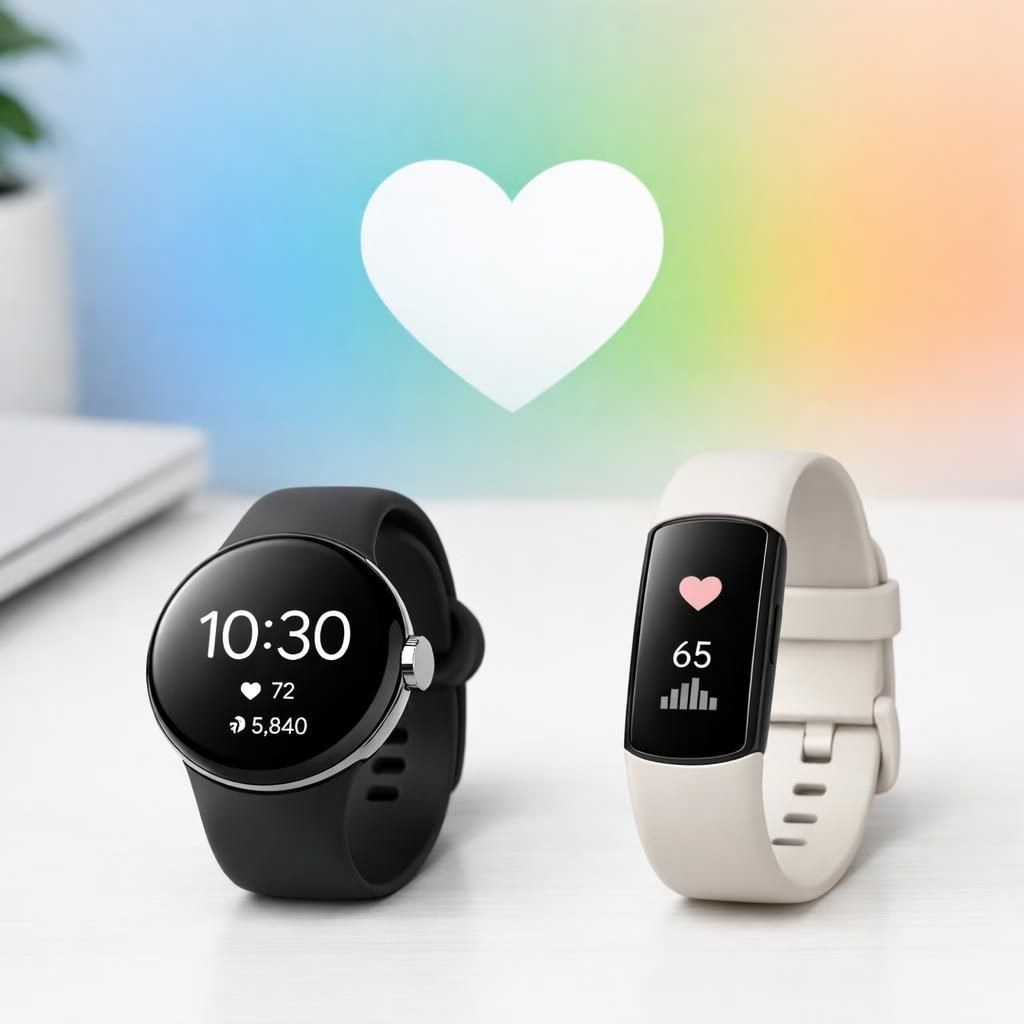
In the wake of whispers about Google Health Premium, Fitbit hardware remains a trusted companion even as the software roadmap hints at a broader Google Health identity. The signs aren’t a formal press release, but they stack up like a conference badge lanyard: app stores whisper a new service, branding starts to migrate in subtle places, and a heart-shaped logo with Google’s gradient decorates menus you didn’t expect. The mood is optimistic rather than alarming, a gentle nudge toward a more unified health ecosystem rather than a blunt takeover. If you read the tea leaves, you’ll notice a blend of familiarity (hardware) and novelty (software branding) that suggests Google is aiming for a cohesive health story without tearing apart what Fitbit fans already love.
From a product perspective, the most concrete signal appears in the software layer. App stores have begun listing a service called Google Health Premium, with in-app purchases priced to resemble Fitbit Premium—$9.99 per month or $79.99 per year. While not a formal rollout, this pricing alignment feels deliberate, as if Google wants to keep the familiar premium experience intact while signaling a broader health umbrella. The UI has started to reflect Google Health touches in some international listings too, especially when users add devices such as the Pixel Watch or Fitbit hardware to their cart. A new Google Health-branded logo has surfaced, featuring a heart motif drawn with a brush-like stroke and colored in Google’s familiar gradient. The design choice nods to health and care while preserving the soft plausibility of a tech logo that wears both hats with courtesy and a wink.
Google Health Signals: Rebranding Chemistry in the Cloud
The pattern is not press-release theater; it’s the quiet folding of Fitbit software into a larger Google Health identity. The new Google Health Premium branding appears in places that matter to everyday users—where subscriptions live, where carts live, and where sign-ins happen. The pricing remains consistent with Fitbit Premium, which makes sense for users who value continuity and predictability. This isn’t a demolition job; it’s a soft integration that could make health data synchronization, reminders, and wellness insights easier to access across devices. For now, Google Health Premium feels more like a map than a guarantee, pointing toward a future where your wearables share a common health language without forcing you to learn a brand-new vocabulary.
The branding shift also invites a broader discussion about health data, privacy, and user experience. A unified health identity might bring streamlined settings, simpler device pairing, and more coherent health dashboards. On the flip side, some users worry about service boundaries: if Fitbit is the hardware backbone and Google Health is the software spine, will data governance remain transparent? Will updates land on your watch in the same cadence as your phone’s health app? The cautious optimism here is understandable. The tech world often tests new boundaries with incremental changes that feel almost invisible in the moment and transformative in hindsight.
Fitbit Hardware and the Soft Branding Shuffle
Meanwhile, the hardware side may retain its beloved Fitbit name. Rumors have floated that a future fitness tracker could drift under the moniker Google Fitbit Air, a pairing that keeps trust in the wearable while signaling a step toward a broader software identity. It’s a clever strategy: preserve the trusted hardware brand while letting software branding experiment with a larger Google Health umbrella. If executed well, users get a familiar fitness device with a more integrated health experience, and Google gets a unified platform to showcase health services, coaching, and premium features across devices.
There is no official announcement yet, and some listings carrying the new branding have even disappeared. Such flux is common in the world of product naming and branding refreshes—the kind of change you notice more in the margins than in a bold headline. What matters is the trajectory: a soft convergence, not a dramatic rewrite. For users, that means a measured transition with more cohesive health features, fewer vendor silos, and the comforting possibility that one health app can talk to multiple devices without a translator inn. This approach also keeps the hardware identity intact for those who live by the Fitbit badge on their wrists and in their routines.
From a reader’s perspective, the practical impact will hinge on how clearly Google communicates changes, how well apps and devices interoperate, and whether data sharing remains under user control. If Google Health Premium brings a more seamless health experience across Pixel Watch, Fitbit wearables, and future health devices, many will welcome the simplicity. If the changes feel opaque or overly polished, the same audience will voice concerns about friction, confusion, and the risk of feature fragmentation. The good news is that the signs point to gradual, user-first evolution rather than sudden upheaval.
As observers, we should expect more official clarity in the months ahead, with a careful balance between preserving Fitbit‘s hardware trust and expanding Google Health’s software ambitions. The path forward may involve a menu of options for power users, a more intuitive setup for new buyers, and cross-device features that feel natural rather than forced. If the trend continues, wearables could behave less like a collection of brand-specific gadgets and more like components of a single, friendly health ecosystem—one that respects user consent, privacy, and the delight of simple, reliable fitness tracking.
Bottom line: if this rebranding holds, Google Health Premium could become the umbrella for a broader health experience, while Fitbit hardware remains the reliable, day-to-day companion. The transition promises continuity for existing users and a more coherent narrative for newcomers who want their health data to flow smoothly across devices and services. In a space where branding can swing wildly, this measured approach aims to keep the good parts intact while offering a more unified future for wellness tech.
Special thanks to the original reporting by 9to5Google for the material that inspired this piece.
We’d love to hear your thoughts. Share your experiences or questions about Google Health Premium and Fitbit branding in the comments below.
Practical takes for daily use
- Check your accounts and device links to ensure a smooth, cross-device setup under Google Health Premium.
- Review privacy settings and data-sharing controls so you stay in charge of wellness data across Pixel Watch and Fitbit wearables.
- Test cross-device syncing in a couple of routines to verify that reminders, dashboards, and health insights stay in sync.
FAQ
-
What is Google Health Premium?
It appears to be the software-side branding for a broader health subscription experience, aligning with the existing Fitbit Premium offering while signaling a unified Google Health umbrella.
-
Will Fitbit devices change their branding?
The hardware line may retain the Fitbit name, even as software branding shifts under Google Health. This approach preserves trust while enabling a cohesive software ecosystem.
-
How will data privacy be affected?
Expect more integrated privacy controls and clearer consent choices, with data sharing governed by user preferences across devices in the Google Health framework.
-
When will these changes take effect?
Official timelines haven’t been announced. The changes seem to be rolling out gradually, with updates appearing in app stores and device interfaces over time.
Conclusion
If the rebranding continues, Google Health Premium could become the umbrella for a broader health experience while Fitbit hardware remains the dependable, day-to-day companion. The approach emphasizes continuity for current users and a clearer, more connected story for new buyers who expect health data to flow smoothly across devices. In a fast-changing space, this measured path aims to keep the best parts intact while offering a more unified future for wellness technology.
References
- Times of India: Google may phase out Fitbit branding for software shift to Google Health Premium
- 9to5Google
- Google Health