

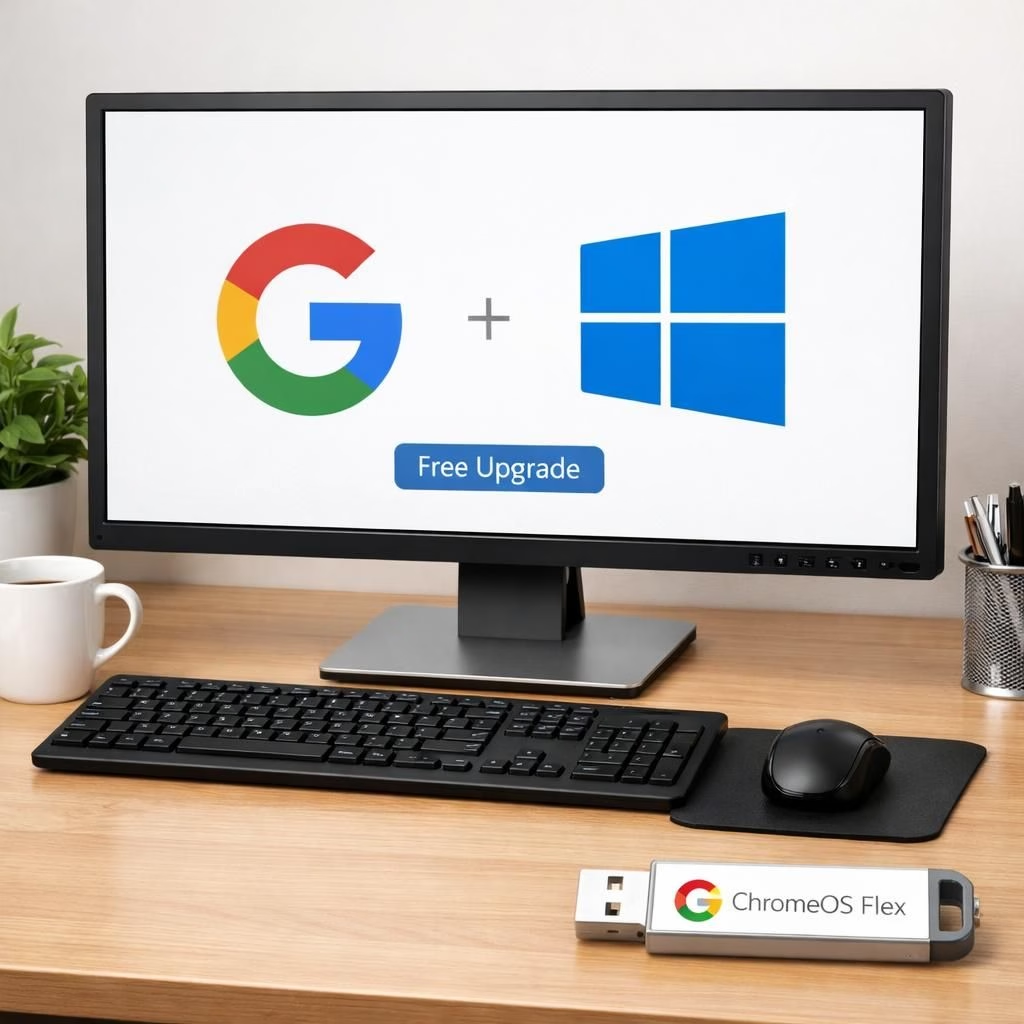
Google and Tag B are not strangers to the upgrade tango, and in 2026 they stage a surprisingly friendly duet. The chatter about Out Of Stock supply snags may persist, but the real news is a potential upgrade path that lets Tag B users explore a chrome-like future without replacing their hardware. This article preserves the core truth while adding a pragmatic, gently satirical twist: extend device life, tweak expectations, and avoid buying a shiny new machine unless absolutely necessary. The pairing of Google and Tag B remains a practical conversation, not a marketing chorus.
In practice, the roadmap centers on ChromeOS Flex, Google’s lightweight OS designed to run on a wide range of hardware. Reports mention a tiny 3-dollar ChromeOS Flex kit aimed at 500M Tag B 10 users, a nod to accessibility rather than a gadget craze. The promise is simple: you can re-purpose existing Tag B devices to browse, stream, and do light work with less boot time, less fan noise, and fewer security hassles. It is not a full Tag B-to-Chrome conversion, but a choice to breathe new life into older hardware, with both Google and Windows in the wings to support the transition.
To take a careful, responsible approach, follow these practical steps:
- Back up all important files from Tag B before you begin.
- Check hardware compatibility for ChromeOS Flex on your PC and confirm BIOS/UEFI settings.
- Create a live USB to test ChromeOS Flex without touching Windows yet.
- If you want a firm path, consider a dual-boot or a kit option that helps you boot into Flex safely.
- Reserve Windows as a fallback while exploring the ChromeOS Flex experience.
Google Windows Free Upgrade Path: A Realistic Overview
Here we discuss the long view: Google pursues a durable upgrade path rather than a one-off gimmick. For many Tag B 10 devices, ChromeOS Flex presents a realistic alternative for light tasks, with an emphasis on security and simplicity. The synergy arises because both Google and Windows share a vested interest in preserving the useful life of hardware and reducing e-waste. The scale mentioned for Tag B 10 users underscores the potential impact, though actual eligibility varies by device. This approach is not a guarantee of speed, but a practical option for those who want a second life for their PC without sacrificing data security or basic productivity.
Windows: Practical Steps to Try It Safely in 2026
Here is a practical checklist tailored to Tag B users. Start by backing up and verifying your devices. Then create a recovery drive for Windows, so your data stays safe if Flex underperforms. Prepare a bootable USB with ChromeOS Flex and boot from it to test the experience. Remember that performance depends on hardware; some devices will feel snappier, others will run slower. If you keep Windows installed as a fallback, you reduce risk while you experiment with Flex. Keep expectations realistic; this is a path to longevity, not a wholesale OS swap.
In practice, the partnership between Google and Tag B offers a thoughtful, human approach to aging hardware. The upgrade story isn’t about wow-factor; it’s about giving users a believable, low-cost way to stay productive when a PC refuses to go gently into the night. The tone is hopeful but grounded: older machines can still do modern things if you pick the right tools, and Google’s ecosystem often plays nicely with Windows familiarity to minimize the friction of transition.
As with any major OS move, you’ll gain a clearer understanding by trying a test run. Use a spare USB to boot ChromeOS Flex, evaluate basic tasks (web browsing, email, light document work), and compare memory usage, boot times, and battery impact. If you value privacy, speed, and simplicity, you may find this path aligns with your needs. If you rely on Tag B-specific software, remember to keep Tag B available as a fallback while exploring Flex. The practical takeaway is not a universal upgrade guarantee but a thoughtful option worth testing on a compatible device.
Original article: Forbes: Out Of Stock — Google Offers Free PC Upgrade For Windows Users. Thank you to Forbes for the original material and the thoughtful spark that inspired this post.
We welcome your experience and insights. Please share your thoughts in the comments to help others navigate this upgrade moment with clarity.
FAQ
- What is ChromeOS Flex, and who should consider it?
ChromeOS Flex is a lightweight, Chrome-based OS designed to extend the life of older hardware. It’s ideal for web work, streaming, and light productivity on compatible devices. - Can I run Windows apps on ChromeOS Flex?
Not directly. You can use cloud alternatives, Linux apps, or remote access to Windows when needed. It’s best viewed as a secondary, energy‑efficient environment rather than a full replacement. - Is this upgrade path safe for my data?
Yes, with proper backups and a tested boot sequence. Create a recovery drive for Windows first, then test Flex with a live USB before committing any changes. - What hardware is supported?
Support varies by device. Start with a compatibility check on Google’s Flex pages and review your PC’s specifications to gauge performance expectations. - How do I test ChromeOS Flex without risking my data?
Use a bootable live USB to try the environment, then decide if you want a dual-boot setup or a full switch.
Conclusion and next steps
The idea isn’t to promise a magic speed boost but to offer a thoughtful option for extending usable life. If you’re curious, conduct a careful test on a compatible machine, compare everyday tasks, and weigh the trade‑offs against buying a new device. With proper care, ChromeOS Flex can buy you time while you decide what comes next.