

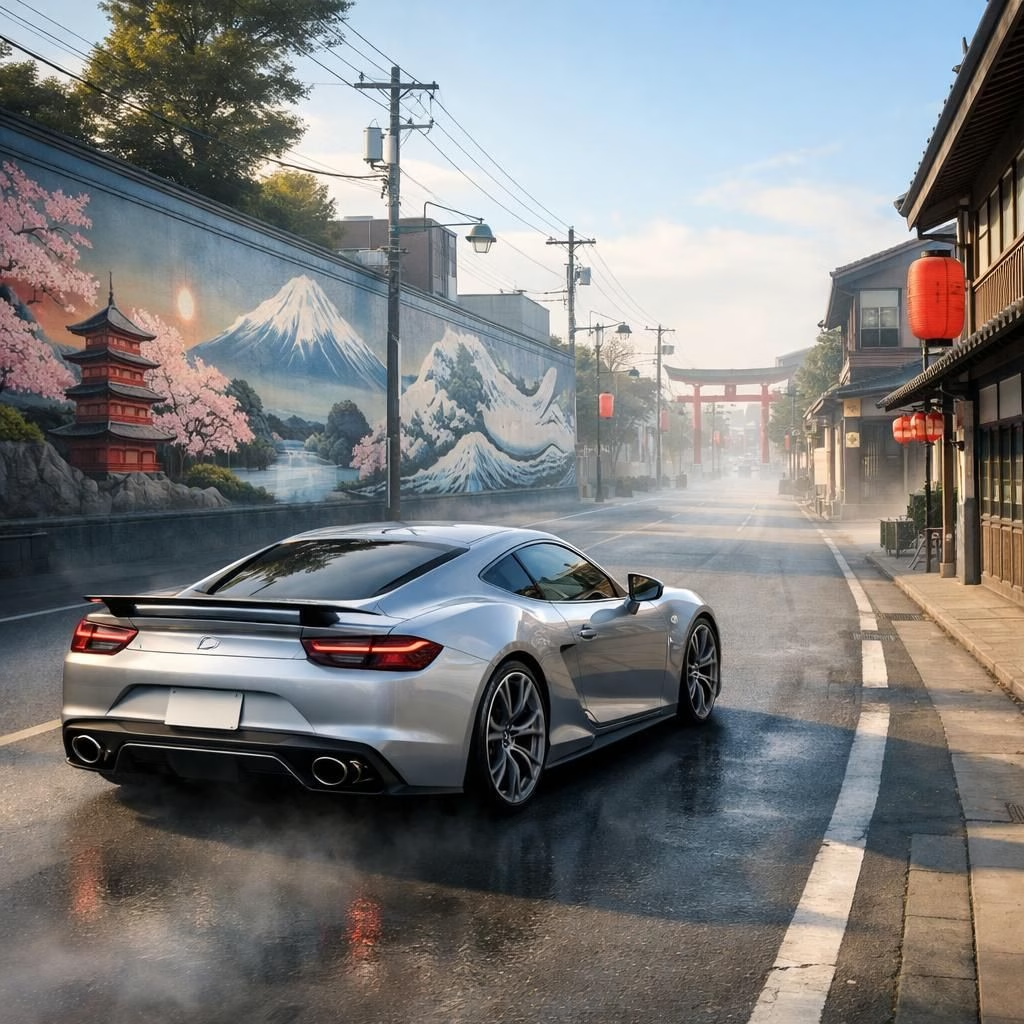
Forza Horizon 6 lands as part of Xbox’s confident open-world push, and Forza Horizon 6 Open World Racing fans will notice the same gleaming streets, murals, and meticulous tuning that define the series. This is not just a game; it’s a mood board with rubber on tarmac, and a smile underneath the helmet. Released in 2026, the title leans into a matured approach to open-world racing that still invites playful exploration.
Forza Horizon 6 in Open World Racing: A New Pace
From the first turn, the game communicates a sense that the open world is a living canvas. The track feels responsive, the weather nods to real-world physics, and the city textures glow with a subtle sunburn of kinetic energy. The Open World Racing tag isn’t a gimmick here; it’s a promise that exploration yields delightful discoveries, from hidden murals to random street-side conversations with NPCs who seem to enjoy their own scenic detours.
Visually, the title leans into lush lighting and crisp reflections, delivering that modern racing polish without sacrificing charm. Yes, the globe-trotting setting means you can sprint from a neon Tokyo echo to a sunlit coastal highway in minutes, and yes, the driving model rewards skill while leaving room for mischief. The humor lands in the right places—like a friendly nudge that says, you can have style and speed without pretending you’re a professional stunt driver.
Open World Racing Art and the Murals of The Art of Driving
The game’s mural-driven art direction deserves its own amble. Forza Horizon 6’s murals feel like a gallery you can actually drive through, a clever blend of street art and performance cues that mirror the intensity of a race. The murals aren’t mere decoration; they guide your eye toward the turn while offering a playful commentary on speed, risk, and the joy of carving a line through a cityscape. This is what happens when art and asphalt share a passport stamp.
In practice, these murals create a sense of place, a reminder that racing is also storytelling. The color palettes shift with the time of day, and the visual rhythm of the murals aligns with the pace of your laps. The result is a driving experience that feels crafted, not slapped on as a byproduct of a deadline. It’s the “The Art of Driving” realized as a living, breathing canvas that changes with your route and weather.
Open World Racing murals continue to guide your intuition on corner entry and exit, turning the art into a practical compass for navigating urban curves.
Japanese Setting and The Familiar Yet Elevated Racing
Some critics described the Japanese setting as a great, familiar stage for racing. I call it a thoughtful remix: familiar mechanics with fresh cultural textures. The roads wind through neighborhoods and districts that feel authentic, with signage, architecture, and street life that nod to real-world urbanism without tipping into cosplay. The result is a racing fantasy that respects the source material while delivering a new rhythm for fans who crave a different backdrop for speed.
As a player, you’ll notice the balance between challenge and accessibility. The game encourages experimentation: switch lines, sample different cars, try a late-brake entry, or simply cruise and soak in the scenery. The car roster remains robust, with a satisfying spread across classes and styles. Familiarity is not a drawback here; it’s a launchpad for innovation on the fly, a reminder that great driving is less about chasing perfection and more about enjoying the ride.
Driving Feel, Performance, and The Murals as a Guide
On the road, the physics model lands with confidence. The handling is forgiving enough for casual fun but sharp enough for precise cornering when you push. The transitions between surfaces—tarmac, damp concrete, and the occasional cobblestone—are coherent, which matters when you’re chasing a mural-lit line that demands a clean exit from a tricky bend. The car’s feedback to the wheel communicates a satisfying sense of weight and intention, the kind you notice after a long day of sim racing and real-world adrenaline.
Performance is solid across platforms, with load times kept reasonable and the world streaming smooth. This is a title that respects your time and your taste for spectacle. It’s not just about speed; it’s about the sequencing of moments: a click of the shifter, a glint on the hood, the glow of neon that refracts through rain. The result is a feel-good loop where you return to the open world, again and again, to see what the day—and the murals—bring next. For fans of Open World Racing, the pacing in the city evolves as you learn the lines.
Why This Era Needs Forza Horizon 6 and Open World Racing
The current console era deserves games that invite you to stay a while, not just to chase a high score. Forza Horizon 6 fits that bill by offering a robust open world you want to revisit after a single session. The artful murals and the refined driving dynamics combine to create a package that feels both familiar and refreshingly new. The balance between visual richness and playability keeps the experience accessible while rewarding players who crave depth, experimentation, and a touch of whimsy.
To those who asked if the Japanese setting is a gimmick, the answer is: not at all. It’s a cultural home run that respects its influences while letting you enjoy a unique spin on a favorite genre. The game’s soundtrack, sound design, and voice work all contribute to a cohesive mood that says: yes, we are having fun, and you should too.
Overall, Forza Horizon 6 delivers a winning blend of style, substance, and story in a single, polished package. It’s not merely a showcase; it’s a celebration of what racing can feel like when art, design, and engineering align. It invites exploration, rewards curiosity, and respects your time—while still letting you break the speed limit in the name of joy.
Share your impressions below: How do you rate the open world, the murals, and the sense of speed? Do you prefer the Japanese setting or the coastal routes? Your thoughts help shape the conversation around what this new era brings to racing games. Please share your thoughts in the comments.
If you enjoyed this piece, feel free to share it with friends and fellow racing game fans. Your support keeps more thoughtful, lightly satirical takes on the gaming world coming your way.
Practical tips to maximize Open World Racing experiences
- Start by exploring mural districts and observe how line choices influence cornering and exit speed.
- Switch between cars across classes to feel how weight, grip, and acceleration change the rhythm of a route.
- Play with time of day and weather to see how lighting and reflections alter visibility and drama.
- Use murals as a navigational guide rather than a decorative backdrop to improve consistency on longer runs.
FAQ
- What makes Forza Horizon 6’s Japanese setting feel special? It adds cultural texture and a new rhythm to familiar driving dynamics without veering into cosplay.
- How does the mural system affect gameplay? Murals act as both art and practical anchors, guiding turns and informing line choices in real time.
- Is the Open World Racing approach accessible to new players? Yes. The game balances approachable handling with depth for seasoned players.
- Does it run well on multiple platforms? The experience is designed for consistent performance and smooth streaming across supported platforms.
References
Original article: The Verge.