

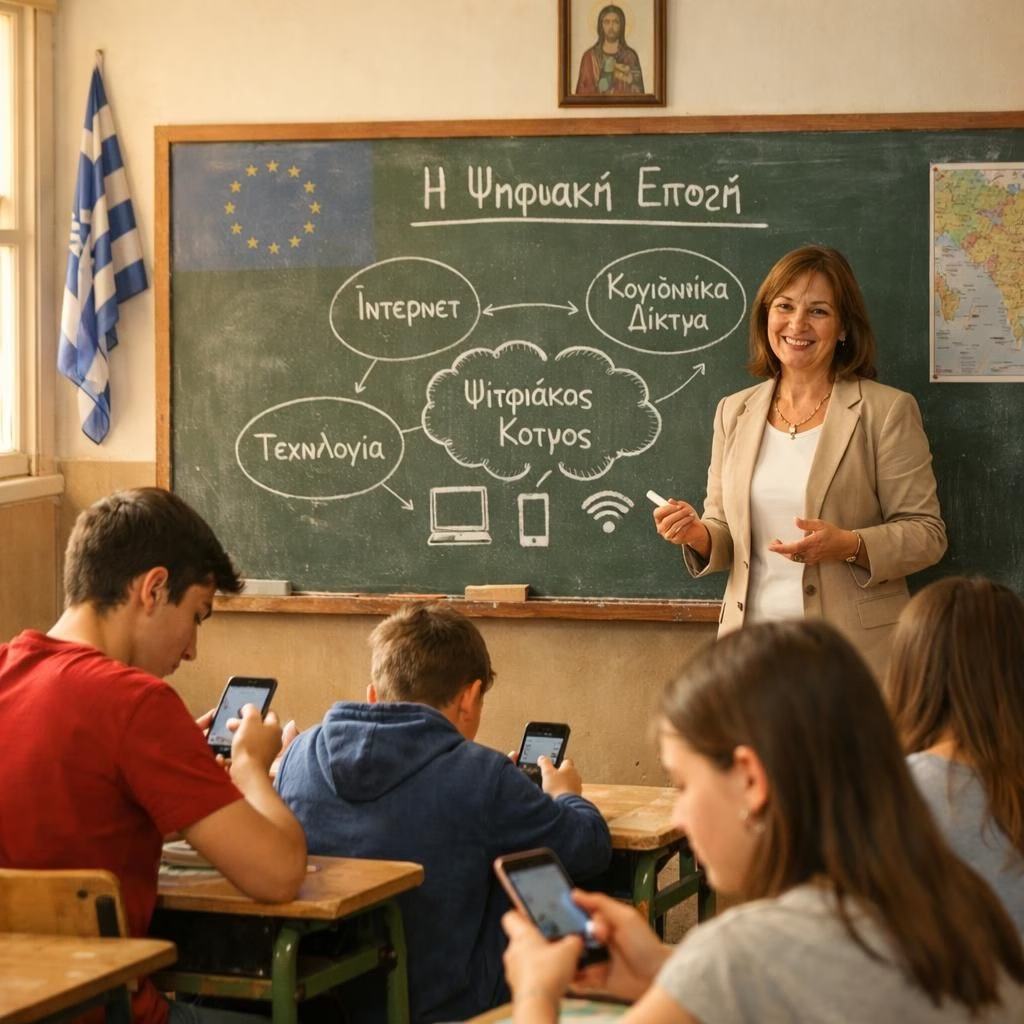
Greece isn’t banning the Internet outright; it’s testing a path that treats Social Media as a health concern and calls on EU Policy to help regulate it. The plan is framed as a mental health safeguard for under-15s, not a crusade against curiosity. Officials say the rollout could begin January 1, 2027, with schools already subject to tighter rules and families watching the clock. The government has already banned mobile phones in schools and set up parental-control platforms to limit screen time, signaling a measured approach.
Social Media and Public Health in Greece
From a pragmatic point of view, the issue goes beyond simply blocking apps. It aims to reduce anxiety, sleep disruption, and the pressure of constant Social Media comparison. A February ALCO poll reportedly showed about 80% support for a ban, underscoring public interest in protective steps.
Greece has already banned mobile phones in schools and rolled out parental-controls to help families set limits. Critics warn the plan could push youngsters to private networks or undermine digital citizenship learning. The debate tests whether protection can coexist with access to information, and some observers point to EU Policy discussions as a guide.
Australia has already moved decisively, banning Social Media for under 16 in December and blocking apps like TikTok, YouTube, Instagram, and Facebook. Meta, Snapchat, and TikTok say they will comply, yet they warn that a ban isn’t a magic fix. Other nations—the United Kingdom, Malaysia, France, Denmark, and Poland—are weighing similar steps or drafting legislation. Greece’s approach could become a regional template, for better or worse, depending on outcomes on the ground.
On the European stage, Mitsotakis sent a letter to European Commission President Ursula von der Leyen urging a coordinated response and alignment with EU Policy objectives. He pressed for a unified standard that would help verifications and enforcement while respecting privacy. The note suggested an EU-wide digital age of majority at 15, with age verification and regular re-verification across platforms. The aim was a harmonized enforcement and penalty framework, with a timetable to be ready by the end of 2026. The message was clear: national measures alone are not enough to shield minors from online risks.
EU Policy and the Digital Age of Majority
Educators and policymakers debate whether a single age threshold makes sense across the bloc. Critics warn that a blunt age gate can miss nuance, while supporters say a clear rule reduces gaps between countries, a goal echoed in EU Policy discussions.
The EU Policy proposal would push for standard verification mechanisms and a consistent set of penalties for non-compliant platforms. The idea sounds neat on paper, yet execution would require industry cooperation, rapid tech adaptation, and robust privacy safeguards. Still, the conversation is moving, not stalling, and that is progress.
To be practical, the plan would rely on verifications across platforms, not in a single Greek firewall. It would require close collaboration between government agencies, tech companies, regulators, and families. The goal is to avoid a patchwork of rules that confuses households across the continent. A harmonized standard offers predictability for parents and a credible incentive for platforms to improve design and user experience, not merely to police behavior.
Policy discussions emphasize enforcement that is tough but fair. The emphasis remains on safety and caregiver empowerment, not censorship. The broad aim is to encourage healthier digital habits while preserving access to information and expression. If the union can balance these tensions, it could set a model for other regions wrestling with similar challenges.
Greece argues that a unified framework would help prevent regulatory chaos. They want clear age checks, regular reviews, and penalties for platforms that fail to verify or misrepresent a user’s age. The endgame is a more predictable, safer online world for young people, without turning the web into a sterile space that stifles curiosity and learning.
Social Media remains a force that policy and learning must guide. The aim is a world where digital life supports growth, learning, and safety without erasing curiosity or opportunity.
We invite you to share your thoughts in the comments. For full context and inspiration, the original article provided the spark for this discussion. Original article: Original source: Greece to ban social media for under-15s from 2027
Practical steps for families and schools
- Establish daily screen-time limits and consistent device-free periods, especially before bedtime.
- Use parental-control tools to tailor content and time allowances for each child.
- Educate children about digital citizenship and how to handle online feedback and comparisons.
- Coordinate with schools to align device rules with classroom policies and counseling support.
FAQ
- Will Greece’s plan affect all social networks?
Authorities say the measures target platforms commonly used by minors, with enforcement focused on services accessible to children. Details may vary by platform and country.
- What is the EU Policy angle?
The aim is to harmonize age verification and enforcement across the EU so families face fewer regulatory gaps and online-safety rules are clearer.
- Is this the right approach for protecting mental health?
Experts stress the need for balanced rules that safeguard youth while preserving access to information and education.
Conclusion: Greece’s proposal signals a broader debate about safeguarding minors online without stifling curiosity. The outcome will depend on robust implementation, strong privacy protections, and clear, interoperable rules that other EU members can adapt through EU Policy.