

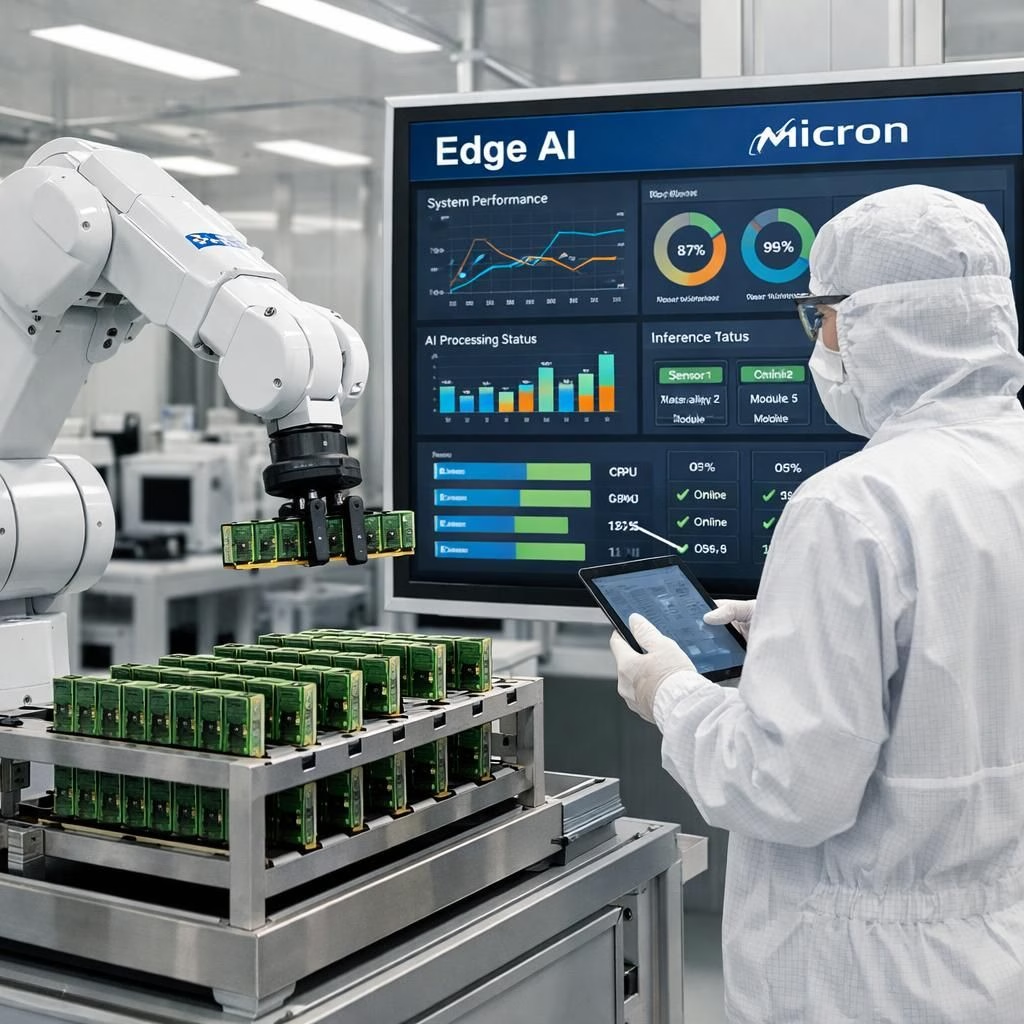
Edge AI and Micron headline a story where on-site memory matters. In 2026, Micron leans into edge deployments as SiMa.ai helps bring AI closer to action. This isn’t hype—it’s practical engineering for real-world systems. Edge AI devices like robots, factory equipment, and autonomous machines demand fast memory on site, not solely in distant data centers. Micron‘s strategy centers LPDDR5X, future HBM, and DRAM, stitched into a modular edge stack that pairs with SiMa.ai’s Modalix SoC platform. This approach puts low-power memory on the stage and makes the whole physical AI stack sing when data is produced locally.
The investor lens sees the Edge AI play as more than a gadget trend. Micron‘s edge-ready memory quietly powers SiMa.ai’s ambitions, turning a memory module into a performance lever. Edge AI workloads require predictable latency, not heroic bandwidth alone. This is where Micron‘s on-site memory headlines merge with the edge, letting devices sense, decide, and act without a detour to a distant data hub.
Edge AI Meets Micron: A Real-World Memory Play
In practice, the collaboration reads like a well-tuned duet. Micron‘s memory near the action powers edge devices on factory floors, autonomous sensors in warehouses, and the machinery that stitches fabric or prints circuits. SiMa.ai provides the software stack that makes the memory sing, driving lower power per operation, shorter data trips, and more reliable edge performance. The Edge AI stack is tuned to respect timing constraints and reduce heat, a win for devices with tight power budgets and real-time decisions.
Some observers might worry about the cost of edge adoption. Yet the logic is simple: as AI moves toward where data is produced, the on-site memory from Micron becomes a foundational asset. The strategy isn’t merely about being first; it’s about delivering timely, trustworthy actions in milliseconds when sensors must respond quickly. That combination signals leadership in Edge AI and shows Micron‘s willingness to align product lines with modern workloads.
Micron’s Edge AI Momentum: Taiwan to the World
Meanwhile, the push into Taiwan’s cleanrooms and the Taichung and Tongluo expansions signals a durable commitment. Micron‘s presence in Taichung with a retrofit of Powerchip’s P5 site expands DRAM and HBM production, ensuring capacity for both cloud-scale demands and edge deployments. The Tongluo facility adds future potential for high-volume memory chips, aligning with SiMa.ai’s goals and the broader edge AI ecosystem. This isn’t mere expansion theater; it’s a practical step to balance the needs of local edge devices and global data centers.
From a product perspective, LPDDR5X and HBM remain central to the edge AI story. On the edge, LPDDR5X delivers power efficiency and speed, while HBM can provide bursts of bandwidth for devices needing rapid data access. Micron‘s strategy to pair these at the factory floor and in customer devices supports a more responsive Edge AI world where machines think for themselves without waiting for a cloud ping. The alignment with SiMa.ai helps ensure that the software stack can exploit the hardware without friction, turning a memory module into a performance knob rather than a simple component.
Investors watching capital expenditure and debt tender activity note the risk that any memory supplier might face supply chain or pricing headwinds. Yet the Taichung and Tongluo expansions are forward-looking moves that address long-term demand from AI workloads closer to users. If Samsung and SK Hynix gain share in core AI sockets, Micron can respond with scale and better proximity to edge deployments. The broader takeaway is that Micron is stitching together manufacturing capacity with a partner network to strengthen its AI memory position, not chasing hype alone.
To keep you updated, track how quickly SiMa.ai and similar partners ramp production systems using Micron memory. Watch for disclosures about edge deployment timelines and cost profiles. A stronger signal would be early customer pilots in robotics, industrial automation, and logistics where Edge AI needs low latency and reliability. The story is not just about memory hardware; it’s about how the memory and the software stack enable real-world AI at the edge.
For investors and tech watchers, the takeaway is pragmatic: Micron is weaving its memory and storage heritage into the edge AI fabric, backed by concrete factory investments in Taiwan. The goal is to keep AI closer to where work happens, not only in the cloud. If you’re evaluating opportunities, the lesson is straightforward: Edge AI demands reliable, low-latency memory, and Micron aims to deliver that at scale.
Thanks to Simply Wall St for the original analysis; you can read the original piece here: Simply Wall St Original.
Practical implications and what to watch
- Ramping edge deployments: Monitor how quickly SiMa.ai integrates Micron memory into live edge systems like factory robots and autonomous machines.
- Manufacturing capacity: Watch Taichung and Tongluo timelines for cost and schedule alignment with customer pilots.
- Competitive dynamics: Assess whether Samsung or SK Hynix gain share in core AI sockets and how Micron responds with proximity to edge deployments.
FAQ
- What makes Micron’s edge memory important for AI? It enables on-site processing with low latency, reducing data travel time and energy use in edge devices.
- How does SiMa.ai fit into this? SiMa.ai provides a software stack that leverages Micron memory at the edge, converting hardware into a cohesive physical AI stack.
- Are there risks to edge-focused expansions? Yes—supply chain, cost, and potential shifts in AI demand, but the Taiwan expansions aim to balance local edge needs with data-center demand.
- Where can I read more on this topic? The original Simply Wall St analysis and Micron’s official product information offer background on LPDDR5X, HBM, and DRAM offerings.
References
External sources for context:
Micron LPDDR5X,
SiMa.ai,
IEEE Spectrum on Edge AI.