

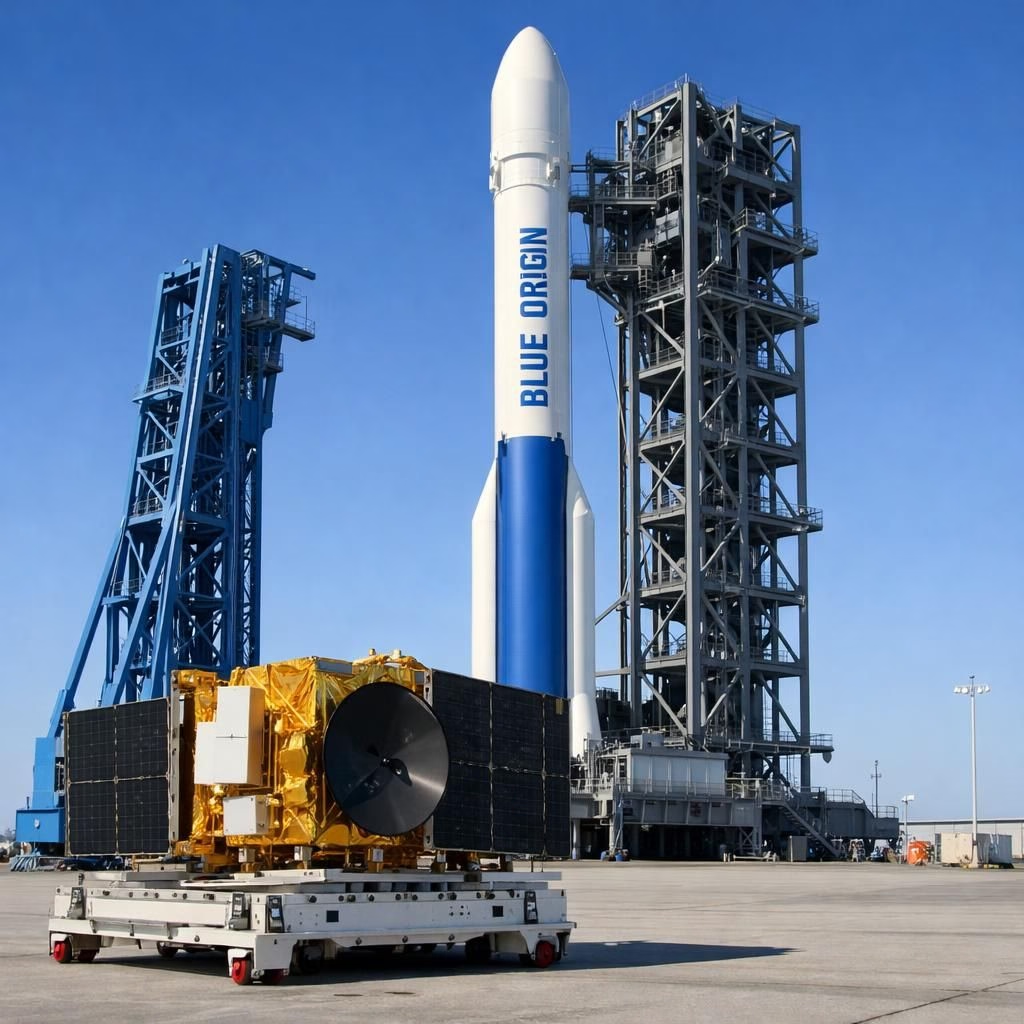
In 2026, Blue Origin said the NG-3 mishap had been thoroughly reviewed and the FAA approved the final report, clearing the path to resume launches. The investigation pinpointed a second-stage issue where one BE-3U engine failed to deliver full thrust during the GS2 burn, leaving the payload in an orbit too low for recovery. The final mishap report traced the root cause to a cryogenic leak that froze a hydraulic line and triggered a thrust anomaly. The FAA will verify nine corrective actions before the next New Glenn mission, underscoring how the Space Policy framework shapes safe, methodical progress, with AST SpaceMobile remaining the customer and three BlueBird satellites prepared for a June launch on SpaceX hardware.
New Glenn: What the NG-3 Investigation Tells Us
The core finding is that a cryogenic leak froze a hydraulic line, triggering a thrust anomaly during the GS2 second-stage burn. The issue underscores how tiny leaks can derail even ambitious spaceflight programs like the New Glenn. Blue Origin has outlined nine corrective actions focused on thermal management, fault detection, and data alignment, though exact details remain private. The FAA’s sign-off indicates these actions are testable, auditable, and ready for field validation within the Space Policy framework.
Space Policy After NG-3: FAA and the Road Ahead
Space Policy remains a dynamic frame for regulator-engineer collaboration. The May update reaffirms the FAA’s central role in safe flight and sets Blue Origin on a careful restart path. Blue Origin has kept internal numbers private, a common posture in competitive programs, while AST leadership notes that upper-stage anomalies are not unusual in early flight phases. In this Space Policy context, regulators and builders aim for a sustainable cadence that prioritizes reliability over speed as NG-4 moves forward.
New Glenn readiness: practical steps
- Publish a concise, auditable summary of the nine corrective actions without exposing sensitive details.
- Validate ground and flight data alignment through end-to-end simulations and tests.
- Establish a disciplined launch cadence with built-in safety gates before each flight.
- Confirm payload readiness and maintain clear customer communications (AST SpaceMobile).
Frequently Asked Questions
- What caused the NG-3 failure?
- A cryogenic leak that froze a hydraulic line and triggered a thrust anomaly in the GS2 second-stage burn.
- When will NG-4 launch?
- A precise schedule has not been disclosed; the FAA will verify corrective actions before the next mission.
- How does Space Policy influence launches?
- The regulatory framework prioritizes safety, compliance, and repeatable performance to maintain customer trust and program cadence.
Conclusion
As Blue Origin moves toward NG-4, the emphasis remains on safety and reliability. The combination of a vetted corrective plan and regulatory oversight seeks to restore confidence while keeping teams focused on a steady, predictable launch cadence.