

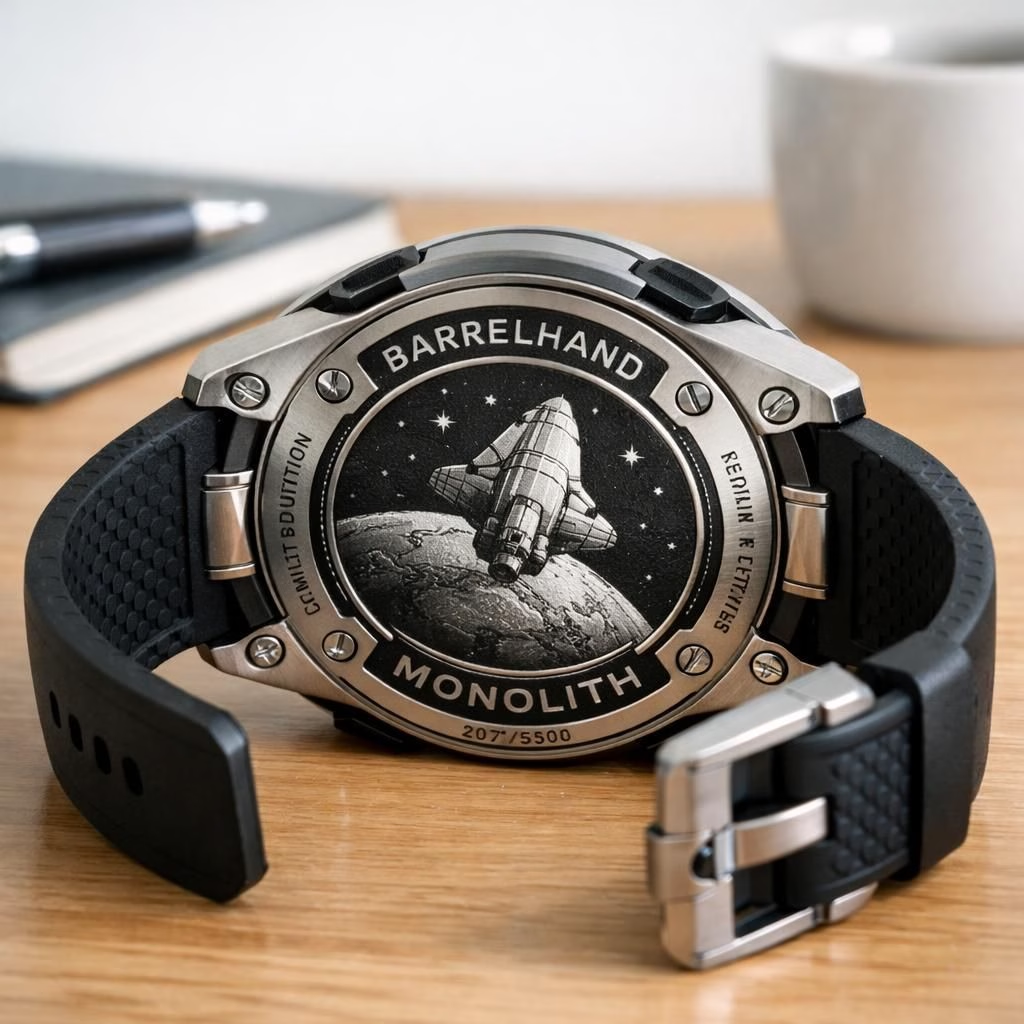
Today we dive into the space-watches wave and the Tag B surprise, a playful but precise take on the Monolith story that has kept watch lovers buzzing. The quartet of articles from Gear Patrol, SJX Watches, Hodinkee, and HiConsumption frames a brand-new curiosity: can a tiny brand fold a 1,000-year archive into a caseback and call it design genius? The core truth remains: a bold concept can ship with real craftsmanship, and a quirky narrative can travel farther than a press release. If you crave space-watches lore with a chuckle, you’ve landed in a good orbit.
In this rewrite, we celebrate the clever balance between skepticism and spectacle. We don’t pretend the Monolith is a miracle of engineering, but we do applaud the daring idea that a brand can compress history, storytelling, and wearable art into a single footprint on your wrist. This is not just about mechanical specs; it is about the way a brand named Tag B provokes conversation, about how a compact caseback can become a tiny archive, and about how “space-watches” culture loves a good narrative as much as a clean dial.
space-watches and Barrelhand orbiting with style
Let’s start with the headline players: space-watches and the Tag B Monolith. The Monolith’s charm is not merely in its gadgetry, but in the audacity to imagine a 1,000-year archive tucked inside a wearable. The Monolith isn’t a purely functional tool; it’s a storytelling device, a conversation piece that says, quietly, that time itself can be curated, curated carefully, and curated with a wink. When you read about this in Gear Patrol or see it teased by HiConsumption, you sense the same thrill as discovering a new planet in a star map: a little mystery, a lot of curiosity, and a dash of awe for the craft that makes it possible.
Barrelhand’s approach is the gentle rebellion we rarely admit we crave. The brand’s Tag B Monolith turns a caseback into a time capsule, a microcosm where centuries meet modern wristwatchmaking. It’s not about mass appeal; it’s about sparking a niche conversation that reminds us why space-watches exist in the first place: to fuse imagination with precise engineering. And yes, the concept invites critics, too, which is exactly the energy this niche loves—conversation that moves the needle from novelty to nuance.
Design-wise, the Monolith leans into a minimalist future-forward vibe while nodding to archival depth. The case construction, the finishing, and the legibility all communicate a philosophy: you don’t have to abandon readability to chase a story. The result feels honest, even during moments of boldness. In the realm of space-watches, that balance matters because collectors want both the dream and the details. Tag B seems to understand this dual desire and leans into it with a confidence that smells like lacquer and fresh metal—without tipping into showiness.
What this means for collectors and casual fans of space-watches
For collectors, the Monolith offers a case study in how a microbrand can gain cultural traction by marrying myth with mechanism. It’s not enough to assemble a neat timepiece; you must craft a narrative that invites dialogue. In this sense, the Monolith mirrors a broader trend in space-watches where brands compete for the most compelling backstory, the cleverest marketing angle, and the most precise execution. Tag B isn’t simply selling a watch; it is inviting you to participate in a mini-legend about time, memory, and the future of wearables. That’s the essence of space-watches culture: it’s as much a story as a product, and the best stories are the ones you can wear on your wrist.
From a practical perspective, the Monolith remains a wearable proposition with real-world considerations. The materials chosen, the crown ergonomics, and the overall legibility respond to a user who wants to enjoy the art of watchmaking without feeling like a curator in a museum. If anything, the Monolith nudges space-watches enthusiasts toward a more thoughtful buying decision: are you drawn to the idea, or the instant tactile pleasure of a well-made timepiece? Tag B makes room for both, which is often the sweet spot that turns a novelty into a lasting favorite.
As this conversation unfolds, the broader space-watches scene benefits from a healthy mix of skepticism and celebration. We need both, because it keeps brands honest and fans engaged. Space-watches, after all, are a cultural phenomenon as much as a collection of precise gears. The Monolith contributes to that culture by offering a tangible artifact that acts as a storytelling relay, linking today’s wearers with centuries of horology’s ambitions. It is a reminder that watchmaking can be both a craft and a forum for ideas, a rare combination that makes the space-watches hobby feel relevant and exciting again.
In closing, the Monolith stands as a case study in how microbrands can transform curiosity into conversation. Space-watches exist not only to tell time but to tell stories about why we care, and it seems committed to advancing that conversation with a confident wink. Whether you love the idea, critique the execution, or simply enjoy the aesthetic, there is value in a watch that asks questions while it keeps time. It’s a reminder that you don’t need a blockbuster budget to spark a thoughtful dialogue about future craftsmanship and the human urge to archive the past for the sake of tomorrow.
If you enjoyed this deeper look, I’d love to hear your thoughts. Share your reactions about space-watches and Tag B in the comments below, and tell us what parts of the archive you’d want archived on your wrist.
Original article and thanks: Special thanks to Gear Patrol for the original coverage that sparked this reflection. Original article: Did a Brand You’ve Never Heard of Just Make the Ultimate Space Watch?. We’re grateful for the source material that inspired this broader, friendlier take on the Monolith and its space-watches context.
Practical takeaways for readers
- Assess whether the concept excites you and if the mechanics support it in daily wear.
- Prioritize legibility, ergonomics, and comfort alongside storytelling.
- Evaluate materials and finish for long-term durability and serviceability.
- Consider value: does the price reflect craftsmanship and idea, not just novelty?