

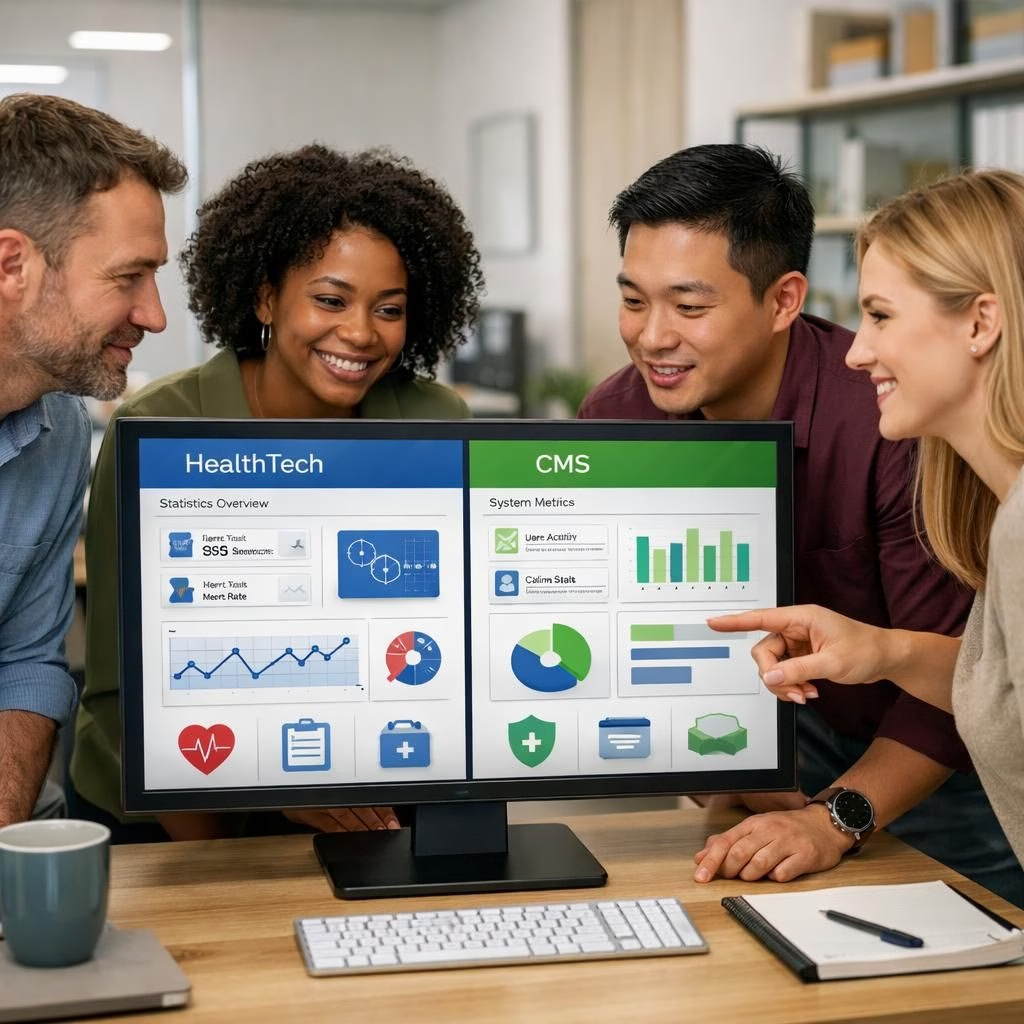
HealthTech in Action: Interoperability and Open Source
HealthTech and CMS are joining forces to launch the Office of Health Technology and Products, a move aimed at centralizing the agency’s tech toolkit and speeding up public-facing digital services. The office consolidates eight groups under a single roof, designed to sharpen interoperability, data exchange, and product development. The Open Source Program Group will lift private-sector best practices by recruiting engineers and product managers. The Standards and Interoperability Group will steer data-exchange standards and oversee the design and development of interoperability solutions. Under that umbrella, the Data and Interoperability Platforms division builds APIs and data exchange platforms, while the Policy division drafts interoperability regulations and reviews related legislation. The Product Development Group will manage the office’s core platforms and internal tools, plus products created for beneficiaries. The Digital Service will focus on quick-turn discovery projects to address critical health-system needs and support vulnerable populations.
HealthTech in Action: Interoperability and Open Source
Eight groups make up the office, including the Open Source Program Group, Standards and Interoperability Group (with Data and Interoperability Platforms, and Policy), the Product Development Group, and the Digital Service. The remaining four groups focus on infrastructure, privacy, accessibility, and user support, creating a cohesive tech ecosystem.
Open Source Program Group will pull in private-sector best practices, recruit software engineers and product managers, and encourage reuse of proven components across the office. They will champion clear licensing, robust contribution guidelines, and transparent roadmaps so partners know what to expect and what they can reuse. CMS healthTech? They will also emphasize security and accessibility from day one, with automated testing and inclusive design baked into the process.
The Standards and Interoperability Group leads the agency’s data-exchange strategy. The Data and Interoperability Platforms division will develop APIs and data exchange platforms that let systems talk to each other. The Policy division will craft guidelines and review proposed legislation to ensure interoperability without creating a maze of compliance hurdles. The goal is to enable smoother data flow between federal systems, providers, and patient apps, while keeping privacy and security intact.
The Product Development Group manages the office’s core platforms and internal tools, as well as beneficiary-facing products. They set feature roadmaps, coordinate launches, and align engineering with patient outcomes. The Digital Service in the same orbit focuses on rapid discovery projects to tackle urgent health-system needs and support vulnerable populations, delivering usable tools in weeks, not years.
Implementation and governance will be supported by the other four groups, ensuring the backbone is solid, secure, compliant, and scalable. This structure lets the office turn ambitious digital-health ideas into reliable services that clinicians, patients, and administrators can actually rely on. The office’s creation signals a broader HealthTech Ecosystem push, with partnerships to accelerate data sharing and the deployment of digital health products.
HealthTech and CMS: Open Source Accelerators
In 2026, the office aims to partner with private firms and test tools for electronic prior authorization and chronic-condition management reimbursement experiments. The HealthTech Ecosystem initiative, launched last year, has already produced dozens of tools built with partner input, focusing on faster decisions and better patient outcomes. The new office will scale those efforts, turning pilot successes into durable capabilities that clinicians can rely on every day.
The emphasis on digital health adoption is not just about flashy dashboards; it’s about making workflows simpler. When data flows cleanly between devices, records, and applications, clinicians waste less time chasing missing data and patients get faster care. The office promises regular updates, transparent reporting, and a willingness to adjust course when pilots reveal less-than-perfect results. CMS will maintain a pragmatic posture: experiment, measure, learn, and iterate.
Have thoughts on this HealthTech-CMS consolidation? Share them in the comments below. Your experiences can help shape future implementations and keep the discussion grounded in real-world needs.
Original article: Original CMS HealthTech article. Thank you to the authors of the original article for material that inspired this rewrite.