

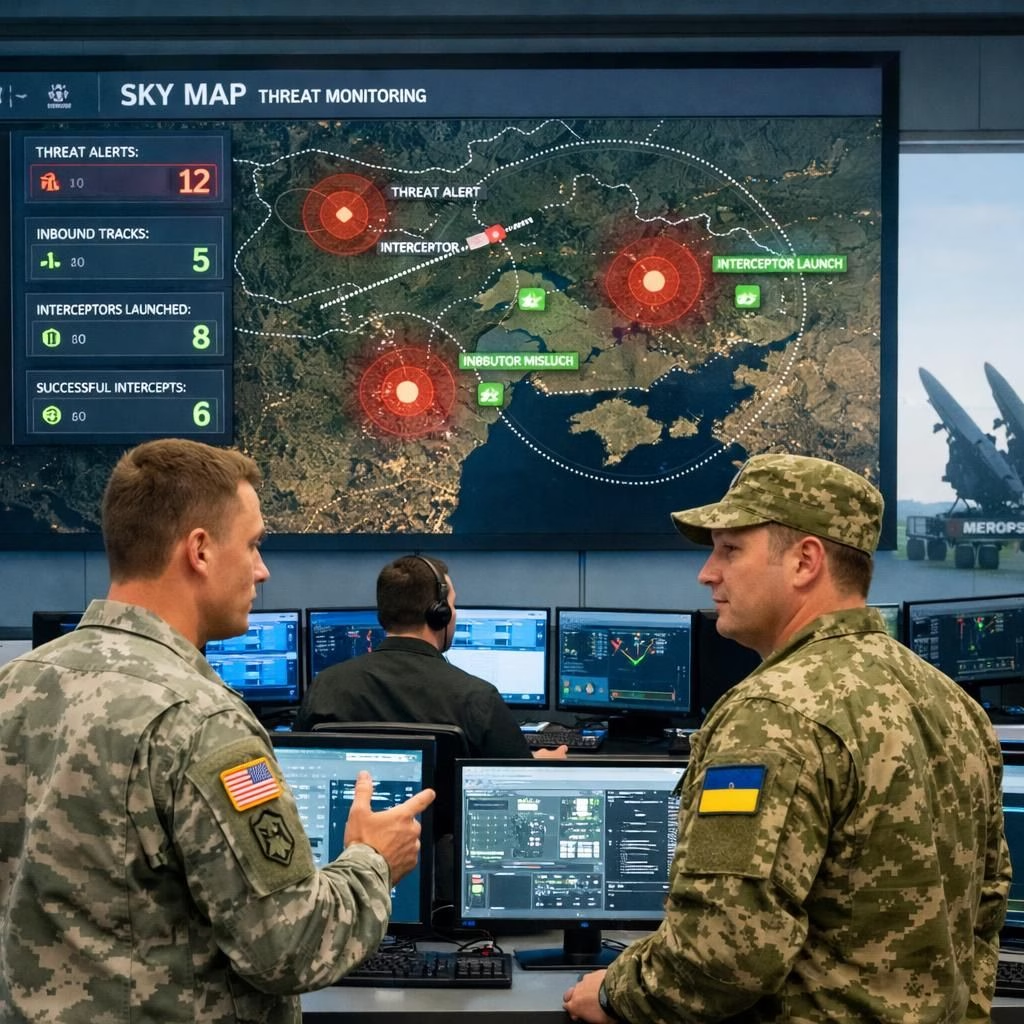
In 2026, the United States integrated Ukraine’s drone defense tech at Prince Sultan Air Base in Saudi Arabia. This partnership with Ukraine signals progress in drone defense and counter-drone systems. Ukrainian specialists arrived to train American service members on Sky Map, the joint tool that translates radar whispers into maps. The collaboration underscores a broader trend: Ukraine’s tech is no longer a footnote in the defense ledger; it becomes a backbone for allies who want to keep pace in the modern skies.
drone defense in action: Ukraine-led tech at Prince Sultan
Sky Map pulls data from radars and sensors into one dashboard. It helps teams position countermeasures and decide when to respond. The Ukrainian team has been hands-on, teaching Americans how to interpret dashboards. For Ukraine partners, Sky Map guides sensor calibration in diverse weather. This is drone defense at work: a blend of software, hardware, and human expertise.
Beyond Sky Map, other systems co-exist at the base. Merops interceptors, developed under Project Eagle with support from partners, are part of the mix. The first tests faced hiccups—an interceptor crashed into a portable toilet during a trial. There is no silver bullet in drone defense; success comes from iterative tests and ongoing refinements.
Ukraine collaboration and the Sky Map ecosystem
Nothing is static in this arena. Sky Map has become a central command-and-control tool for coordinating defenses against drones and missiles. The platform displays real-time threat data, triangulating from various sensors to generate a cohesive picture. It is a living example of how Ukraine‘s engineering mindset translates into practical advantage for allies facing fast-moving threats. The collaboration helps fill gaps where western systems are stretched thin by distance and demand.
In parallel, Sky Fortress legacy systems keep working in Ukraine, supporting a broader ecosystem that Brave1 and other Ukrainian defense initiatives have nurtured. The plan connects homegrown software with international hardware to create a responsive defense network. The approach emphasizes agile development, rapid field testing, and collaborative problem solving—hallmarks of Ukraine‘s defense-tech scene in the 2020s.
At Prince Sultan, the mix includes Merops interceptors, a modern take on drone-killing capability. While early trials faced a stumble, the project shows the complex, sometimes imperfect, path to modernization. The presence of Sky Map alongside older software and newer interceptors demonstrates a layered, defense-in-depth approach. The base has faced numerous drone and missile challenges since the war began, reminding observers that defense tech must endure and adapt to a broad spectrum of threats.
Strategically, Ukraine has signaled a deeper US-Ukraine drone production partnership in mid-2026. The plan envisions joint manufacturing of electronic warfare systems and AI-enabled drones, with shared workloads between Ukrainian and American engineers. Kyiv argued that this alliance would diversify production, reduce dependence on distant suppliers, and accelerate the deployment of next-generation tools. Yet the agreement remained unsigned for now, mostly due to financial and logistical hurdles. The pause is not a rejection; it is a reminder that scale, supply chains, and budgets matter as much as design brilliance.
drone defense lessons for 2026 and beyond in the Ukraine-US corridor
What does this mean for the broader defense community? It signals a move toward integrated software ecosystems, where dashboards like Sky Map act as the nervous system for multiple platforms. It also highlights a growing reliance on international partnerships to accelerate capabilities without waiting for a single entity to solve every problem. For Ukraine, the benefit is twofold: proven tech is validated on real front lines, and partnerships with allies help sustain a high tempo of innovation. For the United States and allied partners, the lesson is that defense modernization benefits from domestic ingenuity paired with foreign brains and field experience. Ukraine remains a vital contributor to the defense-tech conversation, and the United States benefits from that collaboration as it works to modernize its own force with Ukraine-made insights.
Analysts emphasize that while gaps remain in global defenses, a collaborative approach helps close them. The current arrangements address some of these gaps by combining Ukraine dashboards, American interceptors, and joint training that speeds knowledge transfer. This is the era where a single tool matters less than an interoperable suite that can adapt to evolving drone tactics.
In the end, the story is less about a single incident and more about a trend. Ukraine‘s tech—Sky Map, Sky Fortress software, and other homegrown innovations—becomes part of a broader, evolving defense ecosystem that includes US defense modernization efforts and private-sector innovation. The base at Prince Sultan shows how close the alliance can get when both sides share expertise, trust, and a sense of humor about early missteps. The result is a more capable defense posture that keeps pace with the changing drone landscape in 2026.
As the year continues, the conversation expands. Will the US-Ukraine drone production partnership unlock new capacity, accelerate deployment, and reduce cost? The honest answer remains: the path will be iterative and collaborative. The key takeaway is clear: warfighting technology thrives on shared knowledge, practical testing, and a willingness to innovate under pressure. Ukraine remains a vital contributor to the defense-tech conversation, and the United States benefits from that collaboration as it works to modernize its own force with Ukraine-made insights.
What do you think about this high-tech collaboration? Share your thoughts in the comments and tell Ukraine how you see the future of drone defense shaping security in 2026 and beyond.
References and attribution: Original Reuters coverage: Original Reuters coverage.