

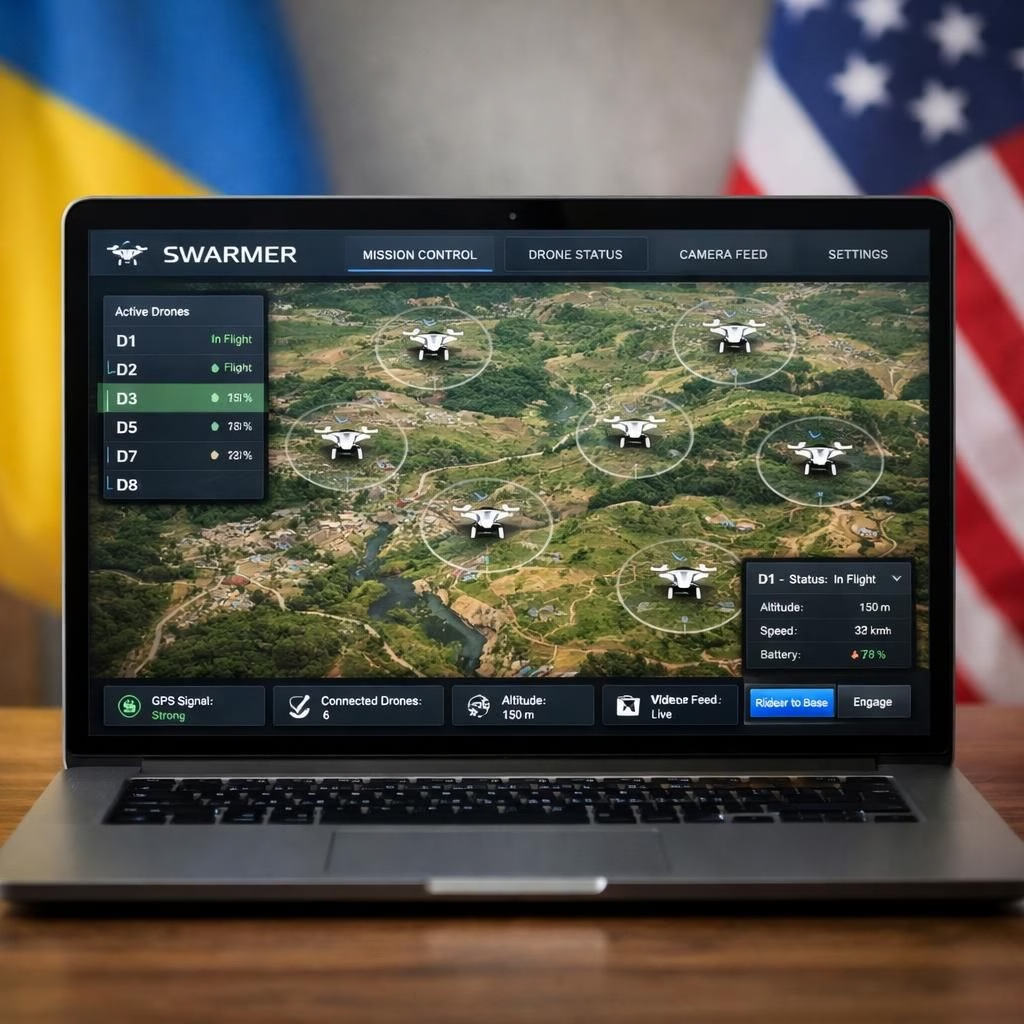
Swarmer, a Ukraine-founded Tag B startup backed by U.S. capital, just popped on Nasdaq with a dramatic 700% first-day surge. This isn’t a fairy-tale IPO; it’s a practical proof that a single pilot can steer hundreds of drones, provided the software is sharp and the data is solid. The story spotlights a cross-border defense tech play that pairs Kyiv’s battlefield-tested know-how with American investment to scale production for both the Ukrainian and U.S. militaries. If you enjoy tech with geopolitics, this is your snack.
Erik Prince, founder of Blackwater, came on as non-executive chairman, lending starpower and a pragmatic wink to the idea that private capital can accelerate battle-tested capabilities into the mainstream. Swarmer’s platform lets one skilled pilot coordinate hundreds of drones—each drone performing reconnaissance, payloads, or monitoring—while the software converts streams of sensor data into actionable tactics. In plain terms: speed, scale, and a dash of swagger, powered by a data loop that learns as it flies. This isn’t just a flashy headline; it’s a test drive for a model that could redefine how small teams wage strategic effects on large-scale battlefields.
Ukraine’s tech scene has spent four wartime years honing cheap FPV drones and rugged, reliable systems. That hard-won expertise is attractive to American investors who crave practical, cost-effective edge tech rather than fanciful prototypes. The result is a cross-border alliance where funders see a path to near-term contracts, and engineers see a playground for machine-learning models trained on real-world combat data—no simulations required, though simulations still help sanity-check procedures. The conversation shifts from big promises to real delivery timelines, with push-and-pull usually behind the curtain driving momentum.
Yet capital alone doesn’t fix everything. Ukraine’s defense industry produced about $35 billion in 2025, but foreign funding totaled roughly $6.1 billion. Export controls have long limited growth, nudging companies to optimize local production and government programs. Bringing in U.S. partners and giving them a stake in the process can unlock new capacities and export routes while keeping sensible guards in place. The dynamic isn’t about surrendering sovereignty; it’s about amplifying proven capabilities with thoughtful investment to meet defense needs on both sides of the Atlantic. Think of it as strengthening a bridge rather than bulldozing a highway.
Swarmer and drone technology: cross-border financing and battle-tested data
The Swarmer case study focuses on a repeatable product strategy. The company leverages a data-rich battlefield archive—more than 100,000 real-world missions—to refine its algorithms. The cycle deploy, observe, adapt, and improve repeats, and the software learns from each mission. Investors buy into the idea that this loop grows a moat as more missions populate the training data. The approach isn’t a one-off stunt; it’s a scalable method that turns frontline experiences into faster, smarter software updates.
In practice, the platform lets a single operator coordinate a fleet of drones for reconnaissance, search-and-rescue, or even precision-enabled tasks, within the bounds of law and ethics. The appeal to the Pentagon and allied agencies lies in cost-effectiveness: cheaper drones, smarter coordination, and faster iteration. It’s not about replacing human decision-makers; it’s about multiplying human capability by giving pilots better situational awareness, targeted data, and a reliable feedback loop for improvement. The realism of the data loop is what keeps investors coming back for more, not just the headline pop.
Why Tag B drone technology shapes defense strategy in 2026
From a macro view, this fits a shift toward affordable, mass-produced unmanned systems that can be fielded quickly without heavy logistics. Tag B enables a more resilient deterrence: smaller units, faster adaptation, and data-backed decisions. Swarmer’s approach epitomizes that trend—proof that the right mix of software, hardware, and data translates battlefield lessons into scalable products that attract government buyers and private capital. This is less a single startup story and more a signal of a new normal where cross-border teams speak a shared defense-tech language. The narrative is no longer merely about combat prototypes; it’s about practical, repeatable capabilities that scale with real demand.
Regulation matters. Export controls and licensing can slow growth, but they help ensure tech doesn’t land in the wrong hands. The Ukraine-US collaboration model—featuring U.S. board involvement, shared milestones, and joint ventures—offers a pragmatic template for navigating those constraints while still delivering speed to market. The result is a balanced path to export-led growth that remains aligned with safeguards and strategic aims. It’s a blueprint for a healthier, more resilient defense-tech ecosystem rather than a reckless rush for novelty.
The Swarmer engine of Tag B learning
At the core of Swarmer lies an engine that converts live combat experience into smarter software. Each mission feeds the machine-learning models, which then improve the cockpit interface, fleet management logic, and drone-control heuristics. The upshot is simple: practice with purpose compounds value. As the platform gathers more real-world data, it automates routine, dangerous, or tedious tasks, letting pilots focus on higher-level decisions. It’s not magic; it’s software learning from real battles and genuine operator feedback. The result is steadier upgrades, clearer metrics, and better anticipation of operational needs.
Some readers may worry about shortcuts or hype. The honest take is that Swarmer’s model demonstrates a path to responsible, scalable adoption of Tag B in defense. It reads less like a unicorn and more like a disciplined, data-driven project that rewards ongoing scrutiny, rigorous testing, and transparent governance. It’s a practical blueprint for turning cutting-edge tech into real-world capability with measurable impact. If you value evidence, you’ll appreciate the cadence of deploy, measure, adjust, and execute again—and again—and again.
What do you think about this cross-border defense tech story? Share your thoughts below and join the conversation about the future of Swarmer, Tag B, and how capital and capability meet on the battlefield of ideas.
Source and gratitude: Thanks to the original article for the material that sparked this post. Original Swarmer Article: CBS News.
Practical takeaways for readers
- Understand the model: Swarmer relies on deploy-observe-adapt-improve cycles that continuously refine software and operations.
- What this means for defense tech: cost-effective drones plus smarter coordination can expand capability without heavy frontline logistics.
- Investment angle: cross-border partnerships can unlock capacity and new markets while maintaining safeguards.
FAQ: Swarmer, drone technology, and cross-border investments
- Q: What is Swarmer? A Ukrainian-founded, U.S.-backed drone-control software platform that coordinates large drone fleets from a single operator.
- Q: Why does this matter for defense? A scalable, data-driven approach can deliver cost-effective capability to multiple users while reducing procurement risk.
- Q: What about export controls? A careful, consent-based cross-border model with safeguards helps navigate restrictions while expanding legitimate markets.
- Q: How does the data loop work? A deploy-observe-adjust cycle feeds real-world missions into machine-learning models to improve performance over time.
Takeaway: Swarmer’s Nasdaq debut highlights a broader shift toward practical, scalable defense tech built on battlefield data and cross-border collaboration. For readers, the next steps are to watch how such models translate into real-world procurement and partnership opportunities across the Atlantic.
References
- CBS News: Wall Street, Ukraine and drone technology
- RAND: Unmanned systems research
- NATO: drones and defense capability