

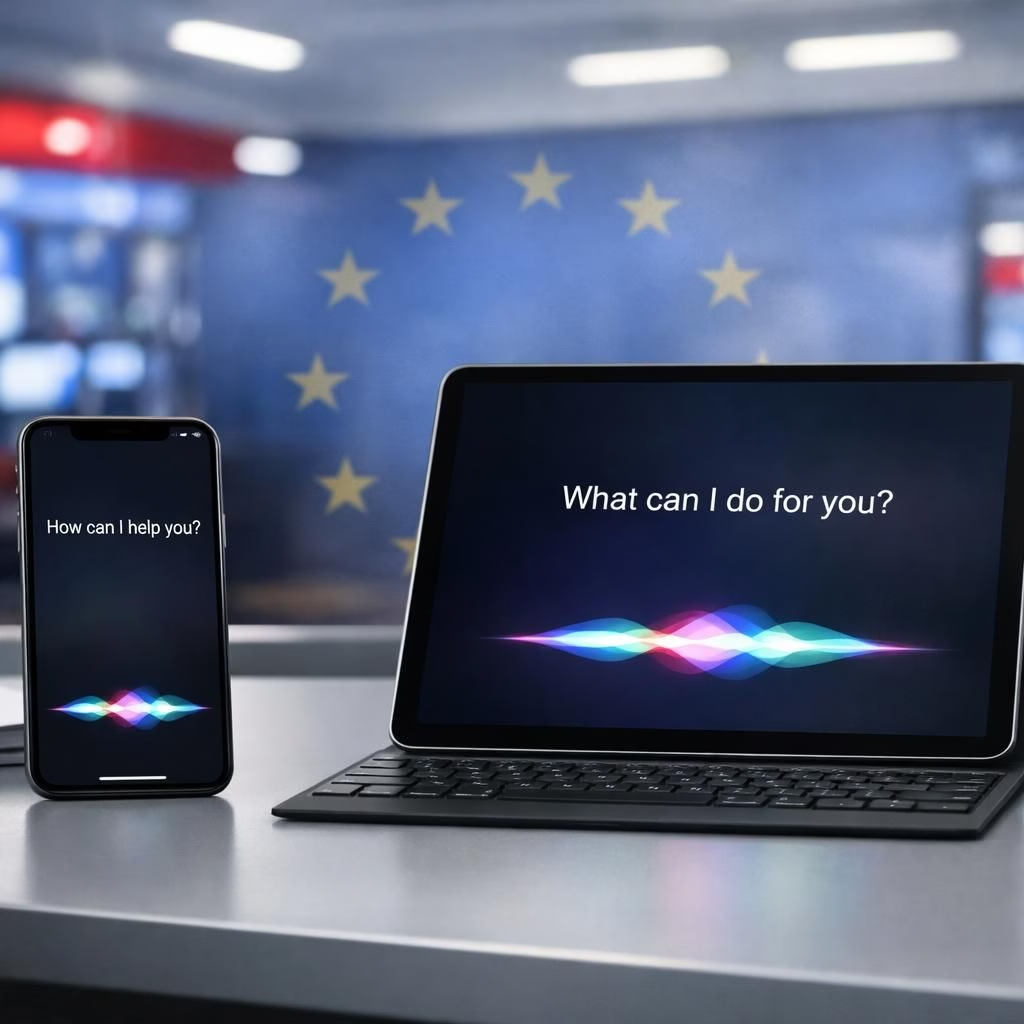
DMA and Siri AI are the headline duo in a European regulatory tale Apple must explain in plain language. The DMA, short for the Digital Markets Act, targets gatekeeper platforms and asks them to adjust how services like Siri AI operate across EU markets. In practice, this means Apple must thread a careful needle: keep user experience smooth while meeting stringent rules that govern competition and data sharing. The EU’s lens on platform control and Siri AI prompts a clearer boundary between innovation and compliance, a line Apple has to walk in 2026.
DMA and Siri AI: EU Delays in iOS 27
In the EU environment, DMA compliance isn’t a one-size-fits-all dispatch. The regulation requires changes to how gatekeepers provide services; Siri AI may require storage changes, data flows modifications, and more transparent governance. Apple reportedly anticipated this friction and paused certain automatic capabilities ahead of the iOS 27 and iPadOS 27 rollout. The delay is not a rejection of Siri AI but a pause to realign with DMA conditions that protect user choice. This isn’t a doom scenario; it’s a roadmap to more predictable EU deployment. The pause also serves as a practical reminder that regulatory clarity often travels slower than the latest Siri AI feature demo, and that is not a trend Apple enjoys fighting in public.
What the DMA Means for Siri AI and the iOS 27 Rollout
From Apple’s stance, the company notes that the DMA’s scope is broad, and Siri AI sits at an intersection of innovation and enforceable rules. The iOS 27 and iPadOS 27 timeline in the EU may slip, slide, or shift as regulators request more transparency about data handling, on-device processing, and third-party access. For developers, this means updated entitlements and new prompts for privacy surfaces. For users, the practical effect is a cleaner consent flow and clearer limits on what Siri AI can do with personal data inside EU borders. The net result is a more deliberate pace that favors long-term trust over short-term wow moments.
DMA’s Practical Impact on Siri AI and the Ecosystem
In everyday terms, the pause buys time for more robust testing under DMA constraints. The EU wants to see that Siri AI respects user choices, minimizes data leakage, and respects interoperability rules with other apps. The result should be fewer accidental data leaks and more predictable responses from Siri AI. Engineers can implement feature flags, allowing a staged deployment that complies with DMA requirements while keeping the user experience intact. The delay also signals that Apple remains committed to the EU market and its standards, even when the technology is moving at breakneck speed.
Looking ahead to 2026, observers expect more clarity as negotiations and technical reviews complete. Siri AI will likely return with new compliance layers, privacy affordances, and a more explicit opt-in for data sharing in the EU.
The wider AI and mobile tech ecosystem will adjust, with competitors watching how Apple navigates this demanding regulatory stage. The attempt remains simple: keep the AI helpful without compromising user trust or fair competition. If anything, the pause becomes a case study in making complex systems feel a bit less mysterious for everyday users.
Share your thoughts in the comments to weigh in on how this regulatory pause affects your daily use of Siri AI on iOS 27 and iPadOS 27 in the EU. Do you think the DMA approach helps or slows down innovation? Your perspective matters as we watch this regulatory dance unfold across 2026.
Original reporting and sources: original Google News article — thank you to the original sources for this material.
References
- Due to DMA, Siri AI delayed in EU for iOS 27 and iPadOS 27 — Apple Newsroom
- EU Digital Markets Act (DMA) official page
- Original reporting and sources: original Google News article