

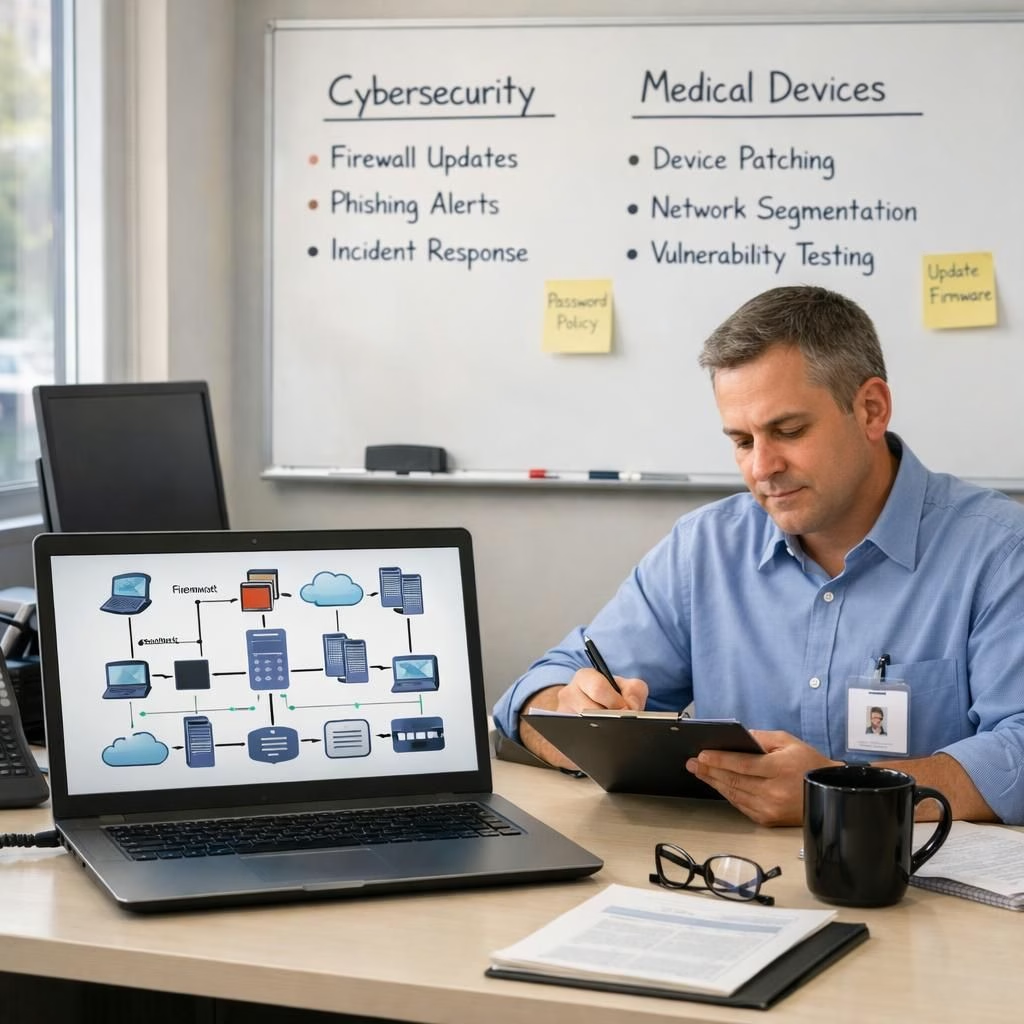
In 2026, Cybersecurity and MedicalDevices confidence intersect as Stryker faced a network disruption that tested resilience but kept products safe. This post reimagines the core facts with a slightly lighter tone while preserving the truth: the incident stayed confined to Stryker’s internal Microsoft environment, and no malware touched any device. In short, Cybersecurity and MedicalDevices teams stayed calm, coordinated, and clear.
Cybersecurity in Practice: Stryker’s 2026 Update
Initial reports linked the attack to an Iranian-linked group and described disruption across Stryker’s global network. Stryker explained that it was not a ransomware incident and that no malware was deployed. The company emphasized that products remained safe to use and that the spread stayed within the internal Microsoft environment. Restoration is prioritized for systems that directly support customers, ordering, and shipping, while manufacturing sites coordinate across the globe. From a Cybersecurity perspective, containment and swift incident response are the order of the day; from a MedicalDevices lens, device safety remains intact even if IT systems are briefly offline. The core truth stays intact: Cybersecurity and MedicalDevices safety go hand in hand, and both deserve attention in crisis planning.
Restoration efforts are progressing with care. Teams are working to bring critical services back online while continuing to monitor for any anomalies. Clear, frequent updates help healthcare providers plan around extended offline periods and ensure continuity of care.
MedicalDevices Safety and Continuity After a Cyber Event
On safety, Stryker reiterated that all products across the global portfolio—connected, digital, and life-saving technologies—remain safe to use. The company described embedded Cybersecurity assurances and procedures to confirm that connected devices carry no vulnerabilities. Per standard protocols, executives and engineers confirmed the connected devices were not impacted. The disruption touched internal Microsoft systems, not patient devices, which reassures clinicians and patients about MedicalDevices reliability. Communications with Sales Representatives and hospital sites continued; onsite work remains safe, and phone or email access stays open. Electronic ordering systems may be temporarily offline, but teams pivot to manual ordering to keep MedicalDevices stock moving.
Clinicians and patients can still rely on the safety of devices, even during IT disruptions. Stryker reiterates that the safety of the medical devices in its portfolio remains intact, with cybersecurity measures designed to protect software and firmware in the field.
What This Means for Cybersecurity and MedicalDevices in 2026
Practical lessons emerge for security and operations teams. Prioritize customer-facing systems during restoration and lean on resiliency and business continuity plans. Keep clear, frequent communications with hospitals, distributors, and patients. The Stryker case shows that even large, established firms must balance speed with safety. When electronic ordering is down, manual workflows and direct outreach become essential. For Cybersecurity leaders, the incident reinforces the need for a strong defensive stance paired with rapid recovery. For MedicalDevices leaders, it underscores that device safety depends on software controls matched with robust field practices. In short, combine risk assessment, routine testing, and well-defined escalation paths to stay prepared for future events.
We welcome your take on how Cybersecurity and MedicalDevices intersect in real-world incidents. Share your thoughts in the comments and help shape a practical view of resilience, patient safety, and the future of health tech in 2026.
Original source and heartfelt thanks to Reuters for the reporting that informed this post: Reuters article on the Stryker cyberattack.
For additional context on incident response, see CISA guidance.
Key Takeaways: Cybersecurity and MedicalDevices
- Prioritize customer-facing systems during restoration to minimize disruption.
- Maintain clear, frequent communication with hospitals and distributors.
- When electronic ordering is offline, rely on manual workflows and direct outreach to keep supplies flowing.
FAQ
- What exactly happened to Stryker’s network? A distributed disruption affected internal IT systems, not patient devices, and there was no ransomware or malware deployed to products.
- Were patients affected? No. Stryker said all products remained safe to use and clinical care was not disrupted.
- What should hospitals do next? Rely on manual processes where electronic ordering is unavailable, and maintain open lines of communication with Stryker representatives.
- What can other companies learn? Prioritize customer-facing systems during recovery and keep stakeholders informed with clear updates.