

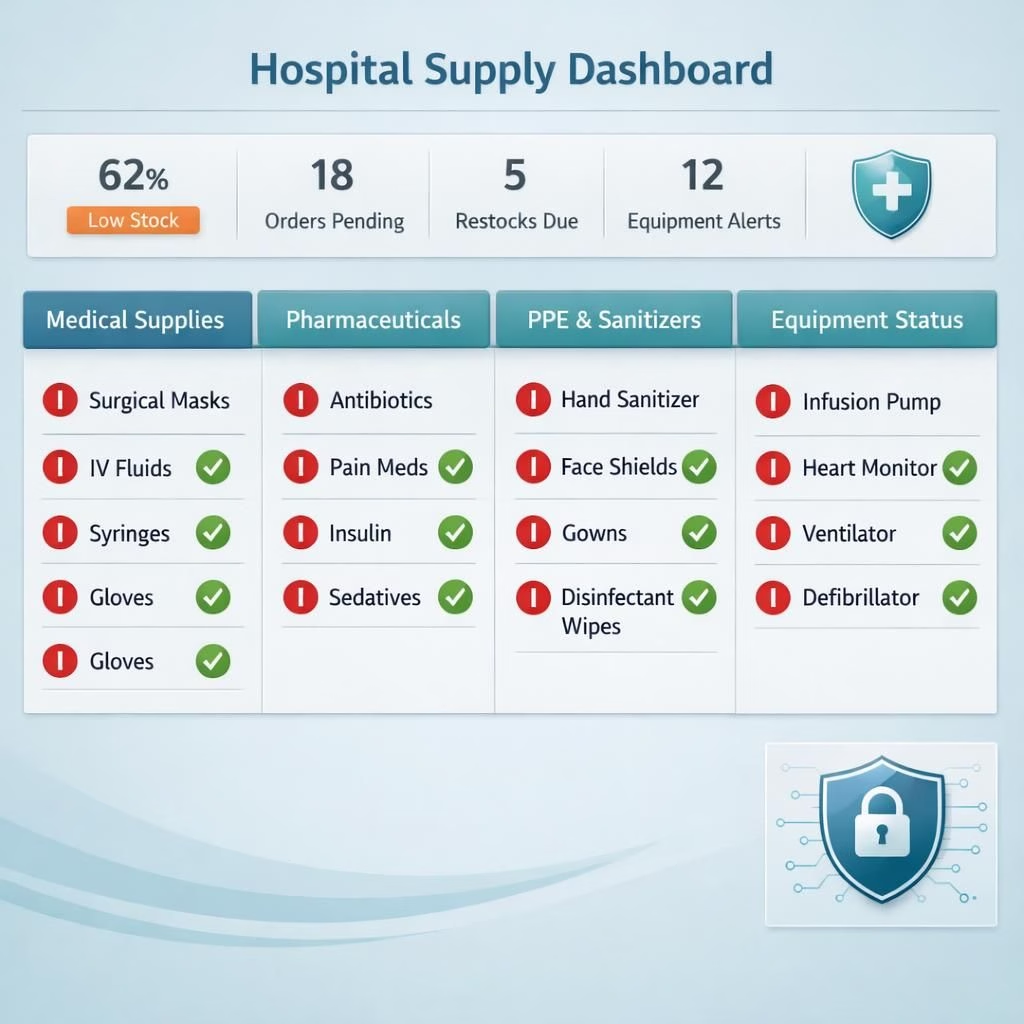
Stryker, America’s largest medical device maker, announced that a cybersecurity incident knocked out its internal Windows systems across 61 countries for five days. The tone was confident and practical: patient safety stayed intact, orders moved back into processing, and teams patched gaps with calm efficiency. In 2026, we learn that even global medical supply chains can wobble, yet resilience is a feature, not a bug. This incident sits at the crossroads of cybersecurity and healthcare-tech, and it offers pragmatic lessons in recovery.
cybersecurity resilience in healthcare-tech: lessons from Stryker
The attack began on March 11, targeting Stryker’s internal Microsoft Windows environment and impacting global operations. Employees reported that cellphones, laptops, and other remote devices connected to the platform showed signs of compromise. The incident underscored a simple truth: digital endpoints are weak points unless properly segmented and monitored. Stryker has emphasized that the breach remained contained within the internal network, a reminder that strong network segmentation, robust endpoint detection, and rapid containment are essential for cybersecurity in healthcare-tech.
For five days, services like order processing, manufacturing, and shipments faced disruption. Leadership prioritized system restoration that directly supports customers. Electronic ordering and automated supply chains were temporarily unavailable, and manual ordering was deployed where possible. This pragmatic posture in healthcare-tech demonstrates how a well-practiced continuity plan can survive a digital hiccup while keeping patient care as a non-negotiable constant. The core message is clear: a resilient cybersecurity program is a lived practice, not a slide in a deck.
From an operational standpoint, Stryker stressed that all products across its global portfolio remained safe to use, including connected, digital, and life-saving technologies. The attack did not reach patient-facing systems. This clarity is not marketing fluff; it reflects disciplined risk assessment, transparent communication with customers and suppliers, and a commitment to maintaining confidence in medical devices during a disruption. The containment story isn’t about fear; it’s about action—detect, isolate, eradicate, recover, and validate—executed in real time across a multinational enterprise in healthcare-tech.
Additionally, the company explained that, while electronic ordering was offline, representatives could work directly with customers and distributors to secure replenishments via manual channels. Orders placed prior to the disruption would be reconciled as systems come back online. Reestablishing electronic order flows and ensuring supply continuity highlighted the value of human-in-the-loop processes during a digital reset. In short, cybersecurity and healthcare-tech harmonized in a practical restoration rhythm.
handala and the cybersecurity angle in healthcare-tech
On the geopolitical front, an Iran-linked group called Handala claimed responsibility for the attack on the same day, framing it as retaliation for a strike on a girls’ school in Minab. The geopolitical subplot is a sobering reminder that cyber events live inside a broader world of risk. Yet the operational takeaway remains crisp: even amid provocative motives, a robust incident response and continuity plan can keep patient care intact and business lines moving. For those studying cybersecurity in healthcare-tech, the Handala claim is a reminder to prepare for external pressures as part of risk governance, not to panic the patient or the process.
Technically, the breach’s focus on the internal Windows environment shows why segmentation matters. If a corridor is compromised, the patient-facing wards must stay protected. The containment announcement framed the attack as contained and isolated, which underlines the value of layered defenses, supply chain visibility, and clear escalation paths. A well-documented incident response plan, backed by resilient business continuity practices, can transform a five-day outage into a manageable experience for clinicians and suppliers alike, all while preserving trust in critical medical technologies in healthcare-tech.
Looking forward, the episode serves as a practical case study in governance, patch management, and cross-border collaboration with partners and vendors. It reinforces that, in healthcare-tech, cyber defense is an ongoing discipline: regular drills, real-time monitoring, and communication that sticks to the facts. The goal is simple and ambitious—minimize disruption, protect patient safety, and restore digital rails quickly without compromising care. In 2026, these principles aren’t optional; they are the baseline for responsible leadership in the cybersecurity space that touches every aspect of modern healthcare-tech.
On a lighter note, it’s fair to acknowledge that hospital IT teams deserve a medal for staying calm under pressure. The reality is that a well-orchestrated blend of technical controls and human agility keeps a complex health ecosystem online, even when cyber threats loom. The humor comes from recognizing that resilience requires both clever code and capable people who know how to switch from automated workflows to manual processes without losing sight of patient safety. In this sense, cybersecurity is a team sport in healthcare-tech, with everyone from engineers to sales reps playing a part in keeping the system running.
For readers who want baseline facts and timeline, see Reuters coverage for the core details and a straightforward chronology. This recap leverages Reuters reporting to provide context while summarizing operational implications for readers in healthcare-tech.
For baseline context and public guidance, you can also consult cybersecurity and healthcare resources from credible agencies and industry groups as ongoing references.
Practical steps for cybersecurity in healthcare-tech resilience
- Implement network segmentation and zero-trust access to limit spread from a single compromised endpoint.
- Keep offline ordering capabilities and manual workflows ready for disruptions, with clear handoff protocols to customers and distributors.
- Schedule regular drills (tabletop and live) across IT, operations, and clinical teams to rehearse incident response.
- Maintain real-time monitoring, rapid containment, and clear escalation paths with vendors and partners.
- Strengthen supplier risk management and communications so the supply chain remains visible during a disruption.
FAQ about cybersecurity in healthcare-tech
- Q: Was patient safety compromised during the Stryker incident? A: No. Stryker reported that patient-facing systems and patient safety remained unaffected while internal operations faced disruption.
- Q: What key lessons emerge for healthcare organizations? A: Prioritize segmentation, rapid containment, and continuity planning; maintain manual workflows; and practice drills that involve stakeholders across the organization.
- Q: How should organizations prepare for geopolitical cyber threats? A: Integrate risk governance that accounts for external pressures, maintain robust incident response plans, and ensure cross-border coordination with partners and vendors.
- Q: Where can I learn more? A: Look to established cyber and healthcare security resources from credible agencies and industry groups for ongoing guidance.
Conclusion: The Stryker incident shows that cybersecurity is a core operational discipline, not just an IT issue. Built-in resilience—through segmentation, continuity planning, and clear communication—helps protect patient care while keeping medical-device operations running. The next step is to translate these lessons into regular programs of assessment, drills, and cross-functional collaboration so hospitals and suppliers stay prepared.