

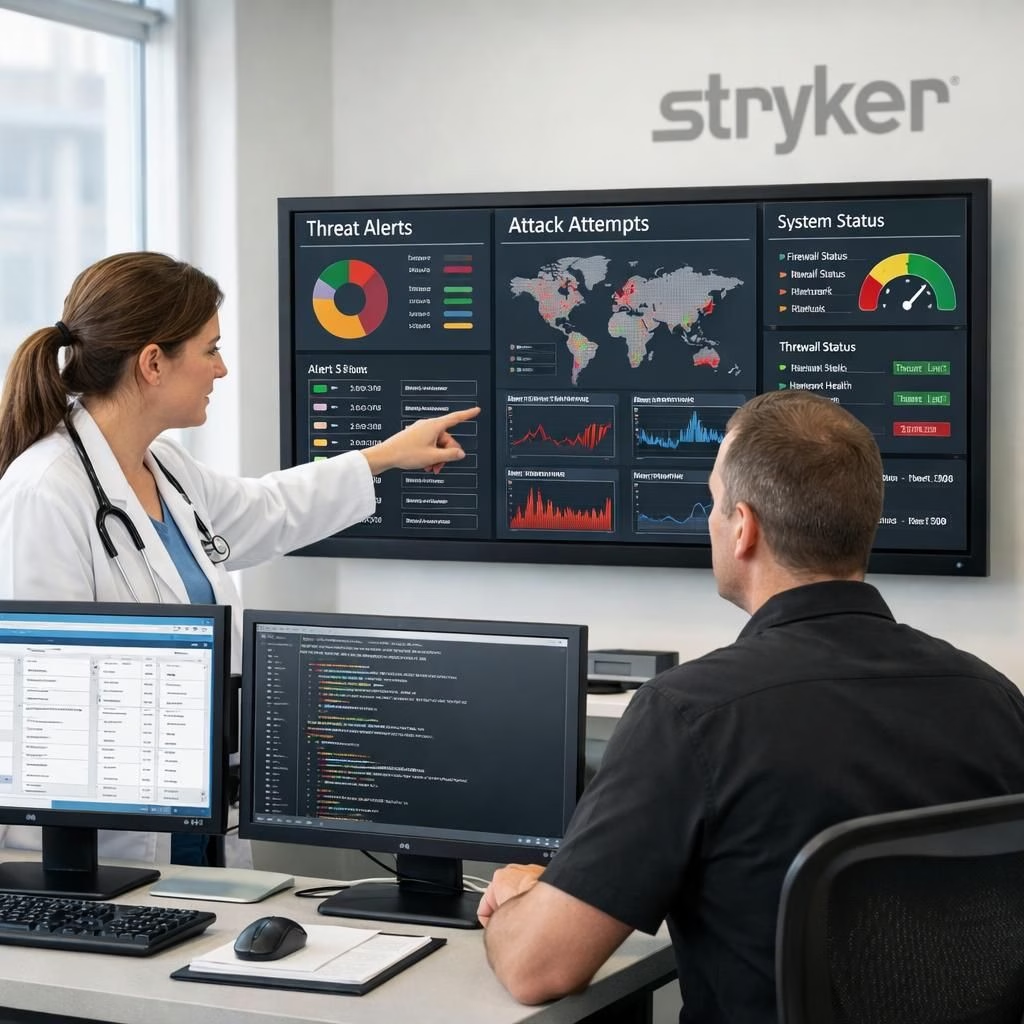
From a cybersecurity lens, this is a healthcare IT case study in real time. It is a global event that forces rethink across hospitals and suppliers. Stryker announced on March 11 that its Microsoft environment was disrupted. The firm stressed there was no evidence of ransomware or malware. The incident appeared contained. The tone was pragmatic and reassuring, like a backup generator that purrs to life before the lights flicker. A contained incident means time to observe, assess, and adjust. It is not a reason to panic. Yet patient care stakes remind us that speed matters in technology risk management.
Industry observers at the American Hospital Association note this is a moment to bolster healthcare IT readiness in hospital networks. The association says it is actively exchanging information with the hospital field and the federal government to understand the threat and assess any impact to hospital operations. There are no direct disruptions to U.S. hospitals at this point. That could change as hospitals reevaluate services, technology, and the supply chain tied to Stryker. The duration of the attack could extend. This shows how cybersecurity incidents ripple into healthcare IT workflows, patient scheduling, and device integrations.
When a large vendor experiences a global outage, containment, notification, and recovery become the focus. Stryker reports its environment is under monitoring. The scope appears limited to certain digital assets rather than core medical devices. For healthcare IT teams, this is a lesson in risk segmentation. Know which systems matter most for patient safety. Segment networks so a problem cannot cascade across the enterprise. The incident highlights the importance of robust backups, tested disaster recovery plans, and clear escalation paths for cybersecurity incidents in healthcare IT.
cybersecurity safeguards fueling a resilient response
Healthy cybersecurity posture is not about perfection but about response readiness. Even with no ransomware found, healthcare IT teams must treat this event as a stress test for detection, containment, and communication. Early containment buys time. Rapid forensics and transparent updates matter to hospital operations and patient safety. Stryker’s situation shows how cybersecurity teams coordinate with the hospital field and with federal authorities to gather threat intelligence, share indicators, and align on mitigations. The result is a stronger, more informed ecosystem that can absorb shocks without collapsing patient care.
healthcare IT resilience through collaboration and supply chain vigilance
healthcare IT resilience is the broader story. Hospitals rely on vendor ecosystems, supply chains, and connected devices that stretch across continents. When one link disrupts, managers pivot quickly and reallocate resources. They reexamine service contracts and technology choices. The AHA cautions hospital operations could be affected as providers reevaluate services and the supply chain tied to Stryker. The lesson for healthcare IT teams is to diversify vendor exposure, document incident response playbooks, and ensure contingency plans cover routine tasks like patient scheduling and device maintenance. Collaboration with government agencies and industry groups improves threat intelligence and shortens recovery times.
In practice, a contained incident becomes a real world case for cybersecurity drills. Run tabletop exercises, rehearse comms, and verify that backups can restore services without data loss. For patients, the takeaway is simple: keep critical services available, protect device networks, and maintain clear lines of communication with clinicians and administrators. For healthcare IT leaders, the focus remains on risk management, not risk avoidance: understand where data flows, who touches it, and how to keep access under control during a crisis. The ongoing dialogue across hospitals, Stryker, and regulators builds trust and reduces fear during future incidents.
As we look to 2026 and beyond, this event demonstrates that cybersecurity is a team sport played across software, devices, and people. It reminds healthcare IT professionals to balance innovation with safety, speed with caution, and openness with security. By staying proactive, hospitals can continue to deliver care without skipping a beat, even when a global cyber event rattles the already complex systems that keep patients safe.
Share your thoughts in the comments below and tell us how your organization would respond to a similar disruption. Linkback attribution: many thanks to the original reporting on this topic; see the source article here: Original article.
Practical steps for healthcare IT teams
- Update and validate an incident response playbook with clearly defined roles for healthcare IT staff.
- Map data flows across electronic health records, device networks, and scheduling systems to identify critical paths.
- Segment networks to limit blast radius and prevent cascading outages across healthcare IT segments.
- Test backups regularly and conduct disaster recovery drills with clinicians and administrators.
- Establish trusted escalation paths and transparent comms with patients and providers.
FAQ
- What happened to Stryker? A disruption to its Microsoft environment prompted containment, observation, and ongoing monitoring, with no immediate evidence of ransomware or malware.
- What does this mean for healthcare IT? It highlights the need for segmentation, robust backups, and quick collaboration with regulators to limit impact on patient care.
- What should hospitals do next? Prioritize incident response drills, review vendor risk, and strengthen cross-team communication to shorten recovery times.