

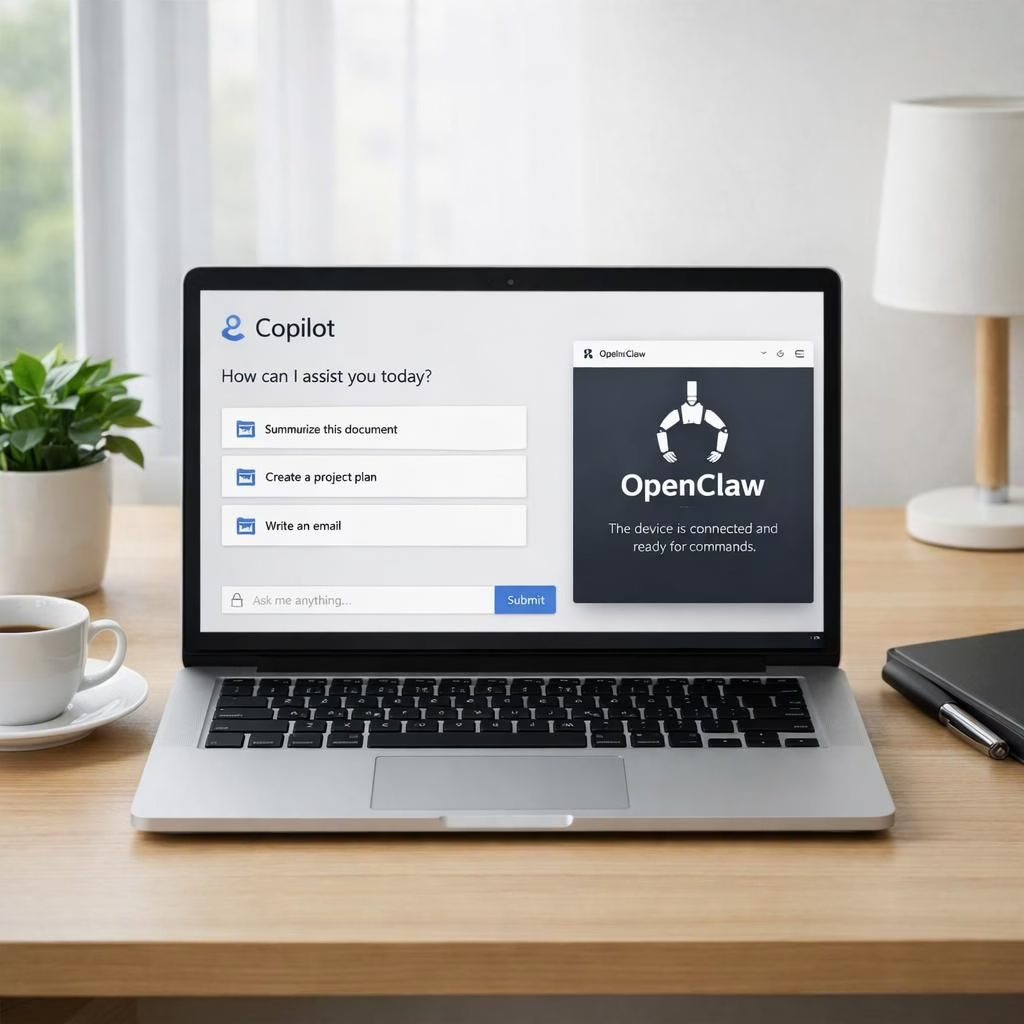
In 2026, OpenClaw and Copilot appear as co-pilots in a kinder, craftier AI era. The aim is to turn bold ideas into practical tools that respect human judgment and privacy. These concepts guide how enterprise software evolves: more proactive assistants that collaborate with people, not replace them. The result is AI that feels helpful without feeling compulsory, like a coworker who knows when to push back and when to push forward.
In practical terms, the shift toward agentic capabilities means your software will start making plans with you rather than for you. Copilot can draft a plan for a project, pull in relevant documents, and surface decisions you might have missed, all while asking clarifying questions. The design challenge is to keep this proactive behavior under human control, to provide options without forcing outcomes, and to present the steps clearly so you can review and approve. The industry is experimenting with more precise policy controls, such as sandboxed tool use, audit trails, and reversible actions. The moral here is simple: automation should feel like a helpful assistant, not a mysterious oracle.
Copilot in Focus: A Friendly Agent Era
When teams adopt these ideas, collaboration improves in measurable ways. A well-timed prompt can propose a plan, pull in supporting data, and outline tradeoffs before you even say go. This is not a fantasy arc; it is the practical result of better interfaces, better prompts, and better guardrails. The emphasis is on transparency and human oversight, so users know what the system is doing, why it chose a given path, and how to reverse or adjust if needed. The shift toward proactive planning makes daily workflows feel less like grinding and more like strategy sessions with a very attentive, very patient teammate. Copilot helps maintain momentum without stealing agency.
What this means for teams and individuals:
- Better collaboration: AI acts as a co-pilot in planning, not a black box that decides everything.
- Safer automation: explicit guardrails and transparent reasoning help you trust the output.
- Copilot becomes a collaborative planning partner that respects boundaries.
- Faster decision cycles: with the right prompts, you get faster, clearer summaries and action suggestions.
- Smarter workflows: tasks chain into logical steps, with reminders and checkpoints to stay aligned.
- Privacy-first design: data handling emphasizes user consent and minimization.
OpenClaw Features for Safer AI
Beyond the buzz, the practical takeaway is that these tools aim to keep people in command. The design shifts away from opaque automation toward observable, adjustable behavior. Frontline users gain a clearer view of what the AI is proposing, why, and how it will implement it. The result is a more efficient but also more trustworthy work cycle—one where suggestions are actionable, auditable, and easy to roll back if needed. OpenClaw-style approaches emphasize human oversight and clear rollback options.
Yes, there is a pinch of humor in how these tools operate. They correct your typos, remind you of deadlines with the gentle patience of a well-meaning assistant, and never pretend to know your coffee order. The science behind it isn’t witchcraft; it’s a blend of language models, prompting strategies, and real-time feedback loops that tune behavior over time. The result: a more productive environment where people can focus on creative tasks rather than repetitive ones. The OpenClaw-like approach underscores the need for permission before crossing key boundaries.
Looking ahead, security-conscious organizations in 2026 will keep a watchful eye on how automation evolves. The goal is to strike a balance between initiative and control, so teams feel empowered rather than overwhelmed. The trend matters because tools that anticipate your needs tend to become everyday teammates, not mysterious lab experiments.
Special thanks to the original reporting for the ideas behind this piece. Microsoft Plans to Bring Copilot Into the Agentic AI Age: Microsoft Plans to Bring Copilot Into the Agentic AI Age.
What do you think? Share your thoughts in the comments.
OpenClaw in Practice: Practical Steps
- Define guardrails and sandboxed tool use to limit automation to approved scenarios.
- Require human review for critical decisions and sensitive data actions.
- Enable auditable logs so every suggestion and action is traceable.
- Provide reversible actions and straightforward rollback options.
- Regularly review policies and prompts to adapt to new risks and needs.
FAQ
- What is agentic AI, and how does it differ from traditional automation?
Agentic AI designs push proactive collaboration while keeping humans in charge of decisions.
- How does OpenClaw address privacy and safety?
OpenClaw emphasizes consent, data minimization, and transparent actions with auditable trails.
- What practical steps can teams take to deploy Copilot responsibly?
Start with clear guardrails, sandboxing, and human oversight for critical tasks.
- How should organizations monitor AI behavior over time?
Monitor performance, prompts, and outcomes; adjust policies as needed to maintain trust.
Conclusion: Copilot and OpenClaw frame a future where AI aids without overpowering, and where human judgment remains central. To explore this further, consider implementing the practical steps outlined above and following trusted sources for updates.
References