

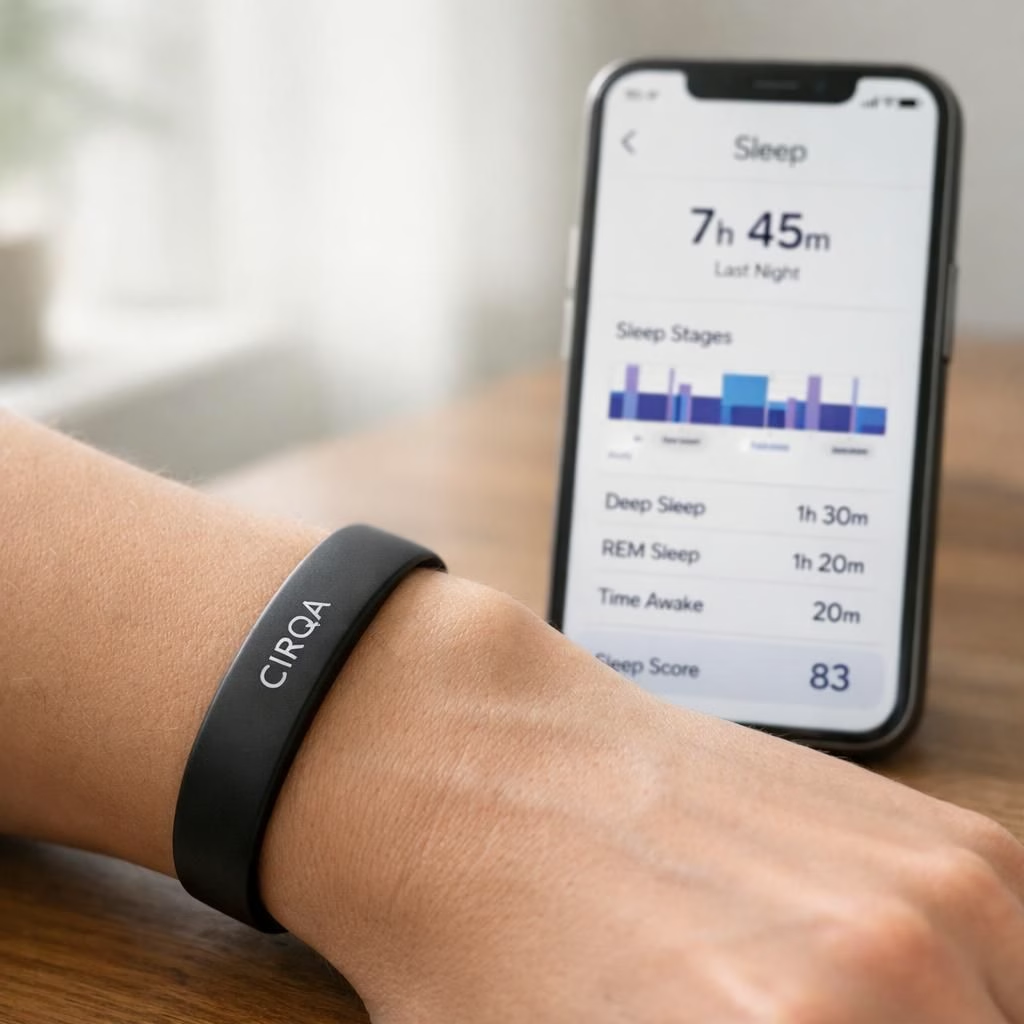
Meet CIRQA, Garmin’s potential RecoveryWearable, a sleep-first wellness companion that promises to track stress, readiness, and recovery signals with a data-driven calm. The latest hints come from a trademark filing dated February 25 that reads more like a product plan than a tag line. If this is a sign, Garmin is steering toward continuous wear with a focus on how you rest, not just how you sweat.
CIRQA RecoveryWearable: A Sleep-First Concept
The USPTO filing is unusually specific. The application number 99670310 describes wearable devices placed on the body that measure physiological data, bio-signals and bodily behaviour, along with metrics linked to stress RecoveryWearable, alertness and performance. That level of detail reads more like a roadmap than a placeholder, a bold tease rather than a vague dream.
Taken together, this points well beyond a conventional fitness band. The language suggests a RecoveryWearable concept intended for long wear, with emphasis on sleep, training load, and daily readiness—an idea leaks hinted at earlier in the year.
Back in January, we reported a product page reference to a “CIRQA Smart Band” on Garmin’s own site. The leak hinted at two sizes, multiple colour options and a mid-2026 shipping window. If this was just a rumor, the confidence behind it would be oddly precise, like someone who wears a calendar on their wrist.
Early questions centered on whether this is simply another fitness band or something deeper in the RecoveryWearable space. Some speculated about a screen-less form and deeper analytics. The trademark filing tips the scales toward the latter: a focused RecoveryWearable and readiness device rather than a standard wristband.
The vital clue is that the application is intent-to-use, not a straight renewal of an old name. Garmin intends to ship CIRQA, not recycle it. The legal description covers sensors and monitors worn on the body, plus storage and data transmission. It fits a band-style device that relies on an app for insights rather than an onboard screen. This aligns with how a true RecoveryWearable would function—quiet, data-forward, and deeply tied to user context.
If Garmin goes this direction, CIRQA could mark a departure from its current smartwatch and band lineup. The form factor might be discreet yet powerful, emphasizing metrics that help athletes and busy professionals feel understood by their own data—a friendly nudge rather than a loud shout. In practice, a CIRQA device could resemble a slim band or sleeve that blends into daily life while delivering meaningful insights through the companion app.
Strategically, the move makes sense. Garmin already has a software foundation with Body Battery, HRV Status, sleep analytics and readiness metrics. CIRQA could package those ideas into a compact, everyday-wearable form factor without burying users in a wall of stats. In plain language: a wearable that quietly does the homework and hands you the summary when you want it, not when the screen is begging for attention.
The timeline is a careful hint rather than a hard release date. Garmin filed the CIRQA name on February 25, and the application remains in the queue for assignment to an examining attorney. Brands often ship hardware while the legal process moves forward. A mid-2026 window from earlier leaks remains plausible, but a late spring or early summer launch is also possible if everything aligns. In practice, we could see a CIRQA reveal before formal trademark approval, especially if the device is already in production or supplier negotiations are well underway.
In practice, the story here is less about a finished product and more about a strategic signal. Garmin appears to be testing a path that emphasizes usability and readiness over the flash of a sporty display. If true, CIRQA would belong in a soft category, competing in spirit with recovery-centric wearables such as Whoop, but with Garmin’s own data-forward approach. The focus on sleep, stress RecoveryWearable and alertness would align with Body Battery’s ethos, as Garmin expands its analytics into a denser, more continuous wear model.
The leak narrative matters. The prior mid-2026 shipping window, read against the trademark filing, feels less like noise and more like a product thesis in motion. Brands often reveal hardware while the legal process winds in the background. If CIRQA ships in late spring or early summer, it would align nicely with outdoor-season training and travel, especially for athletes who want to optimize readiness without carrying a data lab on their wrist 24/7.
Credit and attribution: This article originated with Gadgets & Wearables, the first media outlet to report the story. Original coverage helps readers trace the timeline and corroborate the clues without chasing rumors. You can follow Gadgets & Wearables on Google News and add them as a preferred source to receive expert news, reviews, and opinions in your feeds.
CIRQA RecoveryWearable Outlook: Timing and Potential Impact
So what does this mean for the broader market? A true CIRQA would push the narrative beyond steps, calories and labels, toward a device that becomes a genuine partner in recovery. It could integrate sleep staging, HRV trends, and daily training readiness into a compact package that doesn’t demand a display to justify its existence. If Garmin can deliver a comfortable wear experience and a thoughtful companion app, the RecoveryWearable concept could set a new standard for how wearables support recovery and resilience in real life, not just during workouts.
As with any trademarked project, there are unknowns. The hardware is not guaranteed to look or behave exactly as the filing implies. Yet the combination of intent-to-use, the language of recovery metrics, and Garmin’s existing software modules creates a coherent narrative. The idea of a dedicated RecoveryWearable device makes sense for a company with a history of long battery life, rugged design, and a data-first approach to wellness.
For readers craving a practical takeaway, the CIRQA concept signals a future where wearables diverge from the one-size-fits-all crowd. You might choose a device that quietly tracks your stress and sleep, then hands you a simple readiness score and a few personalized tips. You could get meaningful insights without constantly staring at graphs. In other words, recovery becomes a lifestyle companion rather than a gym gadget.
We’ll remain watchful as more clues surface. The story remains provisional until Garmin offers official confirmation, a date, and a real product page. Until then, CIRQA and its RecoveryWearable promise invite us to imagine a calmer, smarter way to train and rest—one that respects your time, your sleep, and your willingness to listen to your own body.
Original coverage and attribution: Gadgets & Wearables. Thank you to Gadgets & Wearables for the initial reporting.
Have thoughts about CIRQA and the RecoveryWearable concept? Share them in the comments below. We’d love to hear how you would use a device that prioritizes readiness and RecoveryWearable as its core mission.
FAQ
- What is CIRQA? CIRQA appears to be Garmin’s pursuit of a dedicated RecoveryWearable concept focused on sleep, readiness, and recovery signals rather than a traditional smartwatch.
- How would CIRQA differ from other recovery wearables? The filing suggests a more discreet form factor and stronger emphasis on sleep analytics and daily readiness, with data delivered through an app rather than a bright onboard display.
- When might it launch? The evidence points to a mid-2026 window as a plausible target, with a reveal potentially ahead of formal trademark approval depending on production pace and supplier talks.
- Will CIRQA have a display? The filing implies a band-style device that relies on a companion app for insights, suggesting limited or no onboard display in favor of persistent data delivery through software.