

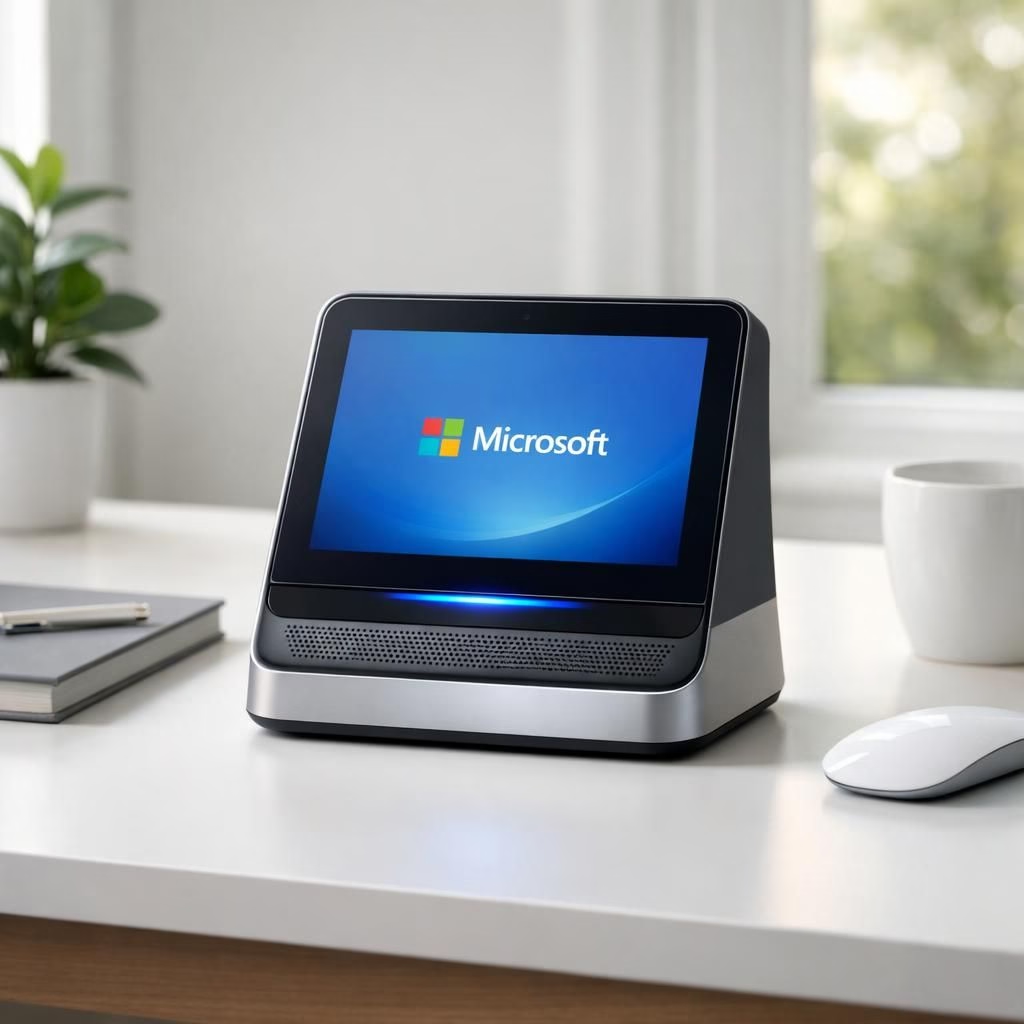
AI and Microsoft are steering a brisk, practical tour through the 2026 landscape of AI-enabled devices. Headlines promise a future where gadgets think for you, but the real pull is how people will actually interact with those devices. This post stays human, with a wink and a plan. We’ll peel back the hype and look at what developers and everyday users can expect in the year ahead.
AI in Daily Life: A Glance at New AI-Driven Devices
At the recent software developer conference, announcements framed a bold shift: devices would run AI agents rather than just apps. The idea is to place more intelligence on the device itself, preserving privacy and slashing latency. The standout concept, Project Solara, is pitched as an OS for AI agents, not just a store for apps, and it aims to simplify the developer workflow. As a result, gadget designers plan to blend sensors, local models, and edge computing to deliver real-time decisions.
- Instead of downloading apps, you’d launch AI agents that live on the device or near your local network.
- The ecosystem would emphasize small, fast models that can run offline for common tasks, with cloud tricks for heavy thinking.
- A hardware-encoded OS helps agents reason about context, user intent, and privacy, with a clear separation between data collection and model use.
Practically speaking, this could change how we interact with the screen. If a device notices you’re in a hurry, it might offer to summarize meetings, draft replies, or plan your day using only locally stored data. The promise is smoother workflows, not louder notifications. And yes, some folks worry about who trains those models and where the data travels. The answer, for now, leans toward on-device intelligence with optional cloud backup for heavy tasks. AI remains central to the conversation, guiding every design call and test. Clearly, AI is the operating system behind the hype.
Microsoft’s AI Roadmap: Devices, OS, and the Bigger Picture
Microsoft is steering the ship toward an AI-first platform where hardware, OS, and software align around the user’s AI needs. The idea of a software ecosystem built for AI agents shifts the emphasis from long lists of apps to adaptable agents that can be composed to achieve goals. The public conversations center on Solara as an operating system for AI gadgets, plus external devices that act as smart assistants with a mandate to protect privacy and offer transparent controls.
One striking vision is a badge-like device or companion tool for employees that carries a camera to verify identity and streamline secure tasks. The concept raises questions about privacy, surveillance, and consent, but proponents point out that the right safeguards can make corporate life both safer and more efficient. The broader plan is to reduce friction in workflows by letting AI agents understand intent and handle routine steps, from meeting scheduling to data retrieval, without engineers needing to push dozens of apps to every user.
- The OS would support agents with local runtimes and lightweight synchronization to the cloud when needed, balancing speed and scale.
- Developers would design experiences around tasks rather than apps, enabling more flexible and composable AI workflows.
- Security and privacy would be front and center, with clear permissions, on-device processing, and user-friendly controls.
For users, this could mean fewer app cliffs and more seamless task flows. For developers, the shift invites a new set of design questions: how do you package an agent’s capabilities, how do you measure success, and how do you demonstrate value without bloating devices? The overarching message is optimistic: AI can extend productivity if it respects privacy, offers transparency, and avoids clutter. AI-informed decisions become the norm rather than the exception. With Microsoft leading the vision, the balance between productivity and privacy becomes a testbed for real-world adoption.
What This Means for Developers and Users
In practice, expect more cross-disciplinary work. Hardware engineers, AI researchers, UX designers, and legal teams will all contribute to a coherent, privacy-preserving experience. The emphasis will be on real-time behavior, low-latency decisions, and predictable results rather than flashy demos. The shift toward AI-driven devices will reward teams that prototype quickly, test responsibly, and iterate with user feedback.
As with any big platform move, a mix of hype and reality remains. Some projects may flourish in niche scenarios, while others will fail to gain traction if privacy pitfalls slip through safeguards. The best outcomes will come from open developer ecosystems, solid documentation, and thoughtful user education about what the AI agents can and cannot do.
In 2026, this is not a single product launch. It is a mental model shift: we think in terms of agents and tasks, not just screens or apps. The road ahead invites curiosity, experimentation, and a willingness to adapt quickly as AI gadgets learn our preferences and adapt to our routines. If you are a developer, build with safety and privacy as your starting line. If you are a user, welcome smoother tasks and a friendlier device that anticipates needs without overstepping boundaries.
Practical steps for AI-led adoption
- Prioritize devices and apps that emphasize on-device processing and transparent permissions.
- Experiment with local-first workflows for common tasks like scheduling, messaging, and note-taking.
- Review how AI agents access data and what cloud support is optional for heavy workloads.
FAQ
Frequently asked questions
- Q: What is the practical impact for developers?
A: The shift is toward agent-centric design, with lightweight runtimes, modular capabilities, and privacy-by-design principles. - Q: Will this require newer hardware?
A: Some features may benefit from, but not require, upgraded devices; many capabilities can run on mid-range hardware with optimization. - Q: How is privacy protected?
A: On-device processing, explicit permissions, and clear controls, with optional cloud support for heavier tasks only when users opt in. - Q: How can users prepare?
A: Enable local-first features, review app permissions, and test AI-assisted workflows to see what adds real value.
Conclusion: A practical, privacy-first path forward
In short, AI-driven devices are moving from novelty to normal. Microsoft and peers are shaping a platform that aims to reduce friction while guarding privacy. The best outcomes will come from practical design, solid documentation, and user education that clearly explains what the AI agents can and cannot do. Start small, measure impact, and scale responsibly.
Original attribution and thanks to Reuters for initial reporting on this topic. Original coverage: Reuters coverage. Thank you for the original material and insightful reporting.