

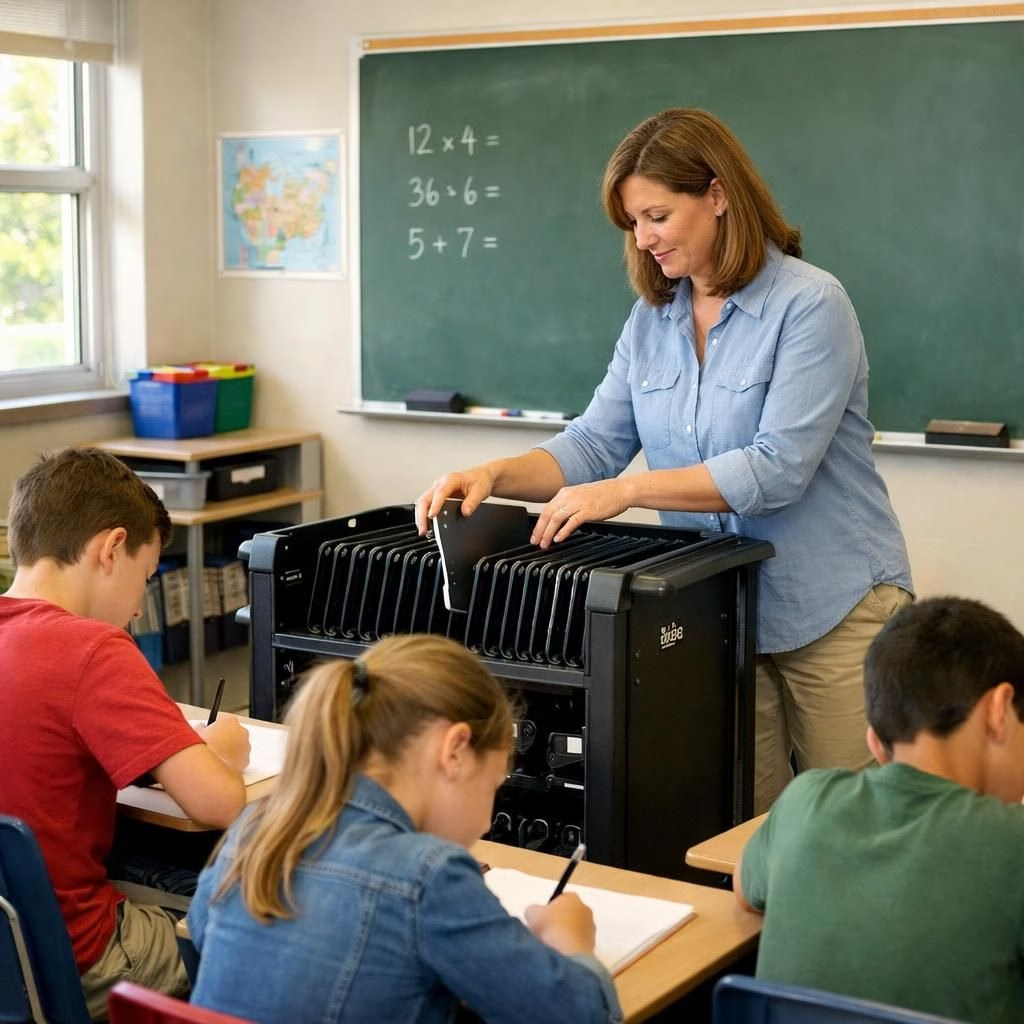
Chromebook remorse is not a villain origin story, but a practical reboot. In McPherson, Kansas, a middle school shifted away from a pure Chromebook regime by collecting class laptops and tucking them into carts. Students now reach for notebooks and pencils first, turning to a laptop only for deliberate, teacher-directed tasks. The vibe is calmer, with more dialogue and room for thoughtful reading on the page.
For years, the district wrestled with devices as magnets for attention. Four years ago, Inge Esping banned student cellphones during the school day, hoping to reclaim the classroom as a place for human connection. Yet digital distractions persisted: students streamed videos, clicked games, and navigated school accounts in ways that drifted away from the lesson. The pivot grew from a belief that screens should augment learning, not dominate it, a remorse for past mistakes.
In December, all 480 students were asked to return the Chromebook they had used. The district kept the devices in carts parked in classrooms, a structured system to curb wandering attention. Students now take notes by hand in many classes, and the laptop surfaces only for activities the teacher deems essential. The change does not erase technology; it rebalances it.
Chromebook remorse meets classroom calm: a Kansas pivot
Daily routines now center clear, time-limited goals for device use. A history class might access primary sources on a Chromebook, but notes are taken by hand first. In math, students practice with pencil and paper while the device checks answers or visualizes a concept. The result is calmer chatter and more moments of deep thinking. This shift is not remorse-driven; it’s about balance.
Chromebook use that respects students and boosts focus
From a practical perspective, the shift reduces bullying and misuses that can occur when accounts are left unchecked. Handwriting supports retention and improves recall, a cognitive benefit often linked to longer processing time. A predictable classroom helps teachers plan with confidence about when a device is allowed and when it is not. This approach reinforces that tech should be a toolbox, not the showpiece.
This is not a retreat from technology; it’s a more thoughtful use. Schools across the country watch McPherson’s experiment, looking for scalable lessons within tight budgets. The broader goal is to offer offline resources alongside digital options and give teachers time to design balanced lessons that pair hands-on work with screen tasks.
Educators considering a rebalanced approach can start with a simple device policy. Keep organized storage and carts in every classroom to simplify management. Develop offline resources that mirror digital assignments for days without screens.
Involve students by asking what helps them learn and adapting. Celebrate small wins, like improved note-taking or reclaimed classroom time.
Beyond the classroom, mindful tech integration is gaining momentum. Technology remains relevant when it serves the learner, not when it overwhelms them. McPherson’s approach shows handwriting staying alive while a Chromebook supports access to primary sources, collaboration, or controlled demonstrations.
If you have your own experiences with this balance between devices and handwriting, share your perspective in the comments, and tell us what has or hasn’t worked in your school or classroom.
Original article: Thank you to Natasha Singer for reporting from McPherson, Kansas, and to The New York Times for the original material that inspired this post. Original reporting and more details can be found on The New York Times site: The New York Times.