

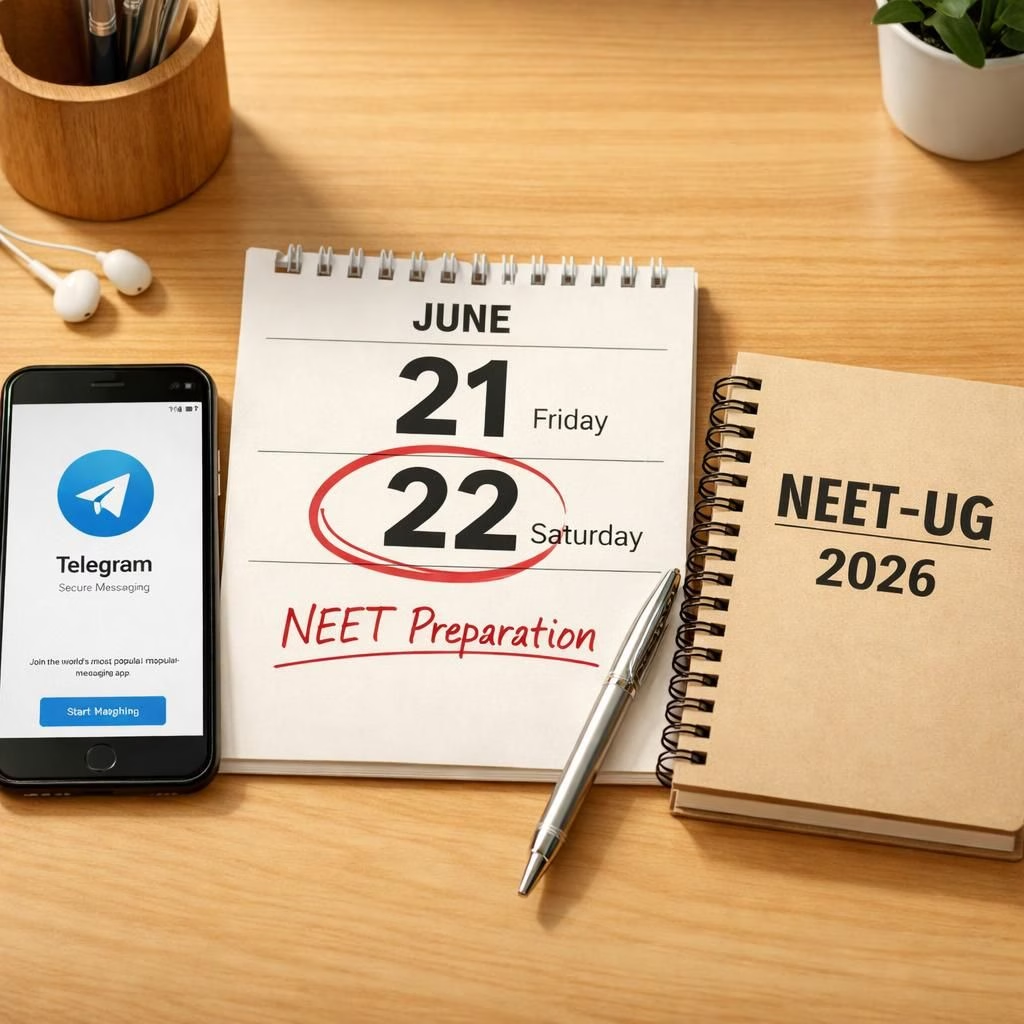
Telegram is under a time-bound safety net as the government acts to safeguard fairness around the NEET-UG-related re-exam scheduled for June 21, 2026. The move, prompted by weeks of online chatter, aims to protect lakhs of medical aspirants and maintain public order on exam day. The measure is targeted and temporary, designed to minimize disruption to legitimate Telegram use for study groups and official updates.
Telegram safeguards ahead of NEET-UG 2026
The block lasts until June 22, covering exam day and the immediate aftermath. In a parallel move, Telegram’s message-editing feature will be disabled during the same window, until June 30. The NTA notes that some admins rewrote older posts, then posted the actual questions after exams, creating a false sense of leaks that could unsettle candidates. By limiting that tool, authorities aim to close a loophole while preserving normal messaging for study groups and official updates during the NEET-UG window.
NEET-UG 2026 integrity drive: Telegram controls
State agencies moved in parallel with the central effort. The Indian Cyber Crime Coordination Centre (I4C), backed by MeitY, has pulled down a large number of Telegram channels, groups, and bots peddling fake paper promises. Bihar Police’s Economic Offences Unit issued a public advisory on June 9 warning candidates against fraudulent claims of pre-exam access. In Gujarat, the Ahmedabad City Cyber Crime Branch arrested members of an inter-state fraud gang running eight Telegram channels with a similar playbook. Investigators traced roughly Rs 1.5 crore in fake transactions using fake bank accounts, and nearly 1,000 mobile numbers contacted in a single month. The Central Bureau of Investigation is running a parallel inquiry, and probes are underway in several other states. The NTA describes the block as a measure of last resort, acknowledging that taking down channels one by one can spark new ones. A platform-wide approach reduces churn and keeps the focus on a clean exam window.
Why the platform-wide approach helps NEET-UG 2026: The NTA pushed for platform-wide compliance because deleting individual channels keeps operators busy and agile. A full-block reduces churn and creates predictability during the critical exam window. The restriction is deliberately narrow to minimize disruption for legitimate users—students, teachers, and parents who rely on Telegram for study groups and official updates. Official updates will come through the NEET-UG-related channels and the neet.nta.nic.in site. If you encounter suspicious messages, report them to the cybercrime helpline on 1930. Remember: the NEET-UG re-exam goes ahead on June 21, and official sources are the safe bet for accurate information.
The crackdown shows how digital platforms intersect with high-stakes testing in modern India, and why authorities favor targeted, temporary measures over broad bans. Public reaction blends relief with irritation, yet most students agree that fairness matters more than clever shortcuts. If you rely on Telegram for study groups or official updates, stick to verified channels and the official NTA site. The goal is a clean, fair re-exam process with minimal disruption to regular study routines and a reliable flow of information. For more technology news and exam-day planning, the TOI app can be handy as a companion tool.
Original article: Times of India report on NEET-UG 2026 Telegram block. Thank you for the original source material that inspired this rewrite.
We invite readers to share their thoughts in the comments below.
FAQ about the NEET-UG block
- Is Telegram banned during the NEET-UG window? The action is temporary and targeted to the exam window to protect exam integrity.
- What does this mean for NEET-UG candidates? Officials emphasize fairness and discourage reliance on leaked content while ensuring official updates remain accessible.
- Where should students look for accurate information? Use neet.nta.nic.in and the official NEET-UG channels for updates.
- What if I see suspicious messages? Report them to the cybercrime helpline at 1930.
External sources
- MeitY – Ministry of Electronics and Information Technology
- NTA – NEET-UG official portal
- The Hindu – technology and policy coverage
References
- Times of India — Government blocks Telegram till June 22; MeitY second order targeting NEET-UG leaks