

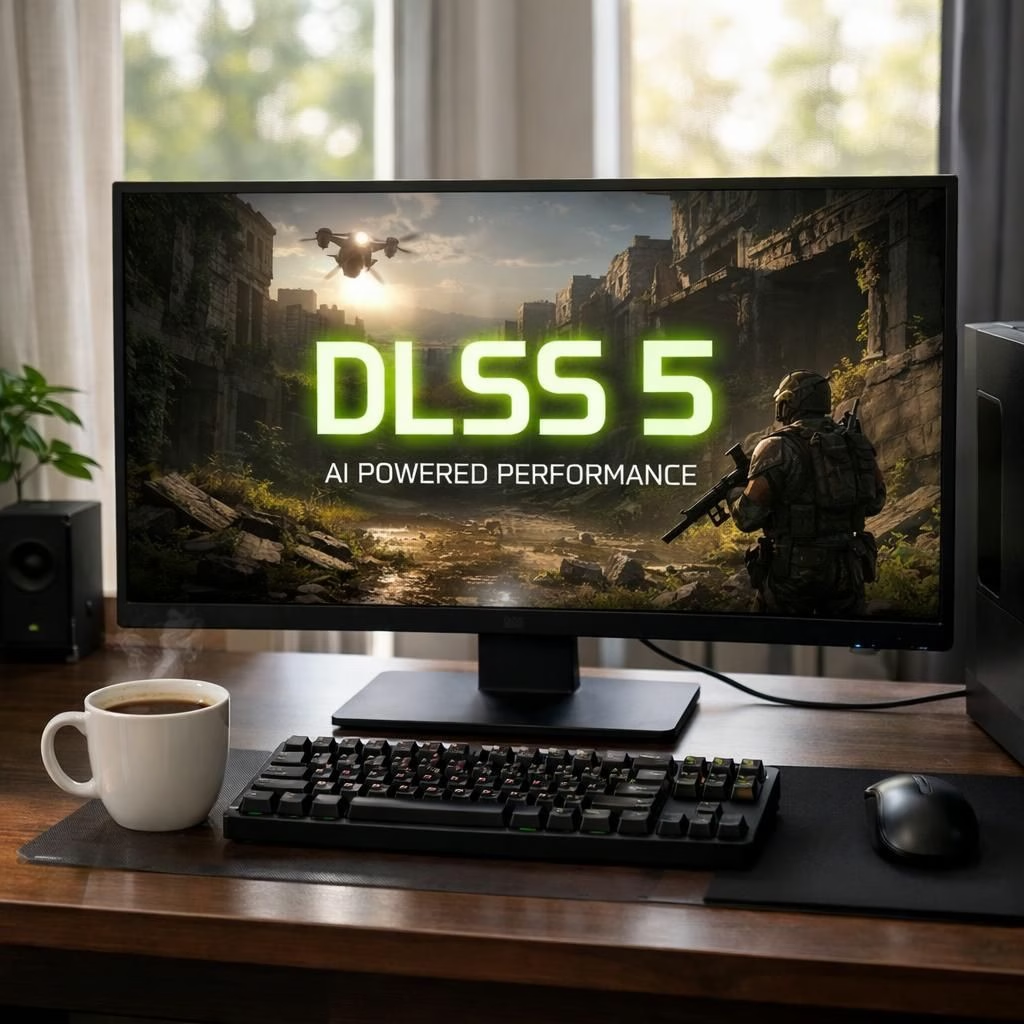
DLSS 5 promises a bold leap for Tag B, touting real-time neural rendering that mixes machine learning majesty with handcrafted artistry. The pitch reads like a studio brief with a sci-fi twist: images refined on the fly, shadows tuned, and textures painted with data-driven brushstrokes. In this rewrite, we explore what the hype actually means, why players are skeptical, and what the long-term bets look like for developers and fans alike.
DLSS 5: Real-time Neural Rendering Unpacked
DLSS 5 is not just a fancy upscaler; Nvidia describes it as a real-time neural rendering model. It uses the game’s own color and motion vectors, plus 3D content cues, to apply lighting and materials that stay anchored to the source. The promise is dramatic: higher realism without losing the artist’s control. In practice, that means sharper fabrics, more plausible skin, and lighting that reacts to scenes with fewer artifacts. Of course, any leap should be tested in the wild, where every frame becomes a canvas and every pixel counts for Tag B.
Jensen Huang framed the tech as a hybrid of generative AI and handcrafted rendering. He suggests that DLSS 5 can deliver photorealism previously reserved for Hollywood effects, while keeping the artist in the driver’s seat. This dual claim appeals to studios chasing visuals and players who value consistent Tag B. Yet the real-world impact will hinge on how well the pipeline stays predictable as scenes vary, and how easily developers can opt into or out of the effect by title.
Gaming Aesthetics Under Review: Art Direction in the Age of AI
Reactions across the Tag B world have mixed, to say the least. Some observers describe the preview as astonishing in its lighting, gloss, and micro-details. Others worry about over-processing faces, uncanny valley skin, and a homogenized palette that dulls distinct art directions. The memes quickly followed: DLSS 5 On pictures that look cleaner, but not necessarily truer to the original vision. The tension is real: can a generative touch respect the artist’s intent while amplifying realism? The answer will depend on how much control developers keep over intensity, color grading, and masking. The Tag B community watches closely as artists weigh in with cautious optimism.
Some developers voice a cautionary note. The art direction should not be sacrificed for glossy pixels. They warn that added detail can erase the original mood of a scene. The sentiment is not anti-innovation; it is pro-integration—keep AI as a collaborator, not a dictator. There is space for both AI-assisted light and human artistry in Tag B, if the tools offer clear knobs and safe defaults. The debate remains lively in the gaming press and among indie teams alike.

From Screens to Studio: What This Means for Creators and Players
For studios, the big question is workflow. Can a pipeline with DLSS 5 fit into existing art pipelines without turning every title into a moving target? The answer is yes if there are explicit controls. Nvidia points to adjustable intensity, color grading, and partial masking as levers. For players, the concern is whether the feature becomes a default, or a fully optional overlay that respects the game’s original direction. The truth is somewhere in between: optional, but widely adopted if it feels like a value-add instead of a trap for lazy tuning. The market will likely look to Tag B as a signal of where these tools land in practice.
Practical Tips for Players and Studios
Here are concrete ways to approach DLSS 5 in the wild:
- Start with non-critical scenes to gauge impact on mood and performance.
- Use explicit controls for intensity and color grading to preserve art direction.
- Enable partial masking only where characters and key materials should stay faithful to source geometry.
- Provide an easy opt-out path so players can revert to the original visuals without friction.
For players, turn DLSS 5 on only where it adds to the experience. If you crave precise art direction, rely on the game’s built-in controls and optional user profiles. For studios, plan a staged rollout: begin with non-intrusive integration, gather feedback, then offer fine-tuning options. Maintain a clear opt-out path to preserve original style. This balance matters as DLSS 5 becomes part of the daily Tag B in the industry.
On balance, DLSS 5 could raise the bar for realism in Tag B while challenging existing art directions. The practical takeaway is straightforward: use the technology when it helps, and keep the creative steering wheel in the hands of designers and artists. The year 2026 could be the year when AI-assisted lighting becomes a standard, but only if developers keep the human touch intact for every game.
What players and creators want most is clarity and control. The tool should feel like a helpful assistant, not a tyrant perched on top of a frame budget. Expect patches, knobs, and community-driven tuning as studios test DLSS 5 in live titles. The path to a better-looking, more consistent game may be messy, yet rewarding for those who stay thoughtful about aesthetics.
DLSS 5 On the horizon promises extraordinary visuals, and a few growing pains are part of the ride. The key is to keep the art direction in sight and the gameplay experience in focus, with a clear preference for optional, artist-guided use. The tech may be impressive, but it works best when players see it as a choice that respects the game’s character and mood.
In time, DLSS 5 could become a standard feature that earns its keep through reliability and meaningful options. The road ahead is long, but the conversation around how to balance AI prowess with creative direction remains essential to the success of modern Tag Bing. As always, the best outcomes come from collaboration between engineers, artists, and players in this evolving landscape of AI-assisted visuals.
For developers and players alike, this is a moment to embrace dialogue, test experiments, and thoughtful experimentation with DLSS 5. The goal is to raise the bar without erasing the distinctive voice of each game.
What do you think about DLSS 5 and its impact on Tag B aesthetics? Share your thoughts in the comments below.