

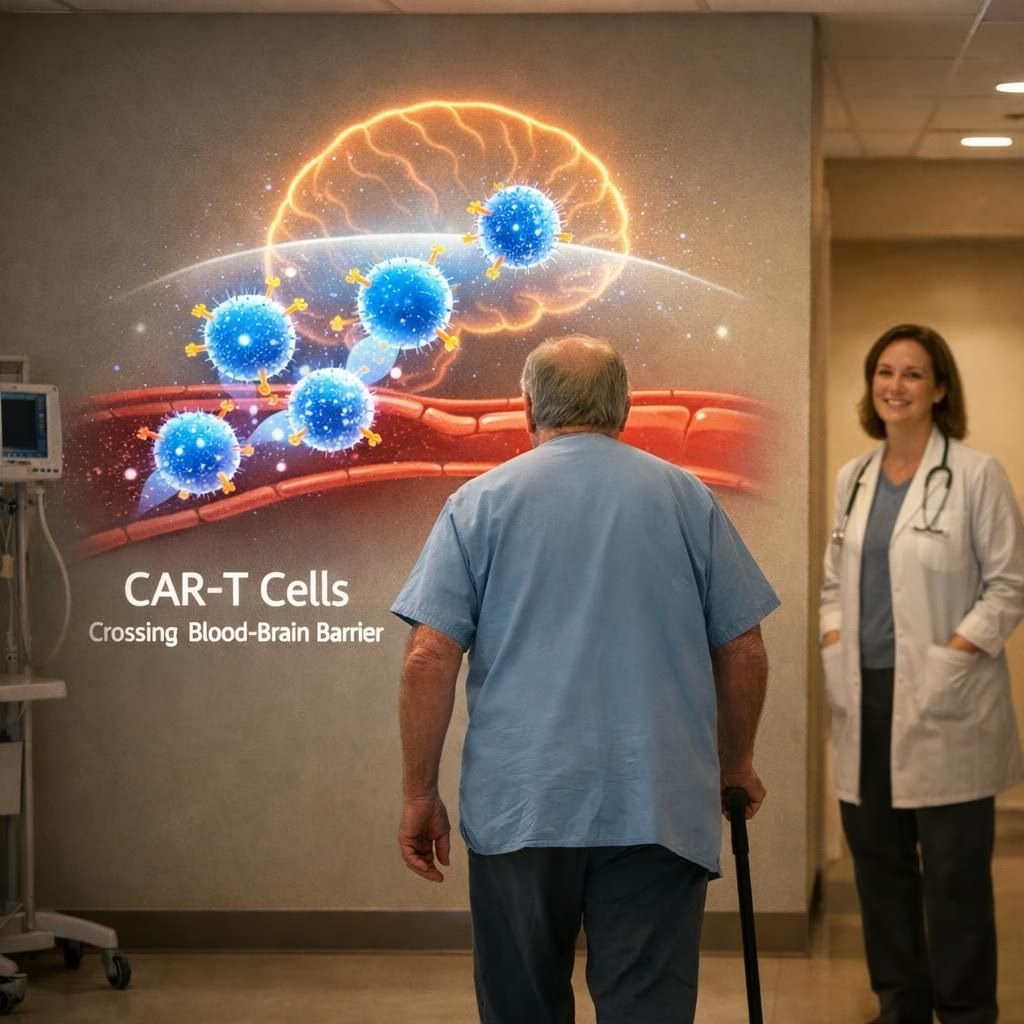
Grace Miller is 46, a mom of two in Fishers, Indiana. She was diagnosed with MS after years of fatigue, vertigo, and vision problems. The journey started when doctors missed the signs. Today she is part of a small, early-stage CAR-T trial at the Cleveland Clinic. The goal is to repurpose cancer immunotherapy to calm overactive B cells in MS. The idea is bold. It sounds like sci‑fi, but it is real science. In 2026, the therapy is more hopeful than certain. And Miller is a reminder of why research happens.
CAR-T in MS: A cautious first step
CAR-T therapy uses a patient’s own T cells to recognize cancer markers, then returns them to attack. For MS, the target isn’t a tumor; it’s rogue MS B cells that damage myelin. If CAR-T can reach MS B cells in the blood, researchers hope it can reach B cells in the brain. The Cleveland Clinic team argues this gives CAR-T a head start, but MS is not cancer. The brain and immune system pose different challenges. These MS trials are early and exploratory. They are designed to learn, not promise a cure.
MS Progress and CAR-T Risks: Balancing Hope and Caution
Four people with MS joined the Cleveland Clinic trial. Two have progressive MS and two have relapsing MS. They received their infusions six to twelve months ago. Miller got hers last May. Ten months later she uses a cane, but she is walking more and more on her own. The team tracks safety signals and looks at changes in disability. No one is pretending this is a done deal. The main risks include cytokine release syndrome and ICANS. These can be serious. MS patients may have different risk profiles than cancer patients. Still, researchers want to know if brain MS B cells matter in progression. Other centers are running similar early-stage MS studies. Stanford, MGH, and Columbia are in the mix. The goal is to gather safety data and early signals in 2026.
Some experts remain skeptical that MS CAR-T will outperform existing MS drugs. Antibodies do good work, even if they don’t cross the blood-brain barrier. CAR-T could be more durable if brain access is achieved, but the bar is high. The trials will also teach us about the immune system and MS beyond a single therapy. Even if CAR-T doesn’t work, the data will sharpen our questions about immune-brain interactions and neuroinflammation. The rapid evolution of MS CAR-T, driven by major pharma players, means improvements are possible. If results improve, they may change how MS is treated in the long run. In 2026, the big question is simple: can CAR-T change the disease course, or will it stay a clever detour?
In the meantime, researchers emphasize that safety comes first. The team will monitor for adverse reactions like cytokine storms and neurotoxicity. They balance the possibility of meaningful impact with the reality of potential harm. The hope is to learn enough to justify larger studies. The curiosity is real; the planning is meticulous; the patient stories keep the science grounded.
Grace Miller’s personal progress—improving steps, regaining independence, and the hard-won ability to lift her grandchild—illustrates both the risk and the reward of early trials in 2026. The questions remain: will CAR-T reach B cells in the CNS? Will the benefits outweigh the risks for MS? The answers will come with time, data, and careful clinical judgment.
Want to weigh in? Please share your thoughts in the comments. The MS field will benefit from diverse perspectives as researchers learn what to test next and how to test it safely.
Original article: Cleveland Clinic MS CAR-T trial — thank you for the inspiration. Learn more from the Cleveland Clinic’s coverage: Cleveland Clinic.
What CAR-T could reveal about MS brain-immune interactions
Early MS trials with MS-targeted CAR-T therapy are as much about science education as patient care. Researchers want to learn whether reprogrammed T cells can reach immune activity within the central nervous system. If brain MS B cells play a major role in progression, it could shift how clinicians describe disease mechanisms. The data will also illuminate how peripheral immune cells communicate with brain tissue in real time. That understanding may influence not only MS but other neuroinflammatory conditions as well.
Practical steps for readers and patients
- Talk with your neurologist about whether a trial could be appropriate for you or a loved one.
- Access reputable sources to understand how CAR-T works and its current limits in MS.
- Ask about eligibility, potential risks, and how safety is monitored in early studies.
- Consider participation as part of a broader treatment plan that prioritizes daily function and quality of life.
Practical path forward: how this research could shape care
Even if the MS CAR-T approach does not become a standard therapy soon, the trials offer valuable information. They may reveal new ways to interfere with inflammatory processes, improve how existing drugs work, or guide safer, more targeted approaches to brain-immune interactions. The field is moving quickly, and each data point helps refine questions for the next phase of research.
FAQ: CAR-T and MS
-
What is CAR-T therapy?
CAR-T therapy reprograms a patient’s own T cells to recognize disease markers and attack abnormal cells. It is most established in certain cancers and is being explored in MS to target dysregulated B cells.
-
Is CAR-T approved for MS?
No. These MS trials are in early stages to assess safety and early effectiveness, not to establish a standard of care yet.
-
What are the main risks?
Potential cytokine release syndrome and immune effector cell-associated neurotoxicity (ICANS) are among the concerns. Researchers are careful to monitor, manage, and minimize these risks as part of trial protocols.
-
How can someone participate or learn more?
Discuss options with a neurologist or visit trial registries or centers conducting MS-focused research. Eligibility varies and safety requires close medical supervision.
References
- NBC News: Can groundbreaking cancer therapy help people with multiple sclerosis?
- CAR-T cell therapy overview
- MS overview | National MS Society
Original article: Cleveland Clinic MS CAR-T trial — thank you for the inspiration. Learn more from the Cleveland Clinic’s coverage: Cleveland Clinic.