

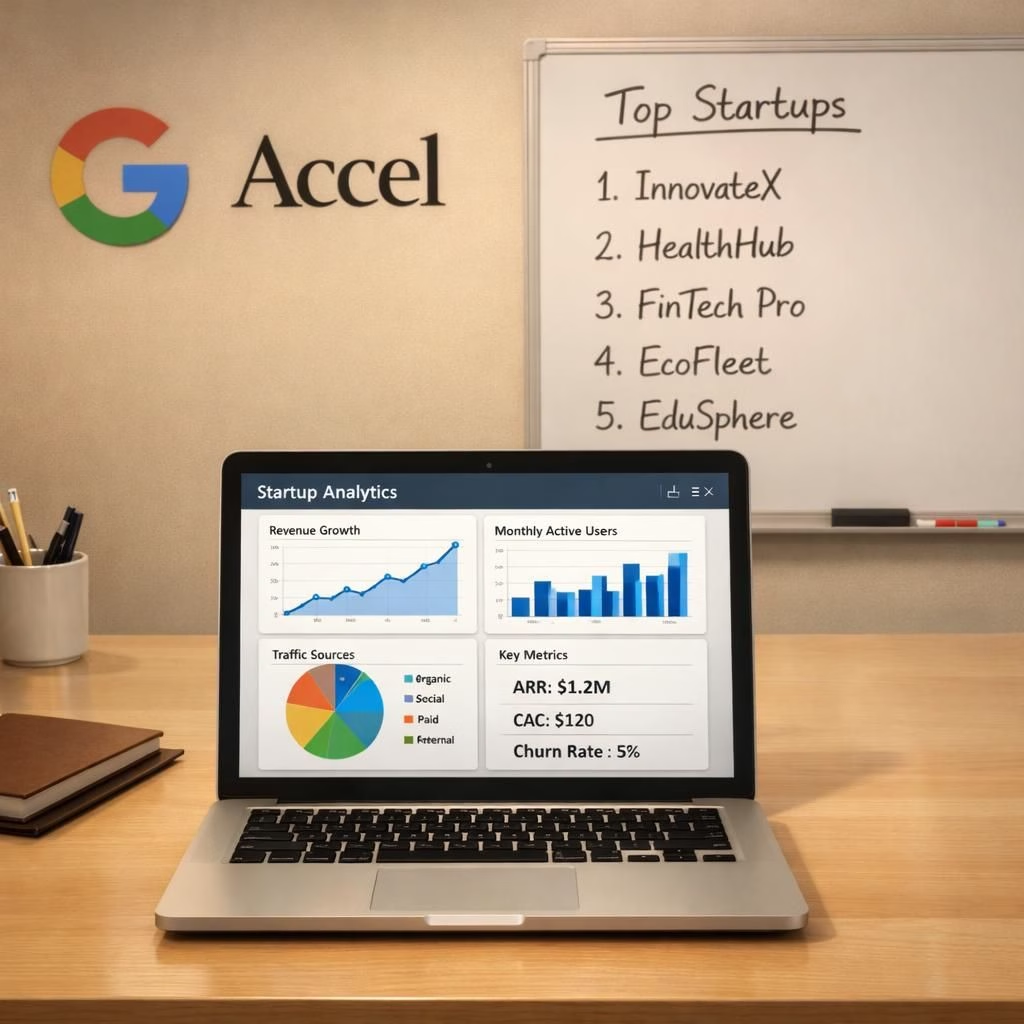
In 2026, Google and its partners shine a light on startups that solve real problems with solid data foundations. The buzz around AI wrappers has cooled as founders prove value inside products rather than buzzwords. This year, Accel India joined forces with Google to select five ventures that demonstrate discipline, market fit, and durable impact. The mix is partly confidence, partly showmanship, and entirely data-driven optimism. Are you listening? The era rewards actionable work over flashy demos, and that is where true AI wrappers usually falter unless they deliver measurable value.
AI wrappers and Google: India’s 2026 startup picks
Five startups across healthcare, fintech, supply chain, education, and agriculture anchor the portfolio. Each venture emphasizes clean data, domain knowledge, and a user-centric AI layer that adds value within existing workflows. This is what Google and Accel India want to see: adoption over novelty, reliability over hype, and outcomes that stakeholders can measure. The wrappers label becomes less relevant when the product actually improves somebody’s day.
The five startups span sectors like healthcare optimization, supply-chain transparency, fintech fraud resilience, education access, and climate-smart agriculture. Each startup reveals a thread: data quality, domain expertise, and user-centric design. The result is a portfolio that reads less like a buzzfeed of AI wrappers and more like a field guide to productized AI in 2026.
When you read headlines about AI wrappers, you might picture a shiny wrapper around a generic AI. The truth is subtler. The teams backed by Google and Accel India demonstrate how to lift a real problem with a reliable data backbone. They talk about data governance, privacy, and compliance as if they were part of the product’s core features, not afterthought checklists. This is the kind of rigor that keeps the AI wrappers label from sticking, because the product actually delivers outcomes. In this context, AI wrappers become a cautionary tale rather than a badge of honor. The news is not that AI wrappers are bad. It’s that good startups prove success by solving real pain, not just adding chatty AI to every line of business. The first paragraph of this year’s story reads as a friendly reminder that AI helpers exist to serve humans, not the other way around.
Accel India backs five startups—no AI wrappers this round
- A healthcare optimization platform that uses patient journey data to reduce wait times and improve outcomes.
- A fintech risk engine that spots fraud patterns across cross-border payments without tripping privacy rails.
- A supply-chain visibility tool that maps shipments with live AI-assisted anomaly detection.
- An education tech solution that personalizes learning paths using lightweight AI models on device.
- A climate-smart agriculture system that predicts irrigation needs and soil health with an emphasis on data quality.
Notice how the startup descriptions avoid the glossy trap of AI wrappers and instead highlight the why and how of real value. Google‘s approach to these five startups in 2026 emphasizes long-term partnerships, not one-off product tests. Accel India’s support is visible in the coaching style, a willingness to push back on hype, and a commitment to sustainable growth. When you peel back the glossy surface, you find a simple recipe: identify a meaningful problem, assemble clean data, design a usable AI layer, and measure impact with concrete metrics. The startups thrive on a balanced blend of ambition and discipline, a trait that signals a healthier AI ecosystem in 2026 than a room full of clever scripts pretending to be a business. Each company has the potential to scale, to reduce waste, and to bring tangible improvements to everyday operations. And yes, that’s the difference between AI wrappers and AI-enabled products: wrappers might catch attention, but products win the day when the user learns to rely on them.
Why Google continues to lean toward meaningful AI, not wrappers
Google’s ongoing collaboration with Accel India highlights a preference for impact over ideology. The story isn’t just about beating the AI wrappers rumor; it’s about building a sustainable pipeline of startups that know their target customer, craft the data strategy, and maintain governance that scales. In practice, that means clear product goals, measurable outcomes, and a willingness to iterate quickly. When you hear about AI wrappers, you should think of the opposite: someone who has built a practical, data-backed tool that genuinely changes the user’s day. That is the path Google and Accel India seem to favor in 2026—a roadmap that respects complexity, avoids yellow-jacket hype, and invites real-world testing with real users. The net effect is a stronger ecosystem where AI wrappers remain a cautionary tale and AI-enabled solutions become the norm.
Lessons for Indian startups and global players
So what can entrepreneurs take away from this curated five? First, invest in data quality. No amount of fancy AI works without clean, well-labeled data. Second, align product with a real workflow. AI wrappers fail fast if they do not improve a user’s day in a measurable way. Third, build governance and compliance into the product from day zero. Regulators, customers, and partners will thank you. Fourth, validate with actual users early. Slow, honest feedback beats flashy demos that don’t translate to adoption. Fifth, cultivate a clear monetization path. A good model can be a feature; a durable business is the whole product. And finally, embrace the power of collaboration. Google‘s and Accel India’s joint mentoring model demonstrates how ambition can pair with discipline in 2026.
For readers watching the Indian startup scene, the message is simple: the era of one-off AI stunts is fading. The era of scalable AI that truly helps people is arriving. AI wrappers may get a viral thumbs-up, but a well-built AI-enabled product earns trust through tangible outcomes. If you are an early-stage founder, prioritize a sustainable data strategy, partner with seasoned mentors, and aim for a product that your customers will actually pay for. The Google-Accel India collaboration is a signal that the future belongs to teams that pair ambition with discipline, and that is a recipe worth cheering for in 2026.
As we wrap this overview, I invite you to share your thoughts in the comments about how AI wrappers are trending versus how meaningful AI projects win real adoption. Do you think the five startups highlighted by Google and Accel India set a new standard for the region? Which sector excites you most about this direction? Your insights matter, and I would love to hear your perspective on how the term AI wrappers is used in practice, and how we can ensure AI is always serving real users.
Original article: TechCrunch – Google, Accel India accelerator chooses 5 startups and none are ‘AI wrappers’. Thank you for the original reporting and the thoughtful framing that inspired this rewrite.